 Zac Brooks
Businesses are starting to see that their agents need a second brain, and most are lost on how. We found a different way, mining, and our agents excel on it.
- What this is
- An introduction to company brains: how the second brain evolved, why a business wants one, the four ways teams build one, and mining, the way we build ours.
- Why it matters
- There's no blueprint. The usual versions stall in the same places, and the fix is in how the brain gets built.
- How to use it
- Read it in order; it gets technical in the middle for a few minutes. At the end, copy the piece into your own agent and let it walk you through building yours.
1The evolution of a second brain
In Memento, Leonard can't make new memories. Every few minutes his world resets: he doesn't know where he is, how he got there or who the person across the table is.1Memento (film)Wikipedia, 2000Leonard cannot form new memories and relies on notes, Polaroids and tattoos It's a thriller, and it's also the clearest picture I know of what memory is for.
He cannot hold a new memory

So he takes Polaroids and writes on them

And tattoos what he must not lose
What makes the film is what he does about it. He builds a system. Every person and place that matters gets a Polaroid, and on each one he writes who it is and whether to trust them. The facts he can't afford to lose go on his body as tattoos, where they can't be misplaced, and the rest rides in his pockets as notes. "You really do need a system if you're gonna make it work," he says.2Memento (film), quotesWikiquote, 2000Leonard's line "You really do need a system if you're gonna make it work" Every time he comes to, he reads the system back to work out what happened and what to do next.
Most of us live like Leonard now. In 2011 a study in Science found that people who expected to look a fact up later remembered where it was kept better than the fact itself.3Google Effects on Memory: Cognitive Consequences of Having Information at Our FingertipsSparrow, Liu and Wegner, Science, July 2011People who expect to have access to information later recall it less, and recall better where to find it Its headline experiment has been hard to repeat since,4Evaluating the replicability of social science experiments in Nature and Science between 2010 and 2015Camerer et al., Nature Human Behaviour, August 2018The replication of the study's computer-Stroop experiment did not reproduce its effect and the habit it named is everywhere anyway.
Dan Koe's case in The Art of Focus is that attention is the scarce thing now, and an abundance of information turns into distraction unless you filter it.5The Art of Focus: official book summaryDan Koe, October 2023Attention is scarce amid an abundance of information, and rest opens focus so the mind can register new ideas Every feed takes a share of the attention that remembering needs, and the quiet between them matters as much. In a 2012 study, older adults who rested for ten minutes after hearing a story remembered more of it a week later than when they spent those minutes on a spot-the-difference game; the authors' reading is that the quiet let the memory settle.6Brief wakeful resting boosts new memories over the long termDewar, Alber, Butler, Cowan and Della Sala, Psychological Science, September 2012Older adults recalled more of a story a week later after ten minutes of quiet rest than after a spot-the-difference game
None of this is new. In 1945 Vannevar Bush was already writing about the scientist who faces conclusions "which he cannot find time to grasp, much less to remember, as they appear."7As We May Think
People have been building a better place to put it all ever since.
1.1The second brain, one power-up at a time
From a desk nobody built to a method anyone can run, one power at a time.
If you're building a brain for a company, you're building on eighty years of people trying to keep what they know outside their heads. Every era kept what the last one figured out and added one power, and one power is still missing.
1945The Memex
Power-uptrails
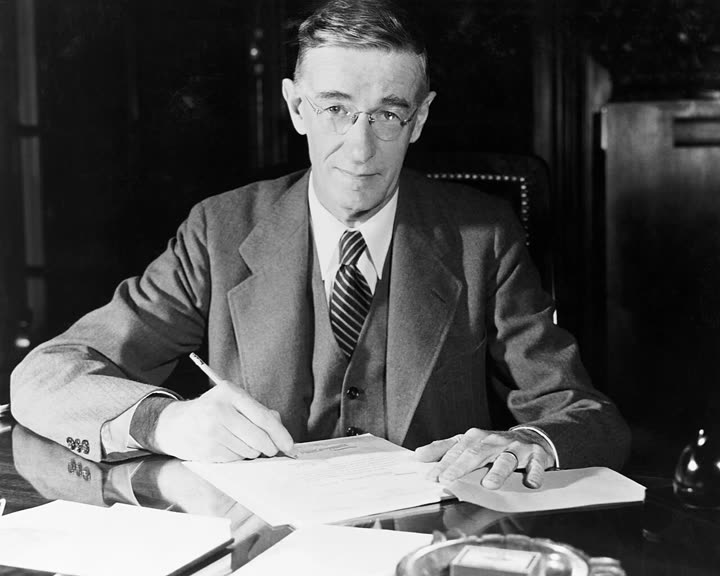
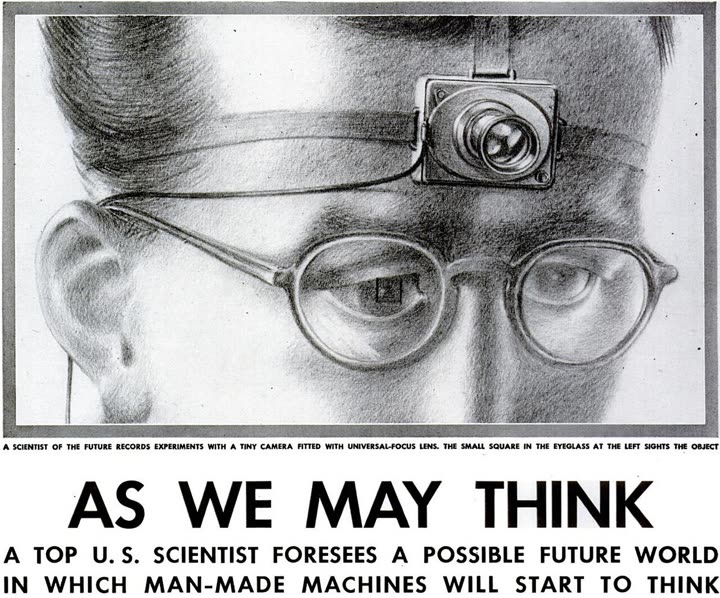
In July 1945 Vannevar Bush described the Memex, a desk where you could tie any two records together into a trail and follow it later.7As We May Think
Bush had run America's science effort through the war. His desk would hold every book, letter and record a person owned on microfilm, and a trail could be handed to a friend. Nobody built it. The trail is what lasted: memory as a path between the things you've kept.
1950sThe Zettelkasten
Power-uplinks
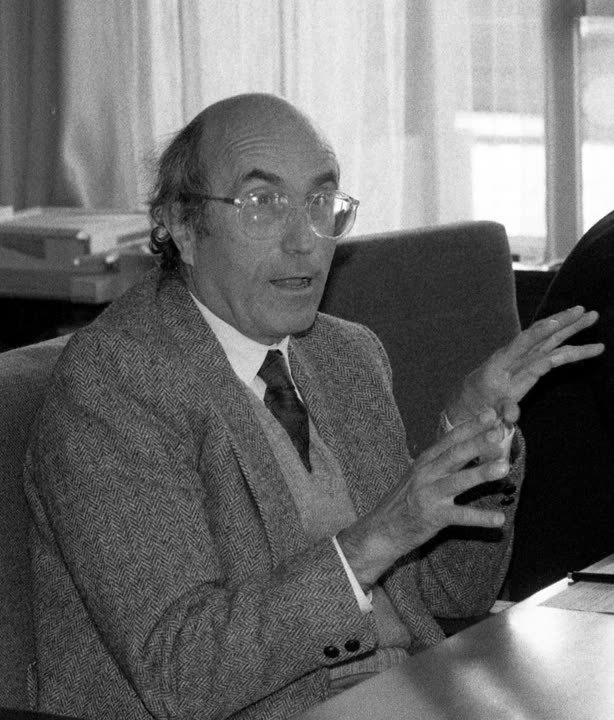
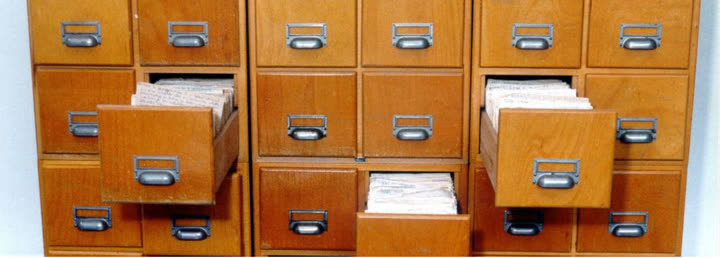
Niklas Luhmann kept a slip box for four decades, until it held about 90,000 cards, each one pointing at the cards it spoke to.8Zettelkasten
Luhmann, a German sociologist, started the box in the early 1950s. Each card had an address, so an idea could branch anywhere without a fixed place in an outline. He called the box his partner in conversation, and it carried him through more than seventy books.
2020sLinked notes and the graph
Power-upa graph
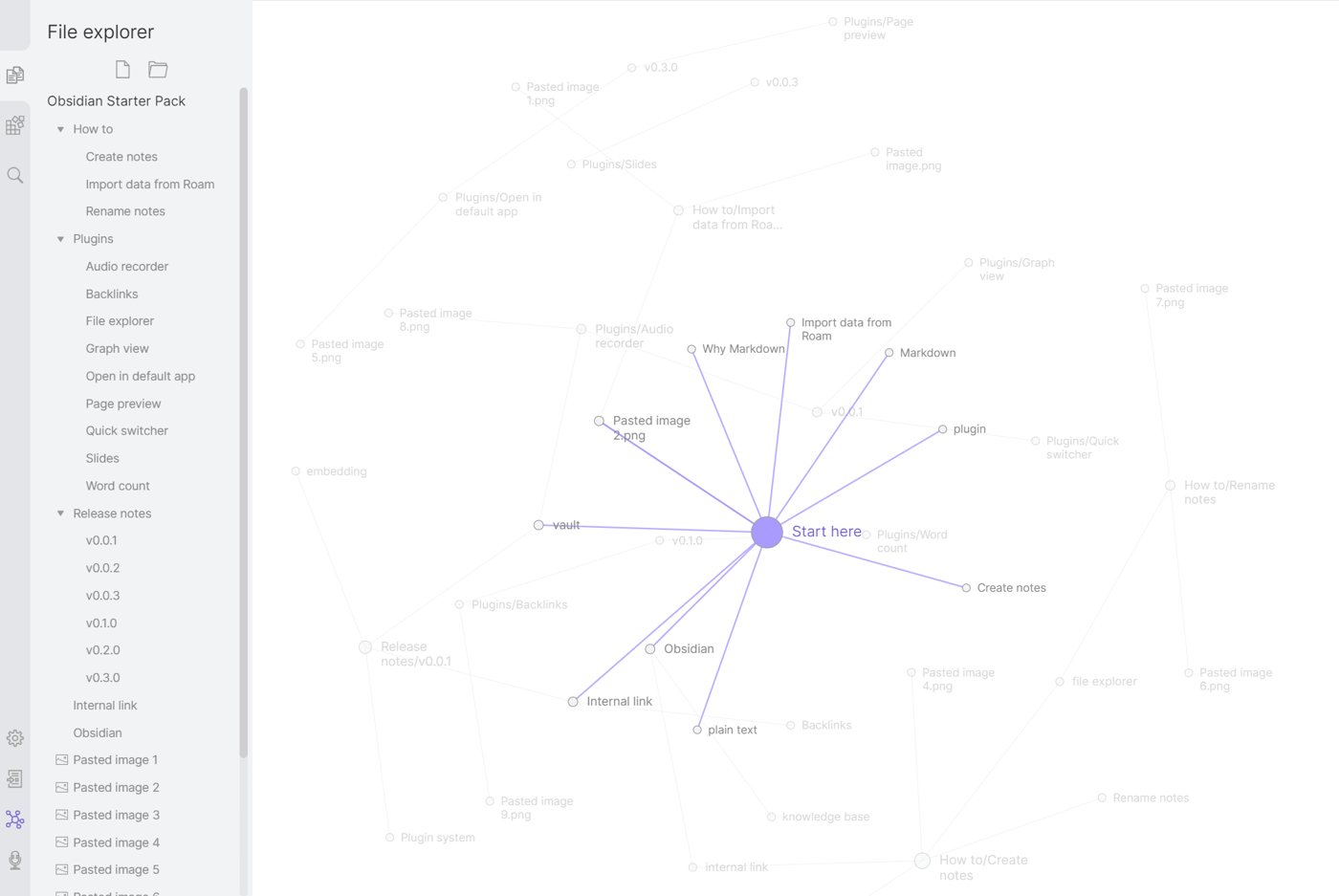
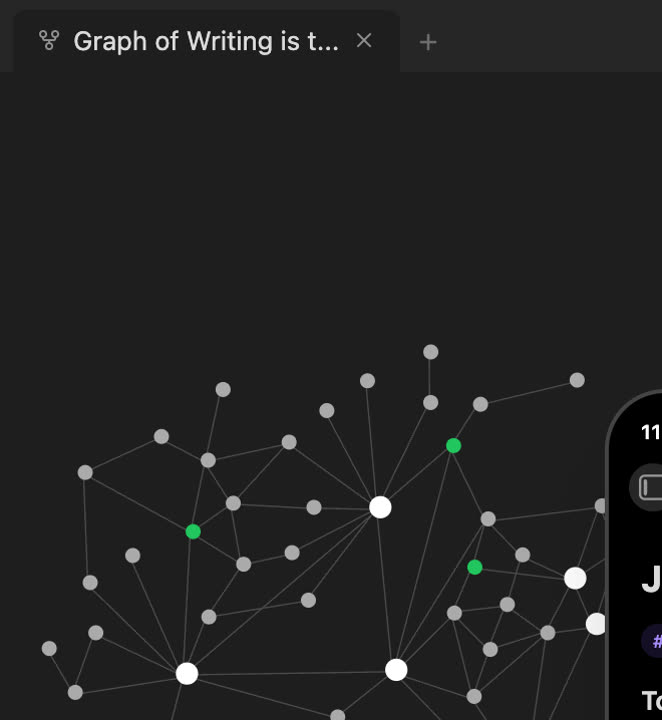
Then the links went digital: Obsidian, which launched in 2020, drew every note you'd linked as a graph you could spin.9Obsidian (software)Wikipedia, 2020A notes app first released in 2020, with links between notes and a graph view
A note links to another with two square brackets. For the first time you could see your memory from above: the clusters you keep coming back to, and the few notes that hold them together.
2022Building a Second Brain
Power-upa method
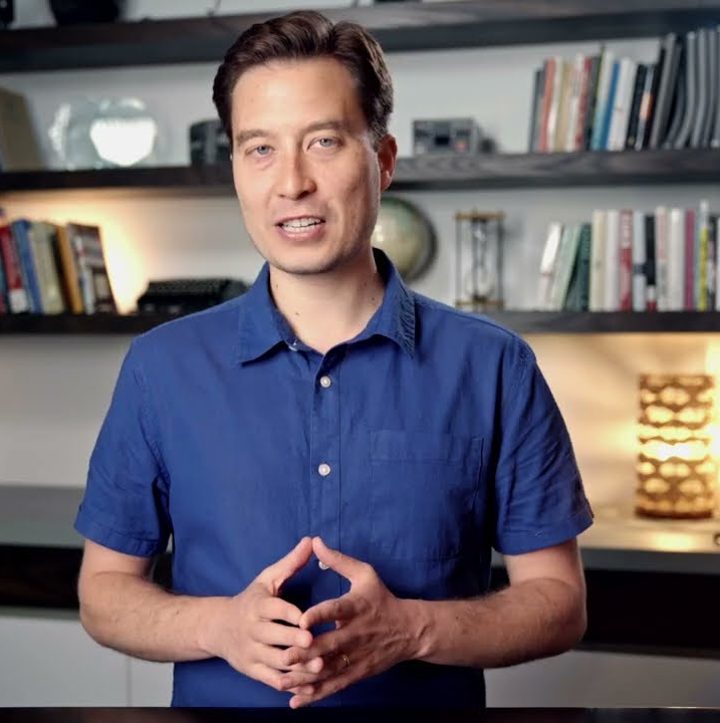
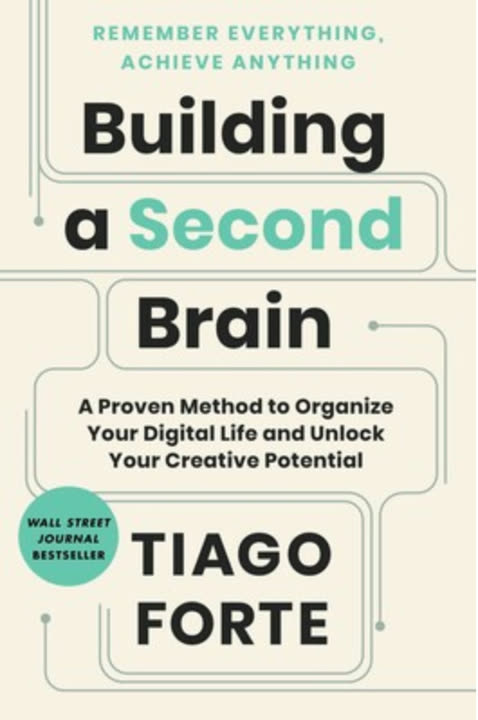
In 2022 Tiago Forte published Building a Second Brain, and it turned all of it into a method anyone could run.
Capture what resonates, organize it by the project it serves, distill it, and express it in your own work.10Forte, T. Building a Second Brain. A Proven Method to Organize Your Digital Life and Unlock Your Creative Potential. Atria Books, 2022 With a method, a second brain became a habit anyone could keep.
What none of them could do was read it for you.
1.2AI arrives with no memory
Agents start every chat from zero, so a second brain matters more now than it ever did.
Then AI showed up, and we were all back in Memento. A model knows a great deal about the world and nothing about you. Every chat starts from zero: it doesn't know who you are, what you promised a client last week or how your team does the work, and when the chat ends, whatever it picked up goes with it. I used the same picture in the path to AI-native, where the first level past chatting is context, because the wall there is one everyone hits: you spend more time explaining your business to the AI than it saves you.
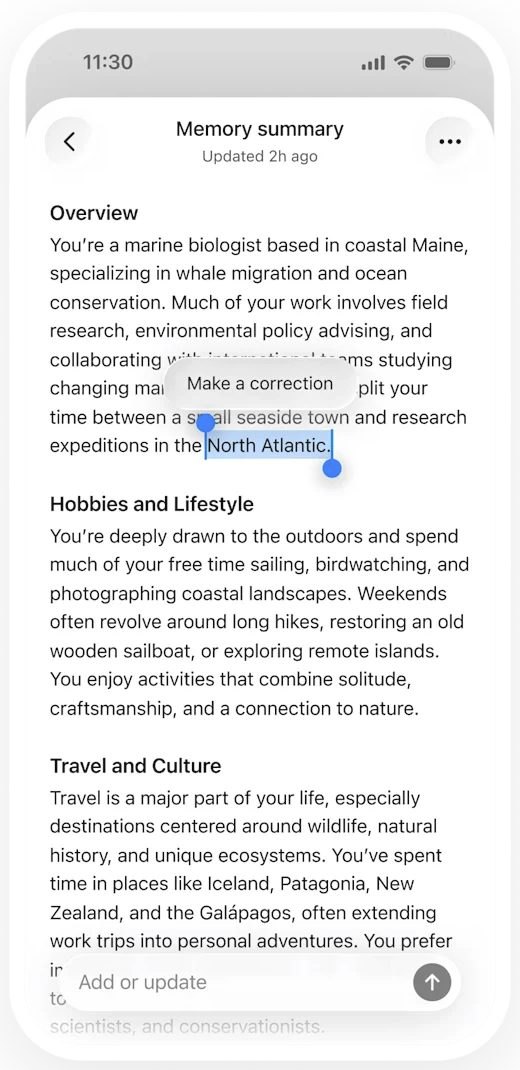
The model makers saw it and shipped Polaroids. ChatGPT, Claude and Gemini all keep a memory across chats now, a line saved here and there, without the conversation it came from. Claude keeps its memory per person and per project, and a team's owners can't see or edit what it has kept for each member.11Use Claude's chat search and memory to build on previous contextAnthropic Help Center, 2026Claude's memory is kept per person and per project; team owners can't view or edit members' memories Google launched Gemini's memory in the UK this spring without business accounts at all.12Gemini launches new personalisation features in the UKGoogle, April 2026Gemini's memory launched in the UK without Business and Enterprise accounts
People started building their own. Search for Obsidian graphs and you'll find screenshots like galaxies, thousands of notes glowing in clusters, posted with real pride. Behind most of them is someone copying and pasting between their notes and their chats all day.
It's become a culture. Andrej Karpathy's LLM wiki, a short note on keeping a wiki that an agent writes for you, went around everywhere in April.13llm-wiki.md
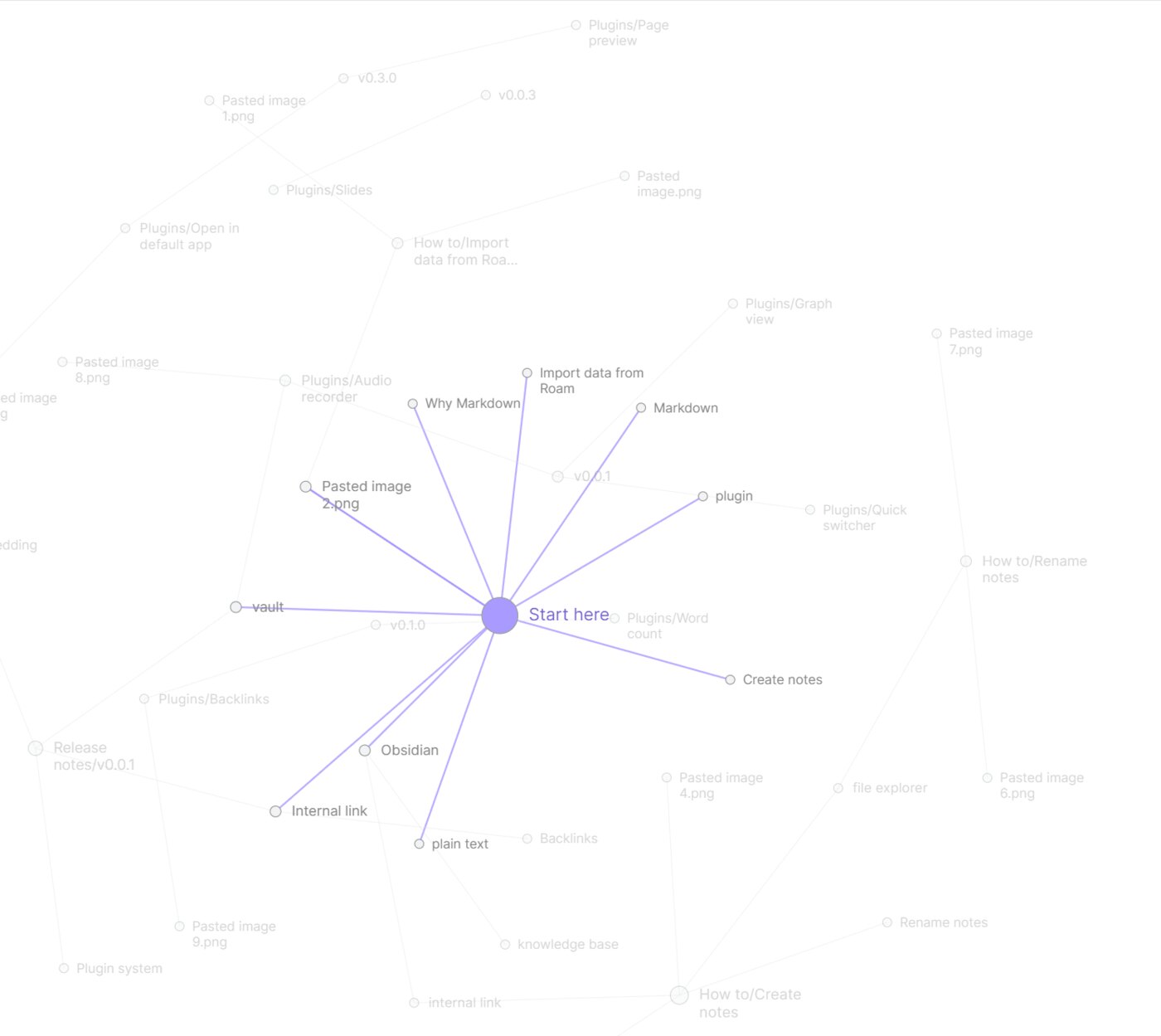 Obsidian's graph view Obsidian Help
- 2,823
public repositories on GitHub's second-brain topic
GitHub topics - 42.7k
stars on openhuman, the biggest of them
GitHub 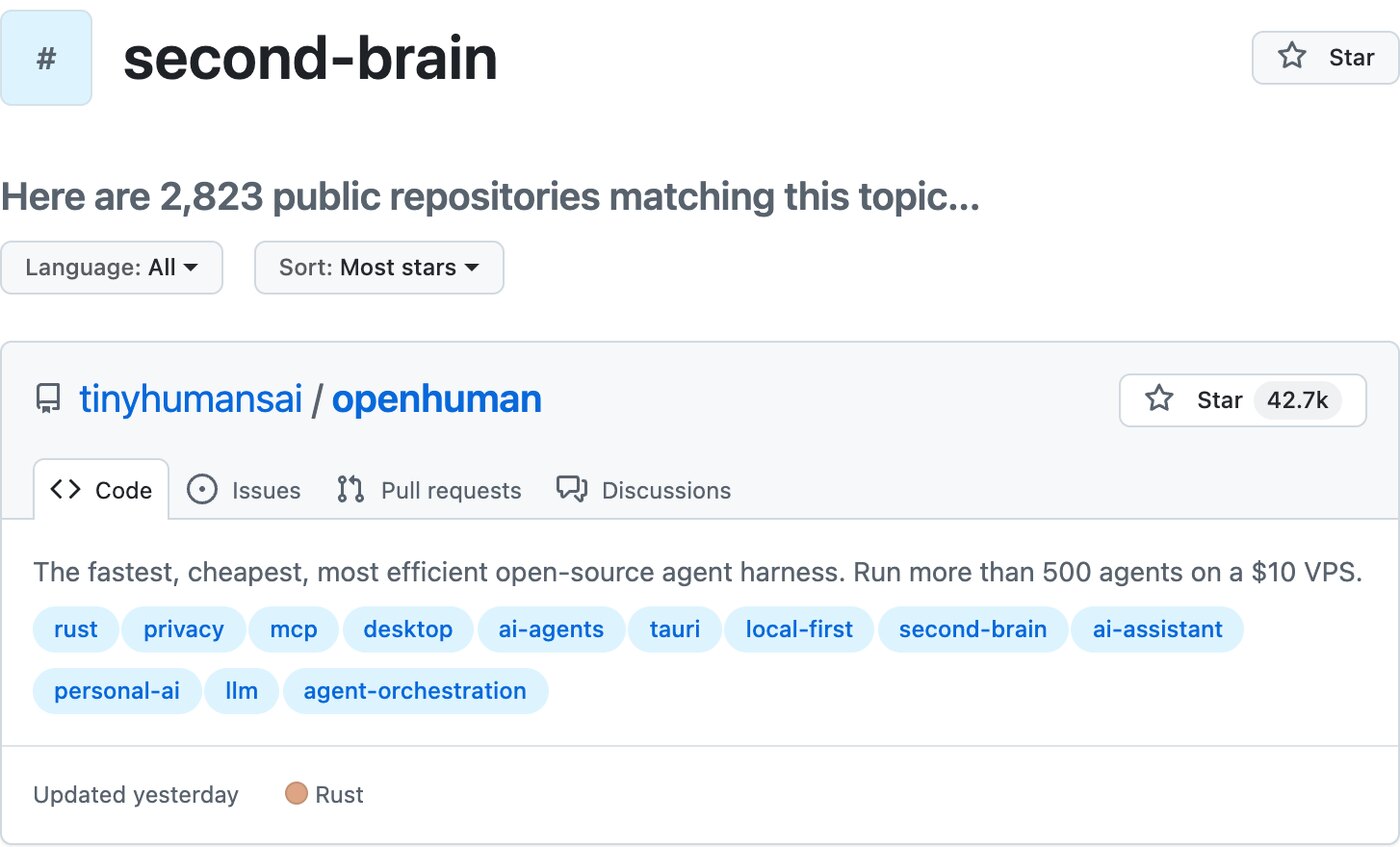 The second-brain topic GitHub topics
 claude-obsidian GitHub
- 16.6k
stars on claude-obsidian, Claude Code wired into Obsidian
GitHub - 5,000+
stars on Karpathy's LLM wiki gist, and as many forks
GitHub Gist Obsidian is the IDE; the LLM is the programmer; the wiki is the codebase.
Andrej Karpathy, LLM Wiki GitHub Gist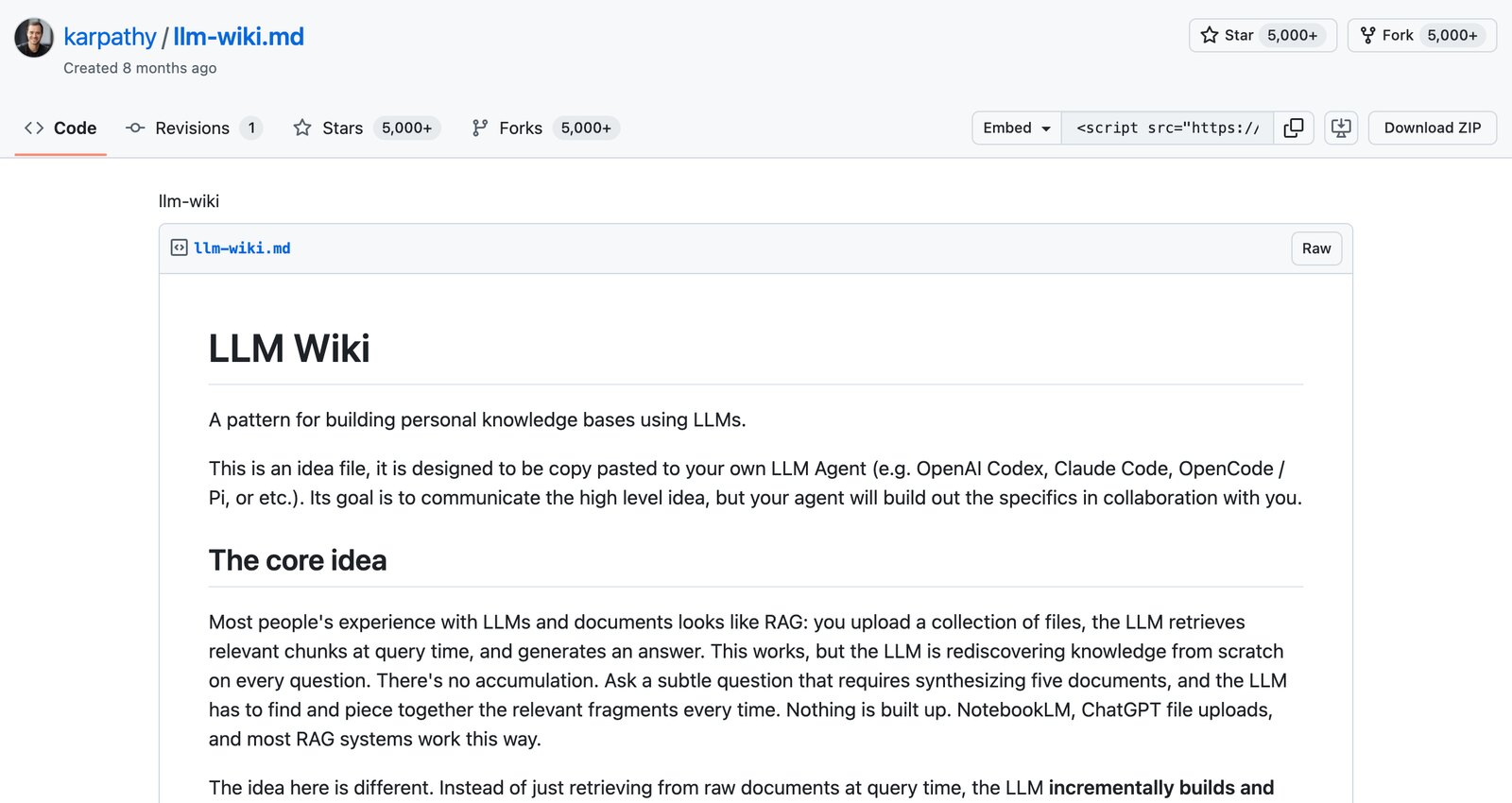 LLM Wiki GitHub Gist
1.3Two kinds of payoff
The gains the market talks about, and the ones it mostly doesn’t.
Mostly, a company wants a brain so it can stop spending the start of each chat getting an agent up to speed, pasting in the client, the history and the plan. That gain is real, and everyone sells it. The bigger one shows up once you have the brain.
The tactical gains everyone talks about
For us it shows up most in client work. I don't tell a chat to go pull the transcript anymore. Agents watch for new meetings, mine them as they land and take the feedback straight into the work. They know the client: every conversation we've had, their goals, the features we've shipped for them, their design system and what their competitors are doing.
The everyday gains
Agents start every chat briefed, and nobody explains the business twice.
- Agents arrive knowing the history
Every client, call, decision and document, searchable from the first message.
- Fix a fact once
Nobody pastes last week’s notes into a new chat or fixes the same fact in five tools.
- Reporting stops being a job
Once it keeps up on its own, tracking the work stops being a job, and you see how much of the week reporting used to take.
The patterns the market misses
A context window holds a lot now, a million tokens on the frontier models,141M context is now generally available for Opus 4.6 and Sonnet 4.6Simon Willison, March 2026A one-million-token context window at standard pricing on the frontier models and models still get worse at using what's in it as it fills.15Context Rot: How Increasing Input Tokens Impacts LLM PerformanceChroma, July 2025Across 18 models, performance did not hold steady as input length grew A brain keeps the business outside the window and hands each agent the part its question needs, so its memory never overflows. And once every call is mined, you can ask the questions that cut across all of them.
- 01Opens Scope Creep, the concept the question is about
- 02Follows its links to 21 Observations and 5 Events
- 03Reads the 18 calls, threads and change requests they came from
- 04Finds the two Patterns synthesis wrote across them
- The boundary lived in a document the client had no way to move, so defending it sounded like defending quality.
- Optional items sat inside the quote, so every later ask read as a price hike.
- Under all of it ran one objection nobody answered: a price that low must hide a sacrifice, so buyers checked scope instead.
- The one thing that held was a meter the buyer moves, so the client argued with the arithmetic.
That question should be easy to answer. Someone on your team was on every one of those calls.
Every business has spread its evidence across a CRM, a project tool, a drive, three chat apps and an inbox, and each tool keeps its own slice.
Follow one deal that went cold. The CRM knows it went from a sent proposal to Closed lost in a month. The client's request to add more work is fourteen minutes into a recorded call. The revised quote sits in someone's sent folder, the team's back-and-forth about the price is in a Slack thread, and the reason the price went up lives in the head of whoever wrote the quote. Every piece of the story was saved somewhere, and no tool holds all of it, so nobody can ask why the deal went cold. Tool bloat buried the answer. A brain reads every one of those slices back into one place, so the question above gets an answer, with the calls and threads behind every line.
For the people building one
If you're the one who set out to build your company's brain, or got handed it, you already know it's hard. You've probably felt like the Scarecrow. There's no map, there's a new memory tool every week, each sure it's the answer, and there's no way to know which one fits your business until you've wired it in.
And the reasons you went looking don't go away while you search. Your agents make things up whenever they're missing context, and the start of every chat goes to bringing them up to speed, again. Anyone climbing the path to AI-native feels the same thing early: the friction drops the moment the agent already knows your business. Then you go shopping and find algorithms that decide what to remember for you, with nothing you can install or tailor to how you work. We hit every one of these building ours.
There's no blueprint for that yet. This is ours, from the four versions most teams try to the one we built.
2Printing a brain
So you want one. The next thing everyone asks me is how you actually print a brain, and the market has a lot of answers.
Some of the tools people build brains with today
Grouped by what each is for. Underneath names which of the four ideas below a tool rests on, read from what each says about itself on 17 November 2026. Each name links to its home.
Each is good at something. Underneath, nearly all of them are versions of four ideas, which most teams try in this order: dump everything in one place, cut it into chunks for search, wire the agent into every tool, or install a memory framework. All four start from the same raw material.
The raw material
Our own brain holds about four thousand conversations so far: client calls, email threads, Slack and my chats with Claude. Almost none of it was written to be read later. A decision on a deal can sit forty minutes into a call, the change to it can arrive two weeks later in an email, and the reason behind both usually lives in someone's head.
Each version is a different way for an agent to find its way through that. To compare them, we'll put the same question to each, the one from part one: why do our deals go cold after the client asks for more scope? The examples come from a made-up company, ScoopRoute, a pet waste removal service with three years of calls, email and Slack behind it. Picture your own business in its place.
The four versions, in the order teams try them
2.1The dump or warehouse
Everything in one place, read with a flashlight.
Version one is the folder, or the warehouse for bigger teams. Every export goes in: meeting transcripts, email, Slack history, the CRM, the drive, the project tool's spreadsheets. Then a capable agent goes in after the answer.
Picture a warehouse the size of a football field, stacked to the ceiling, and you have the speed of the Flash. Someone asks a question and you have to come back with an answer. You have no map, only speed, so you have to choose what to spend it on: finding something fast, getting it right, or covering as much of the floor as you can. And the moment you hand the answer over, your memory of where everything was resets, and the next question starts at the door.
It works, and it works better every time the models get faster. It's nowhere near efficient. One deep-research pass over our raw documents cost us $2,500, and the next question would have paid for all that reading again. Ask it why deals go cold and it reads until its context is full, then answers from whatever it opened first.
23:00
- 1crm-export/commercial-deals.csv
- 2slack/#sales/2026-03.json
- 3calls/2026-03-04 lakeside.txt
- 4drive/Lakeside quote v3.pdf
- 5gmail/sent-2026-03.mbox
- 6route-software/visits-2026-q1.csv
- 7calls/2026-02-10 lakeside.txt
- 8slack/#sales/2026-04.json
- 9drive/Pricing sheet 2026.xlsx
- 10calls/2026-03-18 brightwater.txt
- 11crm-export/closed-lost.csv
Opened 11 of 2,300 files that mention scope
Opened file after file, each name leading to the nextContext full, summarising and reading on…
Eleven files read closely, and none says why. The other 2,289 went into a summary I can't cite.Illustrative
Benefits
- Nothing to build: export everything into one folder and point an agent at it.
- Every source sits there raw, for the agent to open.
Challenges
- Each question pays for the same reading again.
- Answers vary with the files the agent happened to open.
- What it worked out closes with the chat.
When to use
- A first afternoon with a new pile of exports.
- A question you'll ask once, where a long read is worth the cost.
2.2RAG
Chunks of every document, and the nearest few for each question.
Retrieval-augmented generation came next, and it's older than most people think: the paper that named it is from 2020.30Retrieval-Augmented Generation for Knowledge-Intensive NLP TasksLewis et al., NeurIPS, 2020The paper that named retrieval-augmented generation It works like studying with flash cards. Before the test you cut your notes into cards, a fact or a passage on each, and when a question comes you flip to the cards that seem to fit and answer from those.
A RAG system does the same with your documents. Every file gets cut into short chunks, a few paragraphs each, and each chunk is turned into a list of numbers that stands for what it means, so chunks about the same thing land near each other in an index. Building that index is a job of its own, and so is keeping it fresh: when a document changes its chunks have to be cut and filed again, and new documents come in on a schedule.
When you ask a question, it's turned into numbers the same way, and the few chunks nearest to it come back with their sources. For finding the clause or the email, it's great. The chunks come back on their own, though, with nothing about who said them or what happened next, so ask why deals go cold and you get five passages that each sound right and add up to nothing. You're LLM-ing your data to an LLM.
Clients ask to add waste stations once a quote is in.1 Lakeside's revised quote folded the stations into one higher monthly total, and the follow-up got no reply.23 The team has asked whether to price stations on their own.4 All four passages come from one deal, so they don't say how the others went.
Sources
- 1calls/2026-03-04 lakeside.txt00:14:32“Can we just add stations at all twelve?”
- 2drive/Lakeside quote v3.pdfpage 2“Waste stations at all 12 communities, included in one monthly total.”
- 3gmail/Re: Lakeside quote20 March 2026“Following up on the revised quote. Happy to walk through it.”
- 4slack/#sales5 March 2026“Do we quote stations per station, or fold them into the monthly?”
Benefits
- Every snippet comes back with its source to cite.
- Quick at finding the clause or the email you half remember.
Challenges
- Snippets rank by how close they sound, with nothing on who said them or what came next.
- The shape of the business is never in any one chunk.
- Each answer is a fresh guess at what's relevant, so it's hard to repeat.
When to use
- A lookup whose answer sits in one passage.
- Answers someone will check against the source.
2.3MCPs everywhere
The agent wired live into every tool you use.
This is probably the version you know best, even if you've never used its name. Anthropic introduced the Model Context Protocol in November 2024, an open standard for plugging an agent into tools and data,31Introducing the Model Context ProtocolAnthropic, November 2024An open standard for connecting AI tools to data sources, since adopted by OpenAI, Google and Microsoft and OpenAI, Google and Microsoft had adopted it within six months.32Model Context ProtocolWikipedia, 2026OpenAI adopted MCP in March 2025, and Google followed in April 2025 Builders went wild with it. By December 2025 Anthropic counted more than 10,000 active public MCP servers,33Donating MCP to the Agentic AI FoundationAnthropic, December 2025More than 10,000 active public MCP servers and 97 million monthly SDK downloads, and MCP donated to a Linux Foundation fund and the official registry listed over 50,000 by this October.34MCP directories: where to list your MCP server in 2026Apideck, October 2026The official MCP registry listed 53,541 servers on 31 October 2026
Everyone else took longer, and the name didn't help. Outside engineering, nobody knew what a model context protocol was, and Cline, whose coding agent runs on it, told its own users to forget the name and think of the servers as extra tools.35Forget Model Context Protocol: just think of these as extra tools for ClineCline, February 2025A coding-agent maker telling its users the name was getting in the way What finally reached most people was a button: Claude's connectors directory in July 202536Discover tools that work with ClaudeAnthropic, July 2025Claude's connectors directory, open to all users on web and desktop and apps in ChatGPT that October,37Introducing apps in ChatGPT and the new Apps SDKOpenAI, October 2025Apps in ChatGPT, built on the Model Context Protocol both built on MCP under friendlier names. So the move now is to wire the agent into everything, live, and the data is always fresh.
Picture a colleague who answers every question by phoning everyone in the company. Nobody writes anything down, so tomorrow's question gets the same round of calls, while a team with a shared notebook would find it on page four. MCPs give the agent the phones and no notebook.
YouWhy do our deals go cold after the client asks for more scope?
- Made 12 calls to 8 tools
- HubSpot2.4s
- HubSpot4.6s
- Gmail3.1s
- Gmail2.8s
- Slack1.7s
- Drive1.3s
- Calendar0.9s
- Fireflies5.2s
- Fireflies2.0s
- Jobber1.6s
- QuickBooks1.1s
- HubSpot1.8s
Agent
54 of your 210 commercial deals went quiet after the client asked to add scope.
- Why they went quiet isn't in any one tool, so I can count them but not say.
Nothing from this answer was saved. Tomorrow I'll make the same 12 calls.
Benefits
- The data is live, read from each tool when you ask.
- One open standard, adopted by OpenAI and Google as well.32Model Context ProtocolWikipedia, 2026OpenAI adopted MCP in March 2025, and Google followed in April 2025
Challenges
- Every question is a round of calls, and tomorrow's is the same round.
- The answer depends on which tools the agent thinks to call.
- Nothing gets written down, so no trail, links or patterns build up.
When to use
- Questions about right now, where last week's copy would be wrong.
- As the live layer under a brain that keeps the record.
2.4Memory frameworks
Memory packaged as a library you install.
The fourth version is the newest, and it's where agent memory finally started to look like a brain. Researchers borrowed straight from how people remember: HippoRAG copies the way the brain files long-term memories,38HippoRAG. Neurobiologically Inspired Long-Term Memory for Large Language Models and EM-LLM splits a conversation into episodes the way you'd recall a day.39Human-inspired Episodic Memory for Infinite Context LLMsFountas et al., ICLR 2025, July 2024Splits a model's context into events the way people segment episodes, with boundaries that track human-perceived events Memory frameworks brought those ideas to builders as libraries you install, each keeping something between chats: Mem0 a store of facts per user,40Mem0 Zep's Graphiti a graph of facts with the dates they held true,41Graphiti Graphify a map of a codebase.29graphifyGitHub, 2026Turns a codebase and its docs into a queryable knowledge graph for coding agents, grouped by community detection, with no embeddings
The Bullet Journal's funnel
A memory that works narrows: thoughts sorted into topics, topics into collections, an index over them, and insight at the point.
The frameworks are building that funnel for agents.
-
Mem0Memory layer, 69.1k stars
Pulls facts out of conversations and keeps them per user, per session and per agent.
-
Zep and GraphitiTemporal graph, 32.9k stars
A graph of people, things and facts, with the dates each fact held true.
-
LettaStateful agents, 25.5k stars
Agents that edit their own memory blocks and page what matters in and out, from the MemGPT paper.
-
CogneeGraph memory, 33.3k stars
Builds a knowledge graph from your documents and conversations for agents to search.
-
GraphifyCode graph, 149k stars
Turns a codebase and its docs into a graph a coding agent can query, with no embeddings.
-
LangMemLibrary, 1.8k stars
LangChain's library for agents that learn from their interactions over time.
-
SupermemoryMemory engine, 31.6k stars
A memory and context engine and app, fast enough to run fully on your own machine.
Most of them take in conversations and keep facts: who you are, what you prefer, what was decided, chosen by an algorithm or kept per user. They're good at that. None of them turns a company's conversations into the steps its work follows, and none lets you shape what it keeps around how your business runs.
YouWhat should I know before the call with Tom at Lakeside?
- Recalled 4 memories about Tom and Lakeside
- Tom Becker signs off on vendors at Lakeside
- Lakeside has 12 properties
- Prefers email over calls
- Budget resets in July
Agent
Tom approves vendors for all 12 properties. Email the quote first, and time it for July's budget.
YouWhy do our deals go cold after the client asks for more scope?
- Recalled 2 memories about Tom and Lakeside
- Tom Becker signs off on vendors at Lakeside
- Lakeside has 12 properties
Agent
I remember facts about Tom and Lakeside. I don't keep how any deal went, so I can't say why they go cold.
Benefits
- Something stays between chats: facts per user, or a graph of dated facts.
- It installs as a library, with the extraction already written.
Challenges
- An algorithm picks what to keep from one slice of the pile, and the rest stays unread.
- It keeps facts, and the steps the company's work follows go unrecorded.
When to use
- An agent you're building that should remember its users.
- Facts that change, where you need the date each one held true.
- A coding agent finding its way round a codebase.
3Mining and RKA, the technique we built
All of this led us to build our own technique, so buckle up. We tried every version above on our own business. The dump cost too much to ask twice, RAG gave us snippets with no story, MCPs remembered nothing, and the frameworks kept facts about people when what we needed was how the work runs.
So I went back and read the research those tools are built on, eight approaches in all, and scored each one on what it keeps of a business. It's a dense table, so the columns come first.
What each column in the table means
Eight approaches to agent memory, and what we took from each
- Kept
- Partly kept
- Not kept
- What we took
- Karpathy's LLM wiki13llm-wiki.md Andrej Karpathy, April 2026 Kept in markdown in git Who decides implicitRaw record, kept: raw sourcesWiki, kept, what we took: the wikiPatterns, partly kept: summary pagesProcesses, not kept: not presentWhat we took: Agents write the wiki, in markdown a person can read.
- GraphRAG42From Local to Global. A Graph RAG Approach to Query-Focused Summarization Darren Edge et al., April 2024 Kept in graph database + embeddings Who decides not specifiedRaw record, kept: source chunksWiki, partly kept: entity graphPatterns, kept, what we took: community summariesProcesses, not kept: not presentWhat we took: Summaries written over clusters, which became our patterns layer.
- H-MEM43H-MEM. Hierarchical Memory for High-Efficiency Long-Term Reasoning in LLM Agents Haoran Sun and Shaoning Zeng, July 2025 Kept in indexed store Who decides auto-consolidationRaw record, kept: episode inputWiki, partly kept: episode + tracePatterns, kept, what we took: category + domainProcesses, not kept: not presentWhat we took: Levels, from concept to note to the line it cites.
- A-MEM44A-MEM. Agentic Memory for LLM Agents Wujiang Xu et al., February 2025 Kept in linked notes Who decides autonomousRaw record, partly kept: input eventsWiki, kept, what we took: note networkPatterns, partly kept: evolved notesProcesses, not kept: not presentWhat we took: Small notes that link to older ones and get updated.
- CoALA45Cognitive Architectures for Language Agents Theodore Sumers et al., September 2023 Kept in abstract Who decides under-specifiedRaw record, partly kept: environmentWiki, partly kept: episodic + semanticPatterns, partly kept: semantic consolidationProcesses, partly kept, what we took: procedural, abstractWhat we took: A named place for procedures, which we fill by mining.
- Process mining46van der Aalst, W. M. P. Process Mining. Data Science in Action. Springer, 2nd ed., 2016 Wil van der Aalst, 2016 Kept in event log database Who decides human on a dashboardRaw record, kept: event logWiki, not kept: none, structuredPatterns, kept: variant analysisProcesses, kept, what we took: process graphsWhat we took: The process, read from what really happened.
- Cognitive digital twin47Graph Learning for Cognitive Digital Twins in Manufacturing Systems Trier Mortlock et al., September 2021 Kept in time series + knowledge graph Who decides dashboardRaw record, kept, what we took: telemetryWiki, partly kept: knowledge graphPatterns, partly kept: cognitive reasoningProcesses, not kept: largely absentWhat we took: Live feeds, so the brain mirrors the business as it runs.
- MemGPT and Letta26MemGPT. Towards LLMs as Operating Systems Charles Packer et al., October 2023 Kept in paged store Who decides single agentRaw record, kept: archivalWiki, partly kept: recallPatterns, not kept: noneProcesses, not kept: not presentWhat we took: The agent pages in what it needs through tools.
- A mined brain Ours, mined from the record Kept in markdown in git Who decides a person, at the topRaw record, kept: raw feeds, kept as they arriveWiki, kept: conversations, people, timelinePatterns, kept: patterns and conceptsProcesses, kept: skills and workflowsWhat we took: Every layer, the processes included, and each note cites its source.
Look at the processes column. Six of the eight leave it empty, CoALA names it without saying how to fill it,45Cognitive Architectures for Language Agents and process mining builds it only from the logs software keeps, like timestamps on tickets and orders.46van der Aalst, W. M. P. Process Mining. Data Science in Action. Springer, 2nd ed., 2016
That's the layer a business needs most. It's how your best people actually close a deal or keep a client happy, and almost none of it is in any software's logs. It's in what your team and your clients said, on calls, in email and in chat, and none of the research was reading it out of there.
So we built the thing that does, and two terms carry the rest of this piece.
- Miningnoun
- Agents reading the raw record of a business, its calls, email, chat and files, and writing it up as small, loosely structured notes the way a person would, each citing the line it came from.
- In practice About $0.21 to mine a call.
- Reasoned Knowledge ArchitectureRKA
- The shape mining builds. Four layers: the raw record, a wiki of what it means, the patterns across it, and the processes, the steps the work follows. An agent reasons up from each layer to the next, and a person decides what the top holds.
- Also called A company brain.
3.1Your tools can't hold how your business works
Software squeezed the work into fields, and AI can finally read what never fit.
We set out to model how our own memory works, and kept running into what software has done to it over the last few decades. Every tool a business runs on is a mental model of the work that everyone can share: a pipeline for sales, a board for projects, a ticket for support. Some of it is common to all work, like people, deals and deadlines. The rest is your own expertise and the way your team actually works, and software never fit that part.
So software made it rigid.
To fit the tool, people squeezed what happened into fields, statuses and tags, and anything the tool had no field for needed a feature request. Every new need meant another tool, which is how most companies ended up in tool hell, with the story of one deal spread across six of them.
Then AI could finally read the messy part, the calls and email where a deal's story always lived. It just doesn't keep anything: ask it to count the deals that went cold and it reads everything again. So we kept that unstructured goodness the frameworks were reaching for, and added just enough loose structure to remember it by: who, which deal, when. That's when things got interesting.
Mining is that blend. An agent reads the raw record and writes back small notes in plain language, each with a few fields, links to the people and the deal, and a citation to the line. The structure grows out of what was said, so nobody fills in a field, and every note stays tied to the words it came from.
It's the reverse of what MCPs do. An MCP server leaves each tool's rigid structure where it is and lets the model be the putty, reading whatever shape it's handed, one call at a time, every time someone asks. Mining does the reading once, as things happen, and writes down just enough structure that the next question starts from notes instead of from scratch.
And it just purrs. Point it at six months of your calls and you get back who was there, what they promised, what keeps repeating and how the work really gets done, each traceable to the second someone said it. We call that shape Reasoned Knowledge Architecture, and the next part builds it with you.
4RKA in practice: mining the pieces
Building a brain is mostly waiting on agents. You spend a day or two getting your tools' exports into one place, and agents read the whole history in the background while you get on with your week. After that it keeps itself current, a few minutes behind every call.
- Mining the piecesA day or two1Dump every source into one folderEvery tool's export in one place
- A few days, in the background2Mine the building blocksMessages, people and companies, events, information and ideas
- Drawing the linesA few more days, with a person reviewing3Map the networkWho knows whom, as a map of your marketBuilt from messages, people and companies.
- 4Put the business on a timelineEvery deal and season in orderBuilt from events, messages.
- 5Find the patternsPatterns, with every case citedBuilt from information and ideas, events.
- 6Turn processes into skillsSkills your agents followBuilt from events, patterns.
- 7Mine the conceptsA page for each domain of the businessBuilt from information and ideas, patterns.
- From then on, minutes behind every call8Keep it running in real timeCurrent within minutesEvery new call runs through again
Built fromMessagesPeople and companiesEventsInformation and ideasPatterns
It's a lot of reading. A business with a few years behind it has thousands of calls and tens of thousands of email threads, and our biggest run so far, a coaching practice's 2,332 recordings and documents, took a few days and cost about $345. What comes out is something none of your tools has ever held: who everyone is, everything that happened in order, what keeps repeating and how your best people actually get the work done, each traced to the line where someone said it.
Step 1: Dump every source into one folder
Almost every tool you use can export what it holds.
Almost every tool your business runs on has an export somewhere in its settings: your inbox, your team's chat, the call recorder, the CRM, the project tool and the accounting software. Most of it comes out as files you'd never want to read, which is fine, because you won't be the one reading them.
Put it all in one big folder or a shared Google Drive. When a tool fights you, an agent can find the export, write the script that pulls from the tool's API or set up a sync that keeps new files coming. A day or two of that and you have the dump from part two, your whole history in one heap.
Step 2: Mine the building blocks
Small, flat notes, each tagged and pointing back to its line.
Anyone who has run a complicated database learns this the hard way. Design the perfect structure up front and the business changes under it. The data that lasts starts flat and heavily tagged, small records with a few fields and plenty of tags, so you can stack them any way you need later.
Mining builds the brain that way. Agents read every conversation in the dump and write down its building blocks, small notes in plain language that each point back to the line they came from. What's worth keeping comes in four kinds, and every later step is built out of them.
Messages
Every source becomes a conversation first, and each line in it becomes a message with who said it and when, down to the second on a call. Every other note points back to a message, so you can always check what the brain tells you against what was actually said.

People and companies
Everyone who shows up gets a page, matched by name and email, and so does every company. A client who's on forty calls and two hundred emails is one person here, with their role, their company and everyone they've worked with. They're Leonard's Polaroids, with the conversations still attached.
Tom Becker
Director of Operations at Lakeside Property Group
- company
- Lakeside Property Group
- worked with
- Sam Okafor

first seen2026-02-10 Lakeside, first call
Lakeside Property Group
Runs 12 apartment communities
- people
- Tom Becker
- deal
- Lakeside deal
first seen2026-02-10 Lakeside, first call
Events
Events are what happened, whether your team did it or it happened to you: a client asks for more, a quote goes out, a deal goes quiet. Each has a date and the people involved, so in order they make the trail Bush wanted his Memex to keep.
Tom asks to add stations at all twelve properties
- who
- Tom Becker
- deal
- Lakeside deal
source2026-03-04 Lakeside, second call›00:14:32
Andre sends the revised quote
- who
- Andre Lewis
- deal
- Lakeside deal
source2026-03-06 Revised quote, email thread
Information and ideas
The last kind is what someone knows: a fact about a client, an idea, a lesson learned the expensive way. What makes these notes useful is the tagging. Each carries every topic it matters to, so later the brain can gather everything it knows about pricing, or about one client, in one pass.
Residents complain most about the dog run at Lakeside Pointe
- from
- Tom Becker
source2026-02-10 Lakeside, first call›00:08:15
Price stations as a monthly add-on the client can scale up or down
- from
- Andre Lewis
source2026-03-05 Slack, #sales thread
5RKA in practice: drawing the lines
Once your history is mined, a model can read across all of it at once. We call that synthesis, and it's the reasoned half of Reasoned Knowledge Architecture. Each step from here draws one kind of line between the pieces and builds on the steps before it, so the brain grows as a hierarchy.
Step 3: Map the network
Who you know, how you know them and what hangs off each tie.
Built fromPeople and companiesMessages
I think CRMs are about to lose their moat, and I hope most are gone in a couple of years. Sales runs on who knows whom and what was said, and almost none of that fits in a field, so salespeople skip the fields and the CRM goes stale. It's the best case there is for loose structure.
The network draws itself from what was already mined. Every conversation is a line between the people on it, so drawn together they make a map of your market: clients in clusters, partners between them, competitors in what clients say about them, and the warm introductions nobody wrote down.




Step 4: Put the business on a timeline
One call, one deal and one year, at any zoom.
Built fromEventsMessages
Every event has a date, so the brain can lay your business out in time and let you read it at any zoom. You can start on one call, minute by minute, pull back to the deal it belongs to, then pull back again to your whole year, where the deal is one thread beside the hires and the busy season.
Second call with Tom Becker4 March 2026, 30 minutes
The Lakeside dealFebruary to June 2026
ScoopRoute’s year2026
A CRM gives you a stage on each deal. A timeline gives you the story in order, so a new hire can read a year of the business in an afternoon, and so can every agent you run.
Step 5: Find the patterns
What keeps happening with your customers, your team, your competitors and your market.
Built fromInformation and ideasEvents
Patterns are the abstract layer. Once everything is mined, synthesis reads across all of it at once, hundreds of deals and thousands of calls, which nobody on your team has time to do, and writes down what keeps happening, with every case behind it cited.
The useful ones sit between a hunch and a fact. They're about how your customers buy, what your team does under pressure, how competitors win and how your market moves through the year. The question from part one, why deals go cold after a client asks for more scope, is one of them.
Read 4,100 notes from 210 deals, 900 calls and 12,000 threads
Customers
54 of 210 commercial deals
Property managers ask for more once service starts, and the deal goes cold when the add-on lands inside one higher monthly total.
The founder
23 of 31 discounted accounts
Maya saves a stalling deal with a discount, and the client asks for the same discount at every renewal.
Competitors
17 of 26 lost accounts
YardPatrol wins on price each spring, and most of the clients who leave come back once visits start getting missed.
The market
31 calls
HOA boards set next year's budget in the fall, so a quote that lands after November waits a year.
Step 6: Turn processes into skills
From the dirt path to the way that works.
Built fromEventsPatterns
The steps people take are the most valuable layer. Lay the events from every deal in order and you get the dirt path, the trail the work wears into the ground the way a shortcut wears across a lawn. It branches, loops back and breaks, and usually one person's way through wins far more often than the rest.
 Andre Lewis's pathIllustrative
- name: scope-a-commercial-quote
- description: Price commercial quotes the way Andre Lewis does.
- 1Split base service from add-ons.
- 2Price add-ons per station per month, a meter the client moves.
- 3Name the trade-off out loud when scope grows.
- 4Confirm in writing within a day.
workflowEvery new commercial quote›runs the skill›Andre Lewis signs off
So you write that way down as a skill, a short file of steps an agent follows, and the person it came from signs off. From then on the work gets done their way every time. We've mapped 31 of our own processes like this and rebuilt the ones that mattered as skills, each tested against real past cases.
Step 7: Mine the concepts your business runs on
Each concept is a domain, mined into a page of its own.
Built fromInformation and ideasPatterns
Every business has a handful of domains its problems keep coming back to. For a landscaper it might be crews and the weather, and for a law firm intake and billing. In the brain these are concepts, and synthesis finds them where the tags from step two and the patterns from step five keep circling the same thing.
A person approves each one, because a concept shapes how everything after it gets filed. Then mining runs again on that domain across the whole brain and writes it up as a page of how your business actually handles it, with every conversation behind it linked. It's the page you'd hand a new hire on day one.
 Maya Ortiz, owner
Visit scheduling
Missed, moved and extra visits run through 1,400 notes
ApprovedSpring surge
Requests for extra visits climb every spring
DismissedMaya: Part of Visit scheduling, not a domain of its own
Waste disposal
Bags, dumpsters and disposal fees keep coming up
Pricing
Four patterns keep circling it
Mining Visit scheduling across the brain
900 calls12,000 threads4,100 notes
Wiki/Concepts/Visit scheduling
How ScoopRoute keeps every yard and site on its weekly visit
Step 8: Keep it running in real time
Current within minutes, fed by every call and chat.
A brain has to keep up on its own. A call that ends at four is in by ten past: your tools keep dropping new files into the folder from step one, a loop mines each one within minutes, and synthesis catches up behind it.
When a chat starts, the agent gets the week's work and the client's history before it says a word, and what it decides goes back in when the chat ends. Each person and agent sees only the part their role needs.
It's cheap enough to run on everything. Mining a call costs us about $0.21, and over 162 test questions a plain keyword index over the mined notes found and cited every answer that had one. Left running, the notes pile up faster than anyone could write them. This is ours.
6Your first brain
6.1Start with the question your team can't answer
What a mined brain holds, where to begin, and what it becomes.
Leonard never got his memory back. What he had was a system good enough to act on, read back every time he came to, and that's what a brain gives your agents. Built the way this piece lays it out, it stacks up from the raw record to the way your best people work.
What a mined brain holds, read from the bottom up
How your best people do the work, and a page for every domain the business runs on.
What keeps happening with your customers, your team, your competitors and your market.
Who knows whom, and everything that happened in order.
Messages, people and companies, events, information and ideas, each tied to its line.
The exports of every tool you run, in one folder, kept as they were.
You don't need all of it to start. Pick the one question your team keeps circling and can't answer, like why deals go cold or which clients are about to leave, and mine just enough of your history to answer it. The first answer is the slow one, because everything is being read for the first time. The next one borrows most of what the first one built.
A brain changes what it's for the longer you run it. You start by asking it questions. A few months in, agents check what's true about a client before anyone walks into the room, and after that the brain fades into every agent you run. Your team mostly meets it through the chat, which is how it should be, because nobody wants to live in Obsidian.
I think you'll install a brain like this one day the way you install an app, and a later piece gets into what that looks like. Until then, this page is the install: copy it into your own agent and let it walk you through building yours, one question at a time.
Sources and research
The first sources are the ones the text cites, in the order it cites them; the rest are the papers and projects behind the research heatmap, one row each. A note under a source says what we could and couldn't check. The arXiv and DOI links resolve to each paper's abstract and PDF; the ScienceDirect entry behind a paywall was checked at its abstract.
- Wikipedia, Memento (film) (2000) Leonard cannot form new memories and relies on notes, Polaroids and tattoos
- Wikiquote, Memento (film), quotes (2000) Leonard's line "You really do need a system if you're gonna make it work"
- Sparrow, Liu and Wegner, Science, Google Effects on Memory: Cognitive Consequences of Having Information at Our Fingertips (July 2011) People who expect to have access to information later recall it less, and recall better where to find it
- Camerer et al., Nature Human Behaviour, Evaluating the replicability of social science experiments in Nature and Science between 2010 and 2015 (August 2018) The replication of the study's computer-Stroop experiment did not reproduce its effect
- Dan Koe, The Art of Focus: official book summary (October 2023) Attention is scarce amid an abundance of information, and rest opens focus so the mind can register new ideas
- Dewar, Alber, Butler, Cowan and Della Sala, Psychological Science, Brief wakeful resting boosts new memories over the long term (September 2012) Older adults recalled more of a story a week later after ten minutes of quiet rest than after a spot-the-difference game The participants were 33 adults aged 61 to 87, across two experiments.
- Bush, V. "As We May Think." The Atlantic, July 1945.
- Luhmann, N. Zettelkasten (slip-box system), c. 1950 to 1998. About 90,000 linked cards, described at Wikipedia.
- Wikipedia, Obsidian (software) (2020) A notes app first released in 2020, with links between notes and a graph view
- Forte, T. Building a Second Brain. A Proven Method to Organize Your Digital Life and Unlock Your Creative Potential. Atria Books, 2022.
- Anthropic Help Center, Use Claude's chat search and memory to build on previous context (2026) Claude's memory is kept per person and per project; team owners can't view or edit members' memories
- Google, Gemini launches new personalisation features in the UK (April 2026) Gemini's memory launched in the UK without Business and Enterprise accounts
- Karpathy, A. "llm-wiki.md." GitHub gist, April 4, 2026.
- Simon Willison, 1M context is now generally available for Opus 4.6 and Sonnet 4.6 (March 2026) A one-million-token context window at standard pricing on the frontier models
- Chroma, Context Rot: How Increasing Input Tokens Impacts LLM Performance (July 2025) Across 18 models, performance did not hold steady as input length grew
- Obsidian, Obsidian: sharpen your thinking (checked 17 November 2026) Obsidian stores notes locally as plain text Markdown files
- GitHub, claude-obsidian (checked 17 November 2026) Claude Code wired into an Obsidian vault, with 16.6k stars
- OpenAI, Memory and new controls for ChatGPT (February 2024) ChatGPT remembers things you discuss across chats, and you can see and delete what it saved
- Claude Help Center, What are projects? (checked 17 November 2026) A project holds uploaded files as its knowledge base and switches to RAG as that knowledge nears the context limit, on paid plans
- Google Help Center, Learn about Gemini Notebook’s plans (checked 17 November 2026) A notebook holds 50 sources without an AI plan, up to 600 on Ultra; Google now names the product Gemini Notebook
- Khoj, Khoj documentation (checked 17 November 2026) An open source personal AI that reads PDF, plain text, Markdown, org-mode files and Notion pages, self-hosted or on its cloud
- Glean, Glean: the Enterprise AI platform (checked 17 November 2026) 275+ connectors to work apps and data sources, with permission-aware access so users only see what they are allowed to
- Notion, Notion AI (checked 17 November 2026) Answers with citations over the workspace; Enterprise Search across Slack, Google Drive and GitHub on the Business plan
- Mem0 docs, Introduction (checked 17 November 2026) Long-term memory that persists across sessions, tools and runs, as an open-source library or a managed platform
- GitHub, getzep, graphiti: a framework for building temporal knowledge graphs (checked 17 November 2026) Each fact carries a validity window, when it became true and when it was superseded; Graphiti is the graph construction framework inside Zep, Apache-2.0
- Packer, C., Wooders, S., Lin, K., Fang, V., Patil, S. G., Stoica, I., Gonzalez, J. E. "MemGPT. Towards LLMs as Operating Systems." arXiv 2310.08560, October 12, 2023. UC Berkeley.
- GitHub, topoteretes, cognee (checked 17 November 2026) An open-source memory platform that turns documents, code and conversations into a self-hosted knowledge graph, with Google Drive and Gmail connectors
- Supermemory, supermemory (checked 17 November 2026) A memory API for agents and apps that extracts context into a vector-graph database, with an MCP server and SDKs; the engine itself is not open source
- GitHub, graphify (2026) Turns a codebase and its docs into a queryable knowledge graph for coding agents, grouped by community detection, with no embeddings
- Lewis et al., NeurIPS, Retrieval-Augmented Generation for Knowledge-Intensive NLP Tasks (2020) The paper that named retrieval-augmented generation
- Anthropic, Introducing the Model Context Protocol (November 2024) An open standard for connecting AI tools to data sources, since adopted by OpenAI, Google and Microsoft
- Wikipedia, Model Context Protocol (2026) OpenAI adopted MCP in March 2025, and Google followed in April 2025
- Anthropic, Donating MCP to the Agentic AI Foundation (December 2025) More than 10,000 active public MCP servers and 97 million monthly SDK downloads, and MCP donated to a Linux Foundation fund
- Apideck, MCP directories: where to list your MCP server in 2026 (October 2026) The official MCP registry listed 53,541 servers on 31 October 2026 A third-party count; the article warns that directories count different things and include duplicates.
- Cline, Forget Model Context Protocol: just think of these as extra tools for Cline (February 2025) A coding-agent maker telling its users the name was getting in the way
- Anthropic, Discover tools that work with Claude (July 2025) Claude's connectors directory, open to all users on web and desktop
- OpenAI, Introducing apps in ChatGPT and the new Apps SDK (October 2025) Apps in ChatGPT, built on the Model Context Protocol
- Jimenez Gutierrez, B., et al. "HippoRAG. Neurobiologically Inspired Long-Term Memory for Large Language Models." NeurIPS 2024, arXiv 2405.14831.
- Fountas et al., ICLR 2025, Human-inspired Episodic Memory for Infinite Context LLMs (July 2024) Splits a model's context into events the way people segment episodes, with boundaries that track human-perceived events
- Mem0. A memory layer that keeps extracted facts per user, session and agent. github.com/mem0ai/mem0.
- Zep. Graphiti: temporal knowledge graphs of entities and facts, with the dates they held true. github.com/getzep/graphiti.
- Edge, D., et al. "From Local to Global. A Graph RAG Approach to Query-Focused Summarization." Microsoft Research, arXiv 2404.16130, April 2024.
- Sun, H., Zeng, S., et al. "H-MEM. Hierarchical Memory for High-Efficiency Long-Term Reasoning in LLM Agents." arXiv 2507.22925, July 23, 2025 (cited toward EACL 2026). The four layer names (domain, category, memory trace, episode) are our research pass's reading of the paper; its multi-level structure with positional indexing is what we checked against the paper.
- Xu, W., Liang, Z., Mei, K., Gao, H., Tan, J., Zhang, Y. "A-MEM. Agentic Memory for LLM Agents." arXiv 2502.12110, February 17, 2025. NeurIPS 2025.
- Sumers, T. R., Yao, S., Narasimhan, K., Griffiths, T. L. "Cognitive Architectures for Language Agents." arXiv 2309.02427, September 2023. Princeton University.
- van der Aalst, W. M. P. Process Mining. Data Science in Action. Springer, 2nd ed., 2016.
- Mortlock, T., Muthirayan, D., Yu, S.-Y., Khargonekar, P. P., Al Faruque, M. A. "Graph Learning for Cognitive Digital Twins in Manufacturing Systems." arXiv 2109.08632, September 2021.
- GitHub topics, second-brain (checked 17 November 2026) 2,823 public repositories carry the topic; openhuman leads with 42.7k stars
- Sarthi, P., et al. "RAPTOR. Recursive Abstractive Processing for Tree-Organized Retrieval." ICLR 2024.
- Guo, Z., et al. "LightRAG. Simple and Fast Retrieval-Augmented Generation." 2024.
- Liang, L., et al. "KAG. Boosting LLMs in Professional Domains via Knowledge Augmented Generation." 2024.
- Huang, S., et al. "HiRAG. Retrieval-Augmented Generation with Hierarchical Knowledge." arXiv 2503.10150, March 2025.
- "When to use Graphs in RAG. A Comprehensive Analysis." arXiv 2506.05690.
- "Graph-Guided Concept Selection for Efficient RAG." arXiv 2510.24120.
- Cao, S., He, J., Tan, F. "HiGMem: A Hierarchical and LLM-Guided Memory System for Long-Term Conversational Agents." arXiv 2604.18349, April 2026. Findings of ACL 2026. Adjacent hierarchical memory work.
- Wray, R. E., Kirk, J. R., Laird, J. E. "Applying Cognitive Design Patterns to General LLM Agents." arXiv 2505.07087, May 2025. Source of the knowledge-compilation framing.
- Laird, J. E., Newell, A., Rosenbloom, P. S. "Soar. An Architecture for General Intelligence." Artificial Intelligence 33(1), 1987.
- Anderson, J. R. The Architecture of Cognition. Harvard University Press, 1983. ACT-R reference.
- van der Aalst, W. M. P., et al., eds. The Process Mining Handbook. Springer, 2022. Open-access.
- "Abstractions, Scenarios, and Prompt Definitions for Process Mining with LLMs." arXiv 2307.02194.
- Berti, A., Maatallah, M., Jessen, U., Sroka, M., Ghannouchi, S. A. "Re-Thinking Process Mining in the AI-Based Agents Era." arXiv 2408.07720, August 2024.
- Antonov, A., Kourani, H., Berti, A., Park, G., van der Aalst, W. M. P. "PMAx: An Agentic Framework for AI-Driven Process Mining." arXiv 2603.15351, March 2026.
- "From Theory to Practice. Evaluating Trustworthy LLM-Driven Process Modeling." arXiv 2506.03801.
- "A survey of cognitive digital twin and the potential use of LLMs." ScienceDirect S2213846325001762, 2025. Behind a publisher paywall; we checked the abstract.
- "Leveraging Large Language Models for Enhanced Digital Twin Modeling." arXiv 2503.02167.
- "LLM Multi-Agent System for Simulation Model Parametrization in Digital Twins." arXiv 2405.18092.
- "Empowering digital twins with large language models for global temporal feature learning." ScienceDirect, 2024.
- Grieves, M. "Digital Twin. Manufacturing Excellence through Virtual Factory Replication." Whitepaper, 2014 (earliest formal use of the term often attributed to Grieves, c. 2002).
- McKinsey and Company. "Digital twins and generative AI. A powerful pairing." 2024.
- Letta. Productized memory framework. letta.com.
- Cognee. Graph-first agent memory.
- "Enterprise activity knowledge graphs." arXiv 2503.07993.