Freight Invoicing
Energy logistics, 2025
- My role
- Project leadI ran the workshops, wrote the blueprint, and led the design and the front end
- Team
- Four from TurboMe, a designer and two front-end engineers, with the client’s backend team
- When
- Six weeks in 2025From the first workshop to a shippable module
- Built with
- React and TypeScriptAnt Design, AG Grid, REST APIs and PDF generation
The client’s software had to bill freight, and every contract priced it differently.
The client wanted to sell its software to carriers, and carriers earn their living from freight: every load priced to its customer’s contract and provable on paper. Each contract priced freight its own way, and the rules lived in spreadsheets and a few people’s heads. We had six weeks, and the APIs behind the screens were being built at the same time.
Read the full case
- The task
- Build a shippable freight invoicing module, from rate configuration through invoice generation, in six weeks, with the client’s backend team building the APIs behind it.
- The scope
- Ratebooks, the launchpad, freight line items, invoices with credit and rebill, and each order’s freight detail: about 170 features.
- On screen
- The product’s own screens, from its 2025 recordings, with demo customers and placeholder carriers. The credit and rebill screen is set again from a photograph of it, with its own figures. Real customer and terminal names are blurred or left out.
The six weeks
2025
As planned with the client.
- Week 1DiscoveryWorkshops with the client’s product and backend leads. More than 150 freight scenarios, written into a 40-page blueprint.
- Weeks 2 to 5PrototypeEvery screen designed, then running on a stand-in Airtable backend, so product and engineering could work the flows before the build.
- Weeks 4 to 6BuildThe shippable module on the client’s production APIs: ratebooks, line items, invoices with credit and rebill, and the launchpad.
- Week 6ResultAbout 170 features, and every charge on a bill traced to the contract that set it.
The problem
Every contract priced freight its own way, and the rules lived in people’s heads.
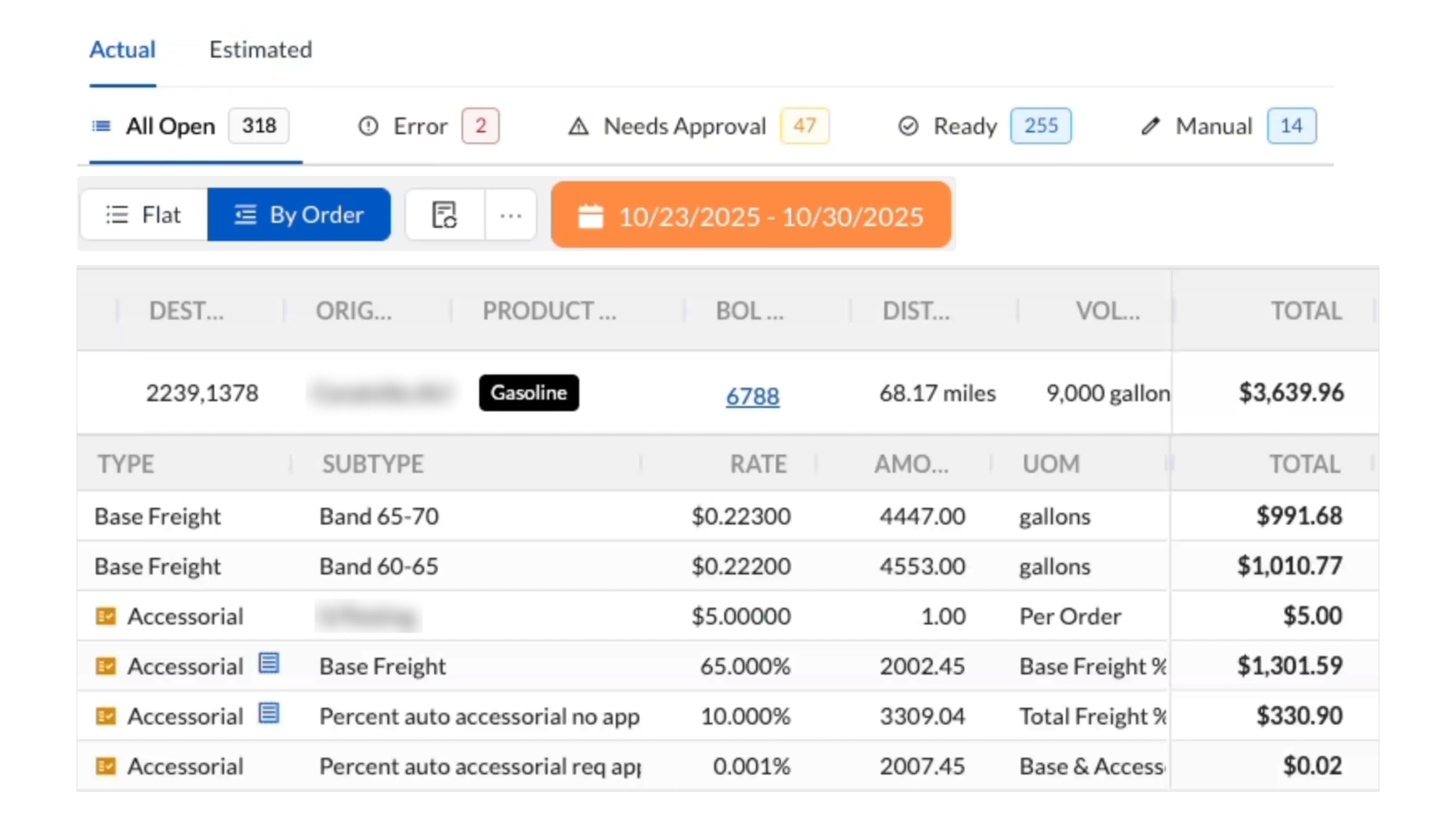
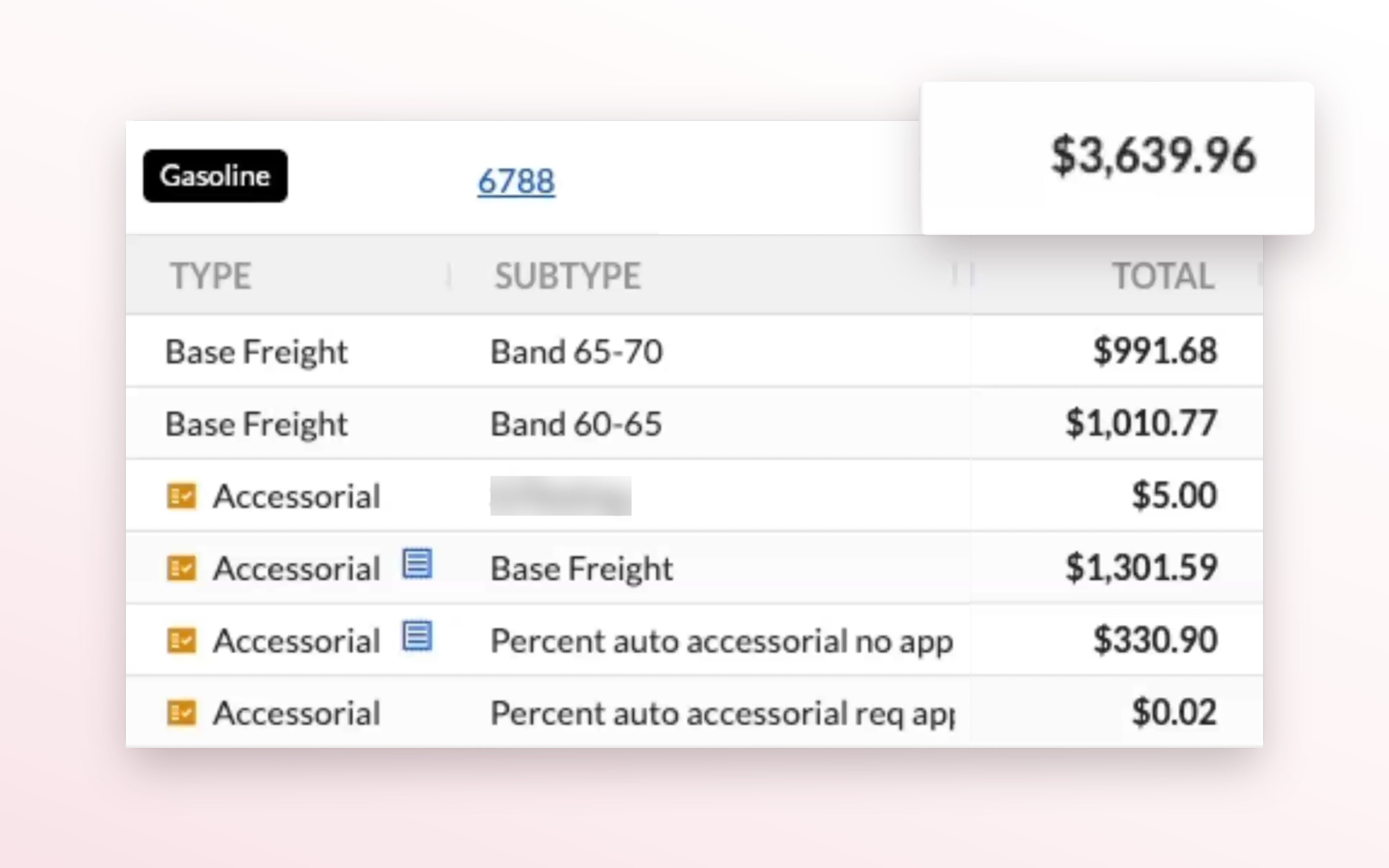
One load could carry half a dozen charges, each from a different rule, and a percentage could apply to fees as well as freight. None of it was written down in one place, so billing freight took spreadsheets, email approvals and the few people who knew the contracts.
One load, six charges
9,000 gallons of gasoline over 68 miles, priced by its contract. From the product's demo data.
Each percentage applies to a different base, so the order the rules run in changes the bill.
The market it wanted
Carriers
Carriers earn their living from freight. The client's software could already dispatch their loads, but it could not bill them.
Where the rules lived
- Contracts
- One-off spreadsheets
- Binders
- Email approvals
- A few people's heads
The blueprint
Every freight rule went into one blueprint before a screen was built.
In workshops with the client’s product and backend leads, I wrote every rule into a 40-page object blueprint and four flows: how rates are set up, how an order splits into freight segments, how each charge is built, and how an invoice lives. Product and engineering agreed on it before the first screen, so the engine and the screens were built against one model.
From the contracts to the invoice
The contracts
Every customer’s own rules
Freight scenarios150+
Rates, fees, surcharges and tax
Rules in spreadsheets and heads
Written down nowhere in one place
The blueprint
40 pages, four flows
One object model
Agreed before the first screen
- Rate setup
- Order segmentation
- Transaction engine
- Invoice lifecycle
One charge, built
The transaction engine
Freight segments
An order split by state, customer and product
The rate
Point to point, or the mileage band
No rate found
An error, named, never priced by hand
The charges
Accessorials, surcharges, then tax
The invoice
Its life after the charge
Attached to its invoice
Validated, its status set
Held
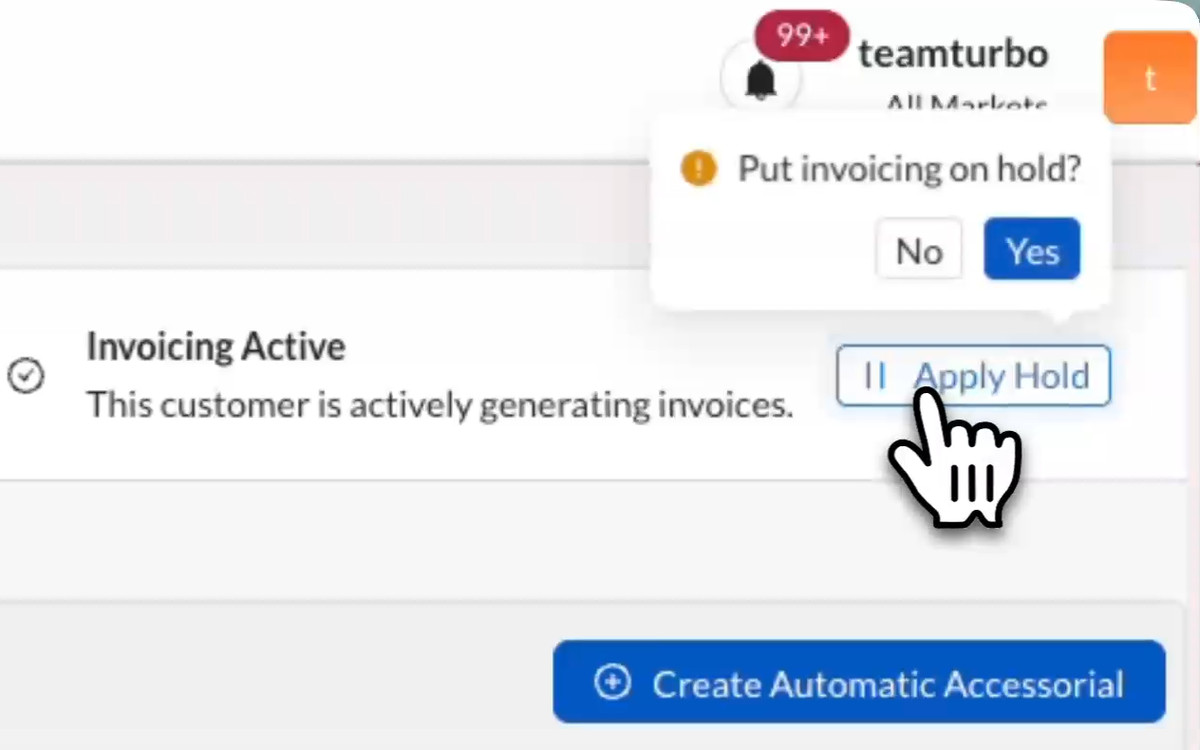
A customer on hold collects its charges
Credit and rebill
A change after sending
- Freight scenarios to One object model: written down
- Rules in spreadsheets and heads to One object model
- One object model to Freight segments
- Freight segments to The rate
- The rate to The charges
- The rate to No rate found
- The charges to Attached to its invoice
- No rate found to Attached to its invoice: flagged
- The charges to Held
- Attached to its invoice to Credit and rebill: once sent
Ratebooks
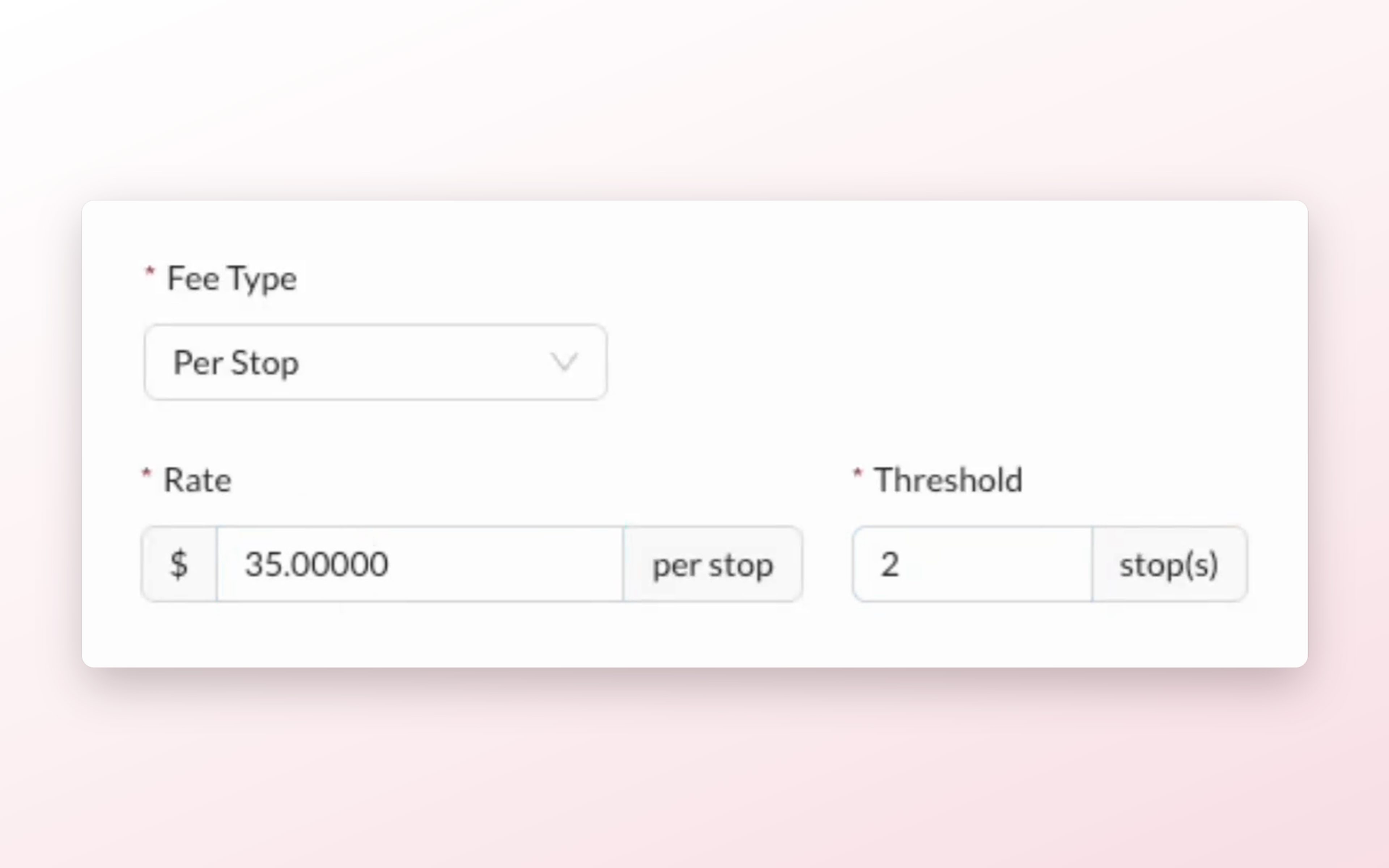
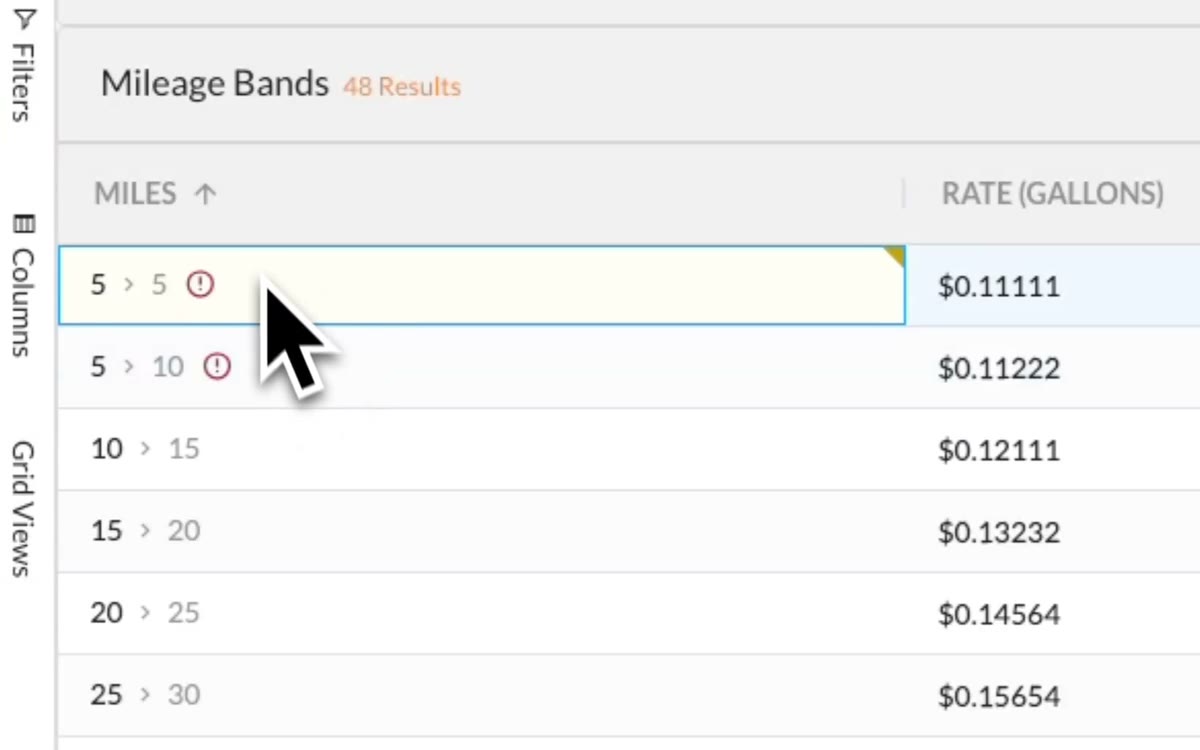
Each customer’s rates, fees and surcharges now live in one ratebook.
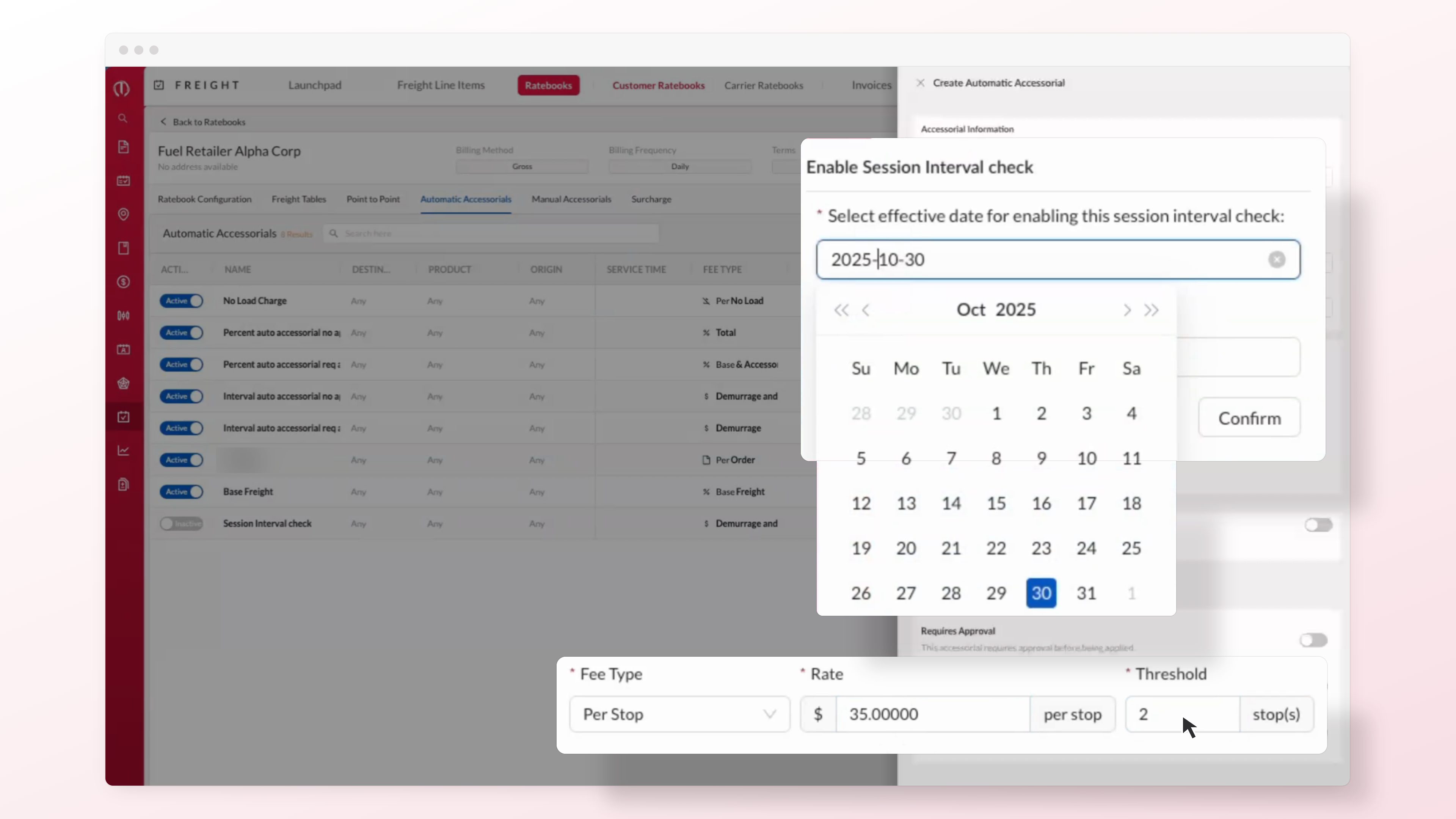
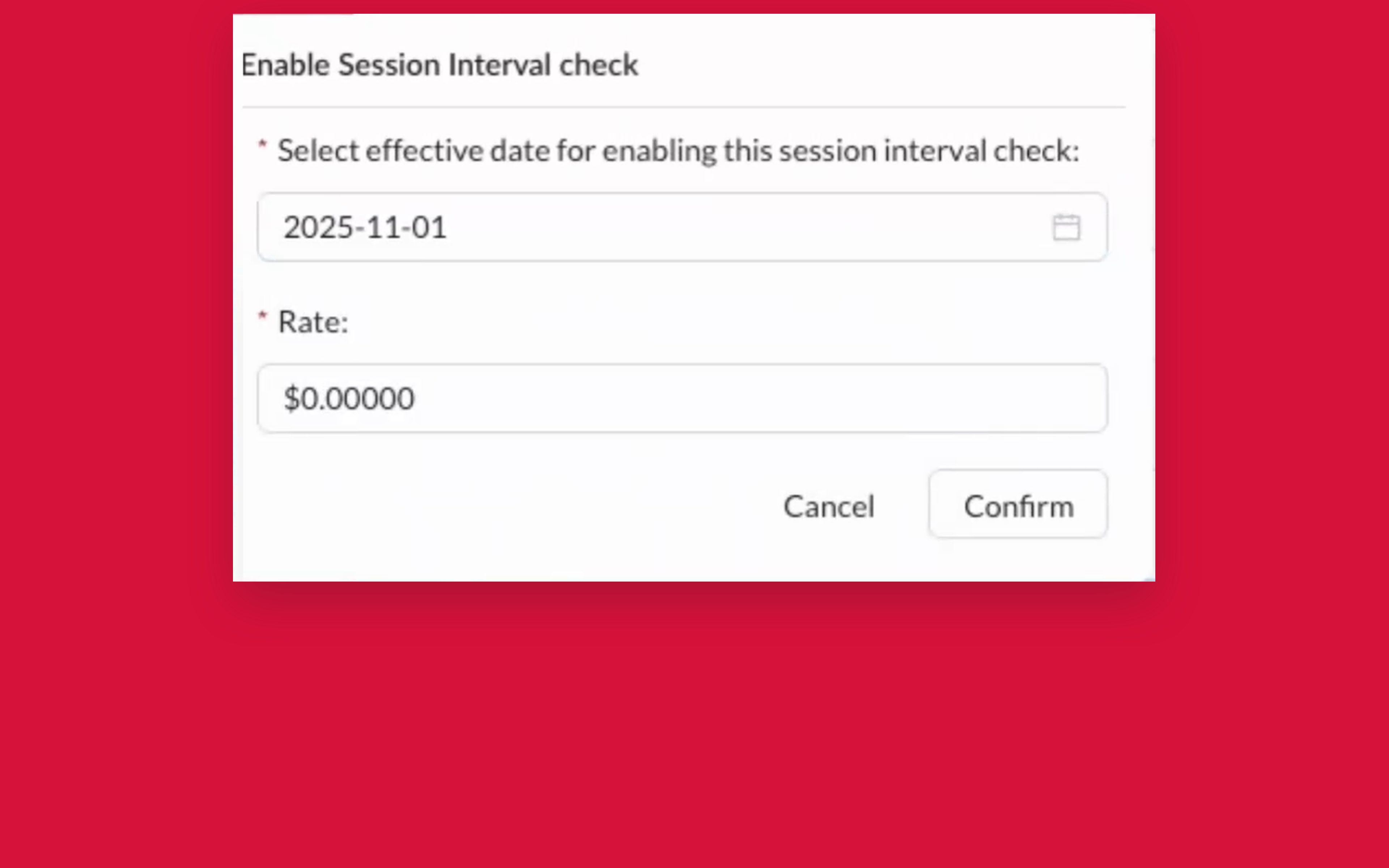
Base rates sat in one-off spreadsheets for each customer, and fees relied on binders and judgment. Each customer now has one ratebook: every rate, fee and surcharge in one matrix with live calculation, and every change scheduled with an effective date.
Line items
Anyone can now see how a freight line was priced, and who changed it.
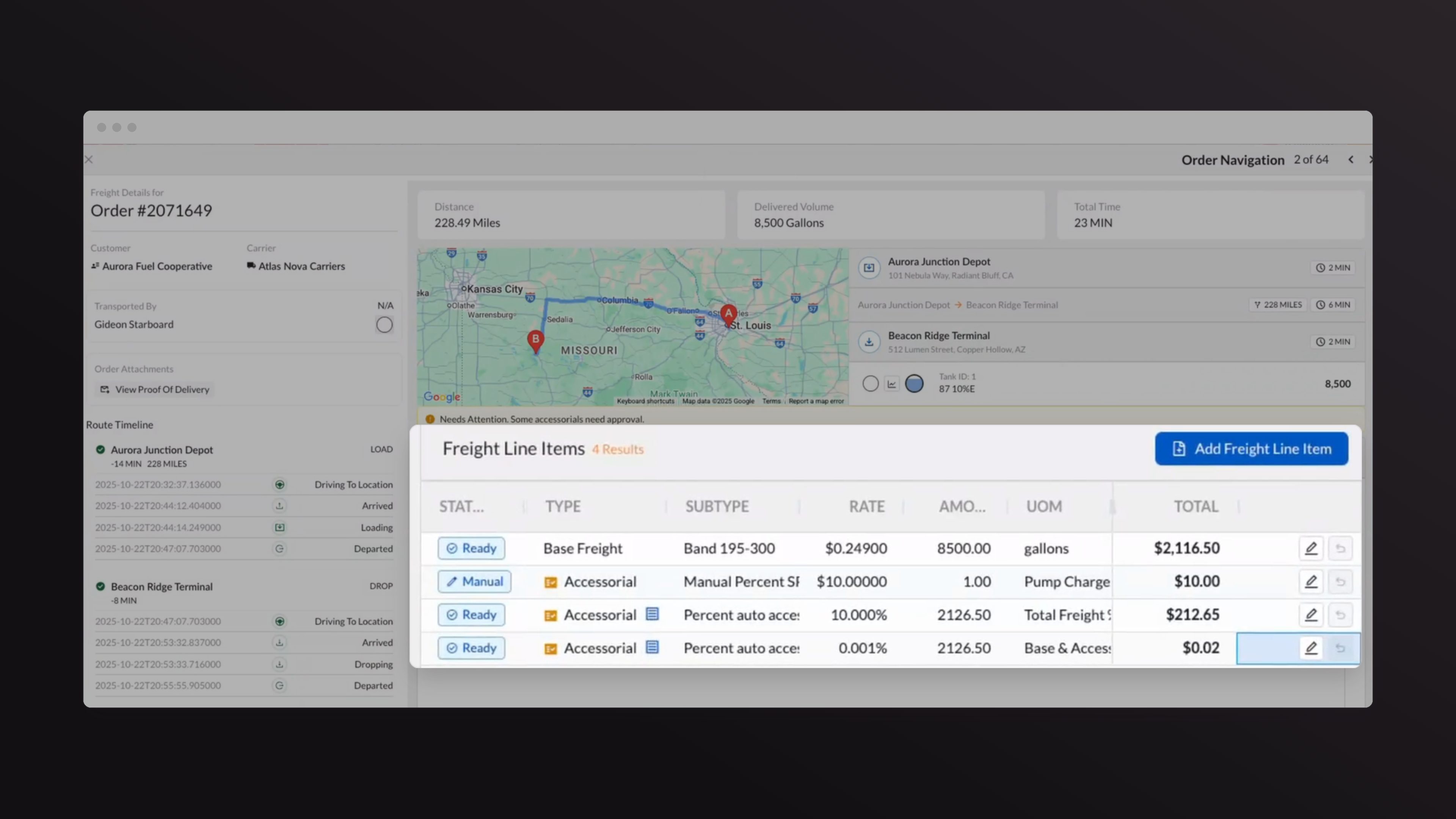
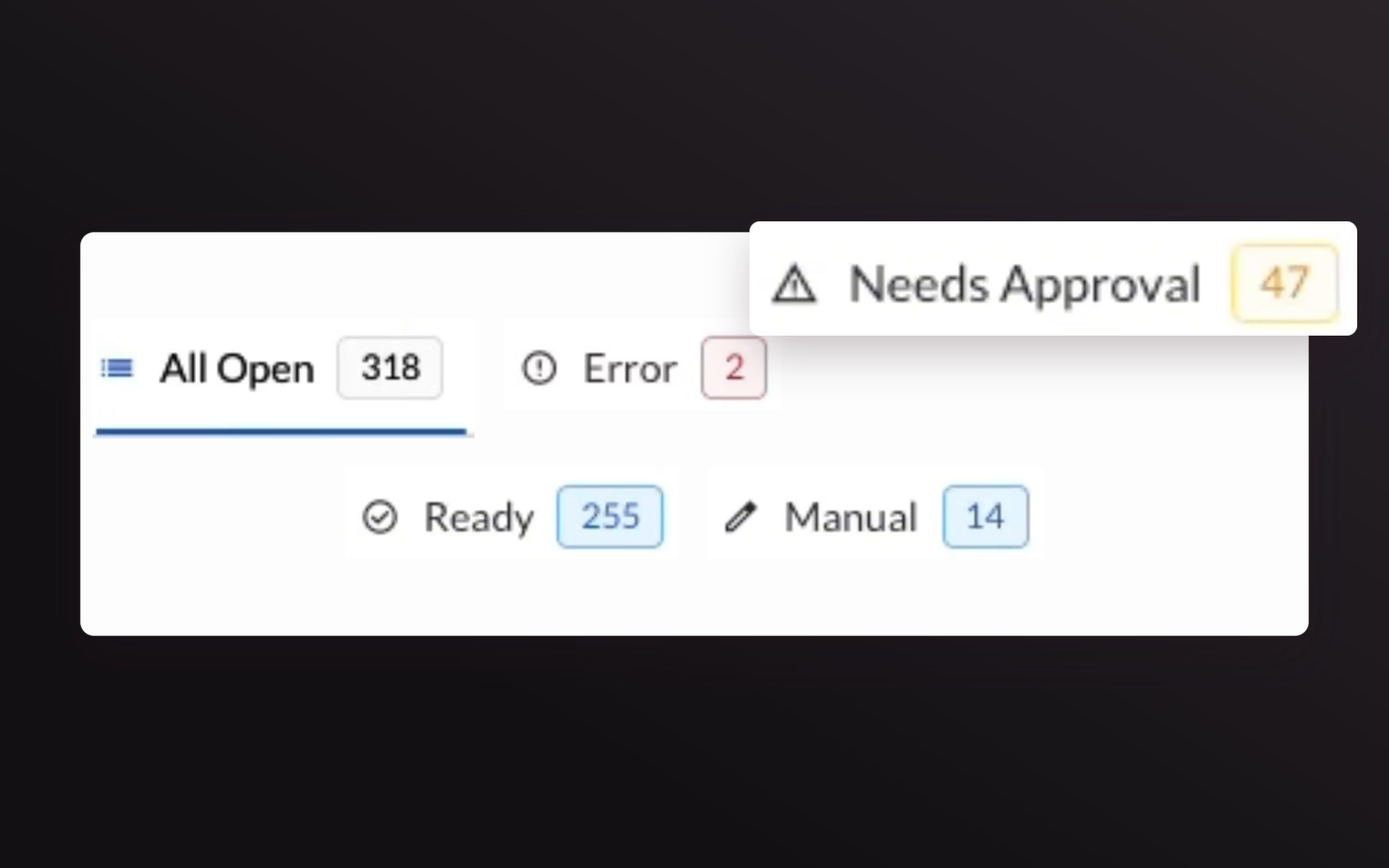
The math behind a freight line lived in hidden spreadsheet formulas, and an override left no trail. Now each line carries its base rate, accessorials, surcharge and any manual change, with who made it and why, grouped flat or by order.
Credit and rebill
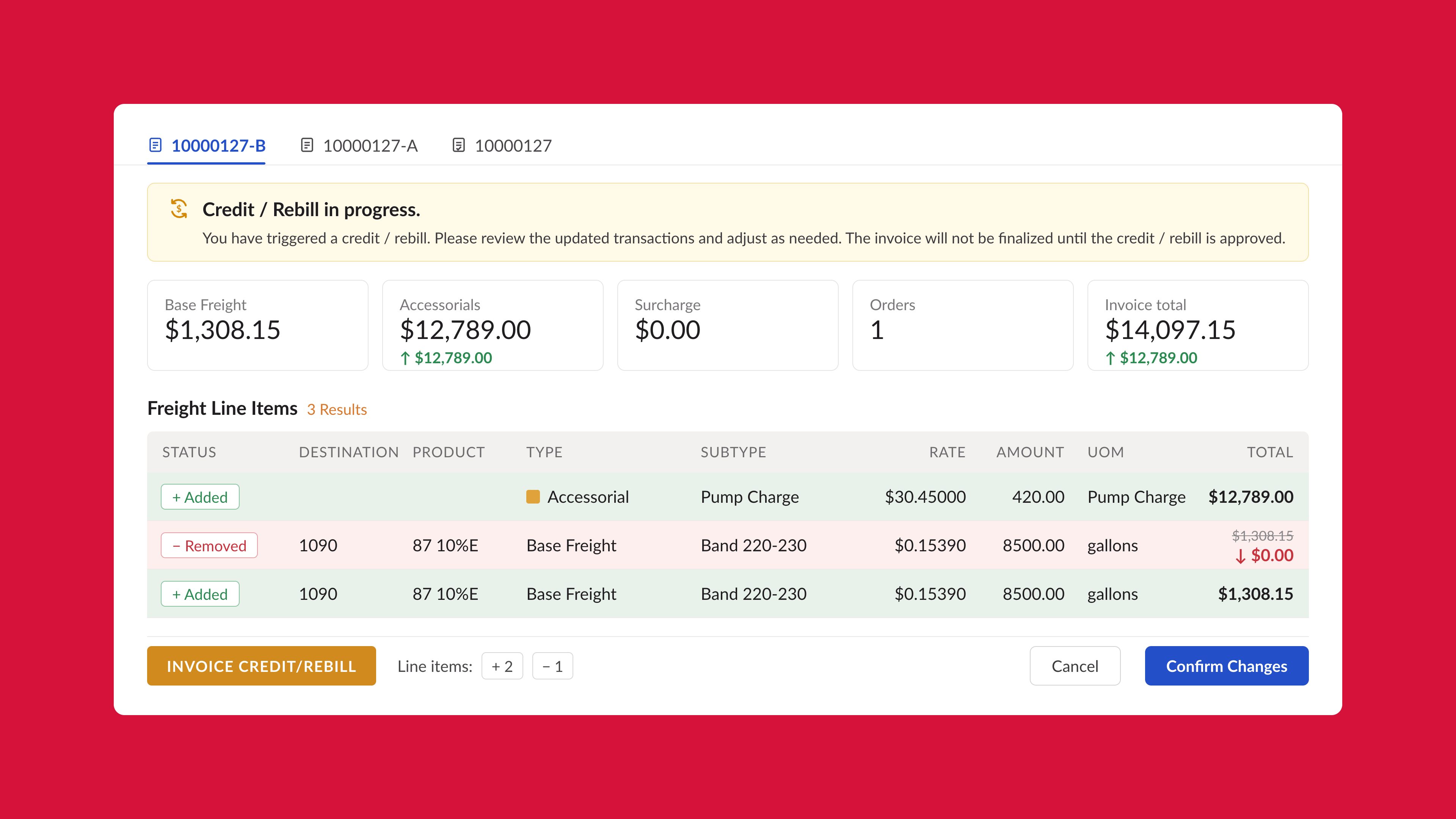
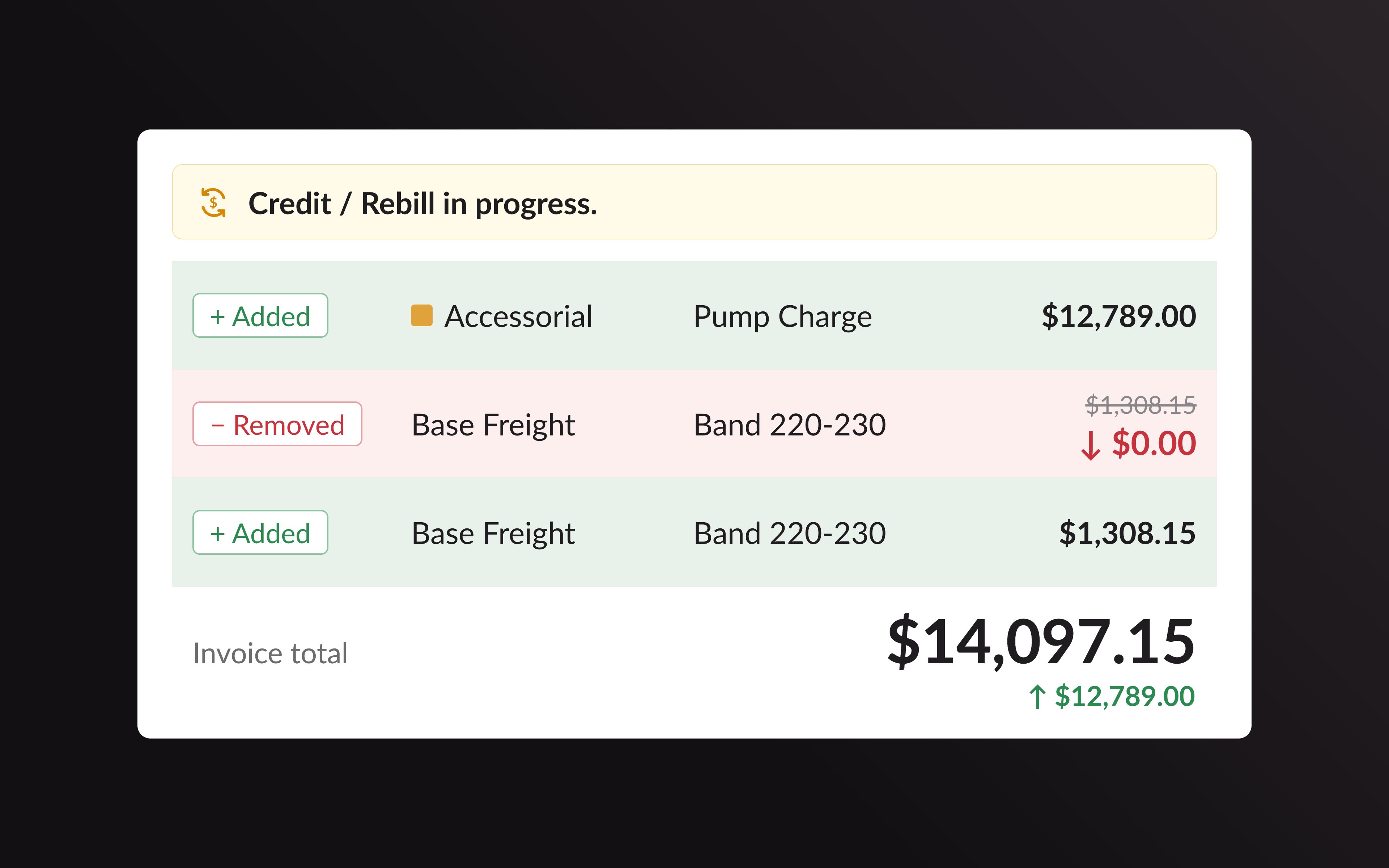
Fixing a sent invoice now leaves a record of exactly what changed.
Correcting a sent invoice meant voiding the PDF and rebuilding its history by hand, and nobody could say what had changed. It was the hardest mechanic, so we ran it first in Airtable as a stand-in backend, and that prototype became the tickets the team built from.
The launchpad
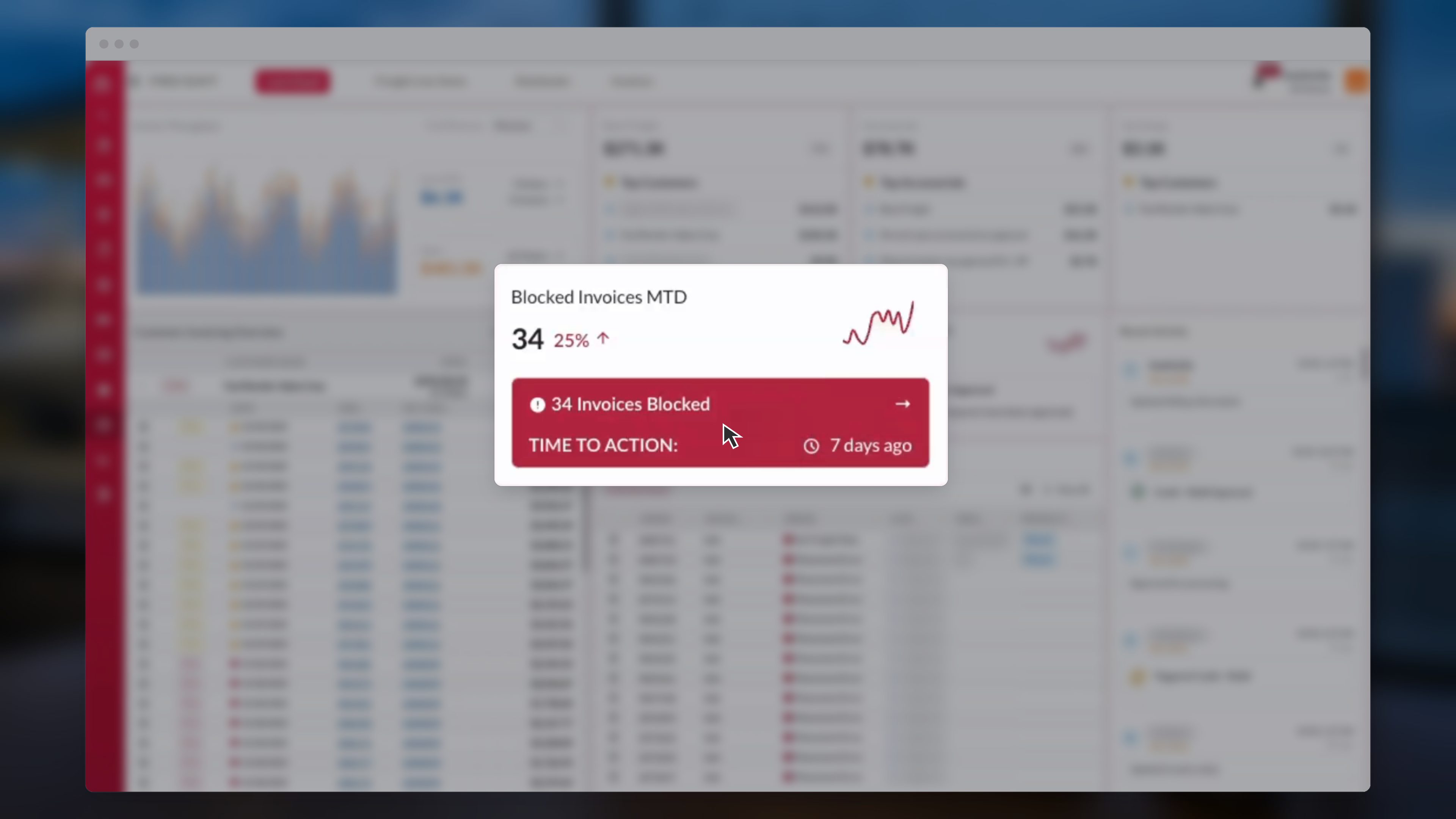
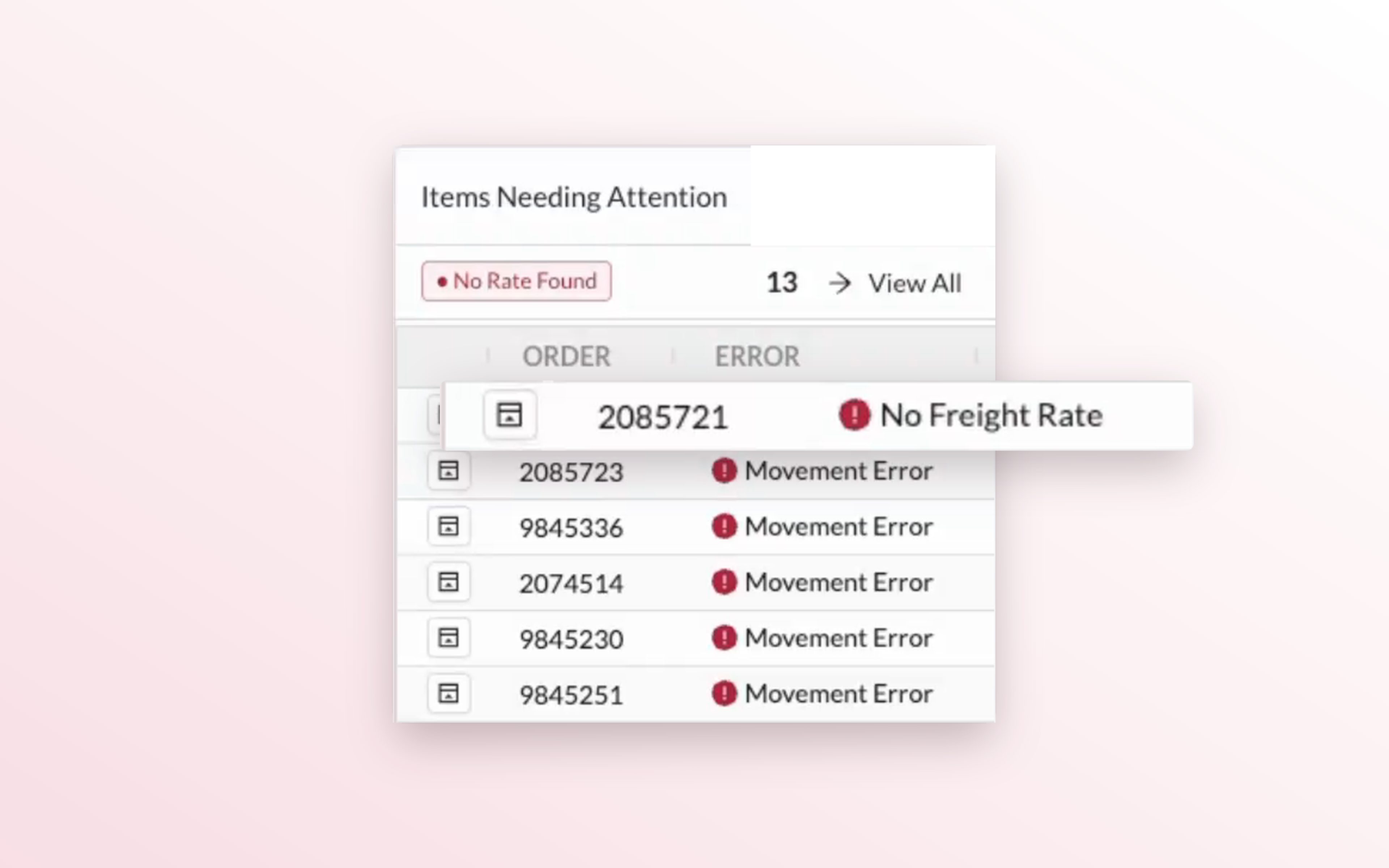
Finance can now catch billing problems before close.
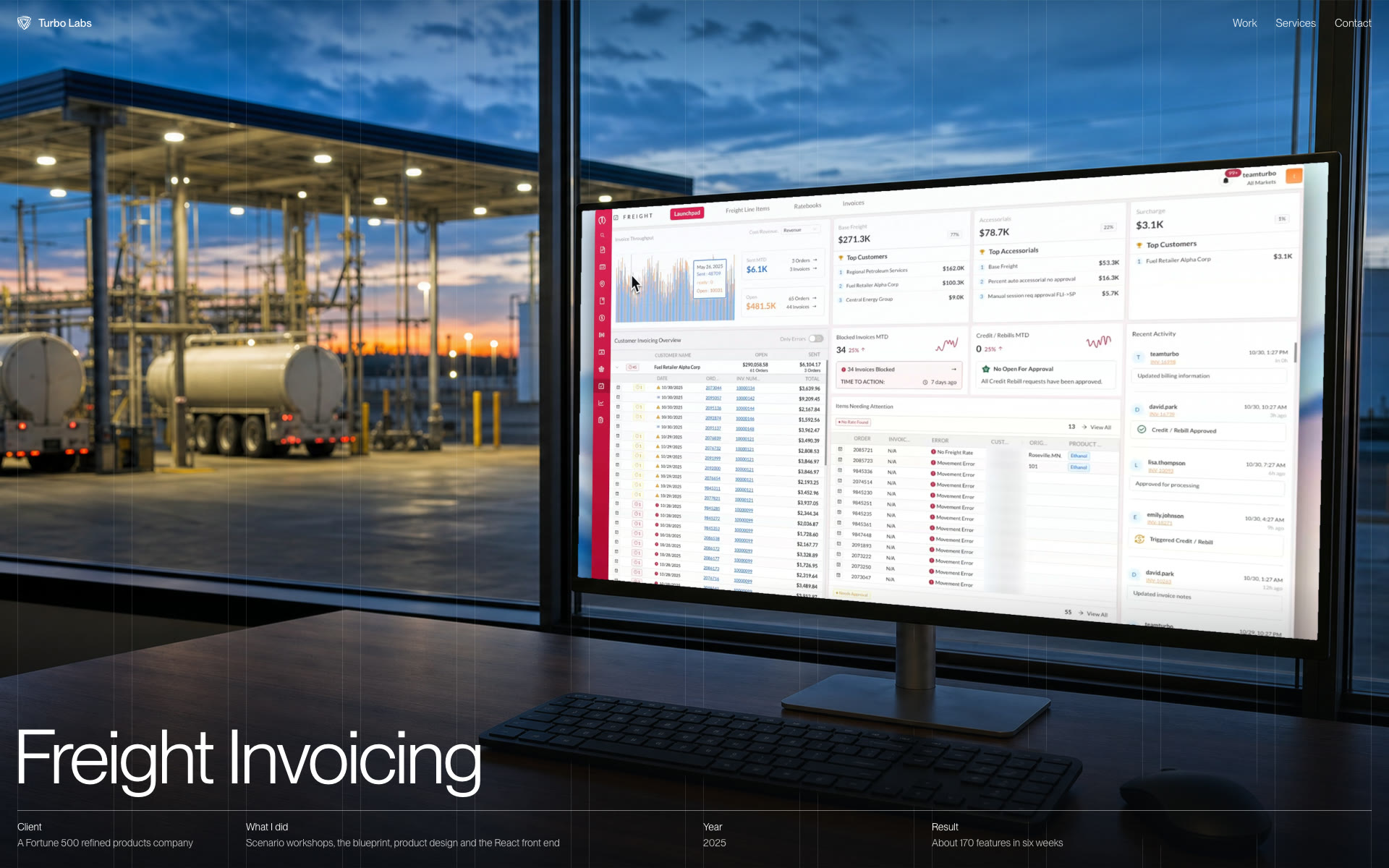
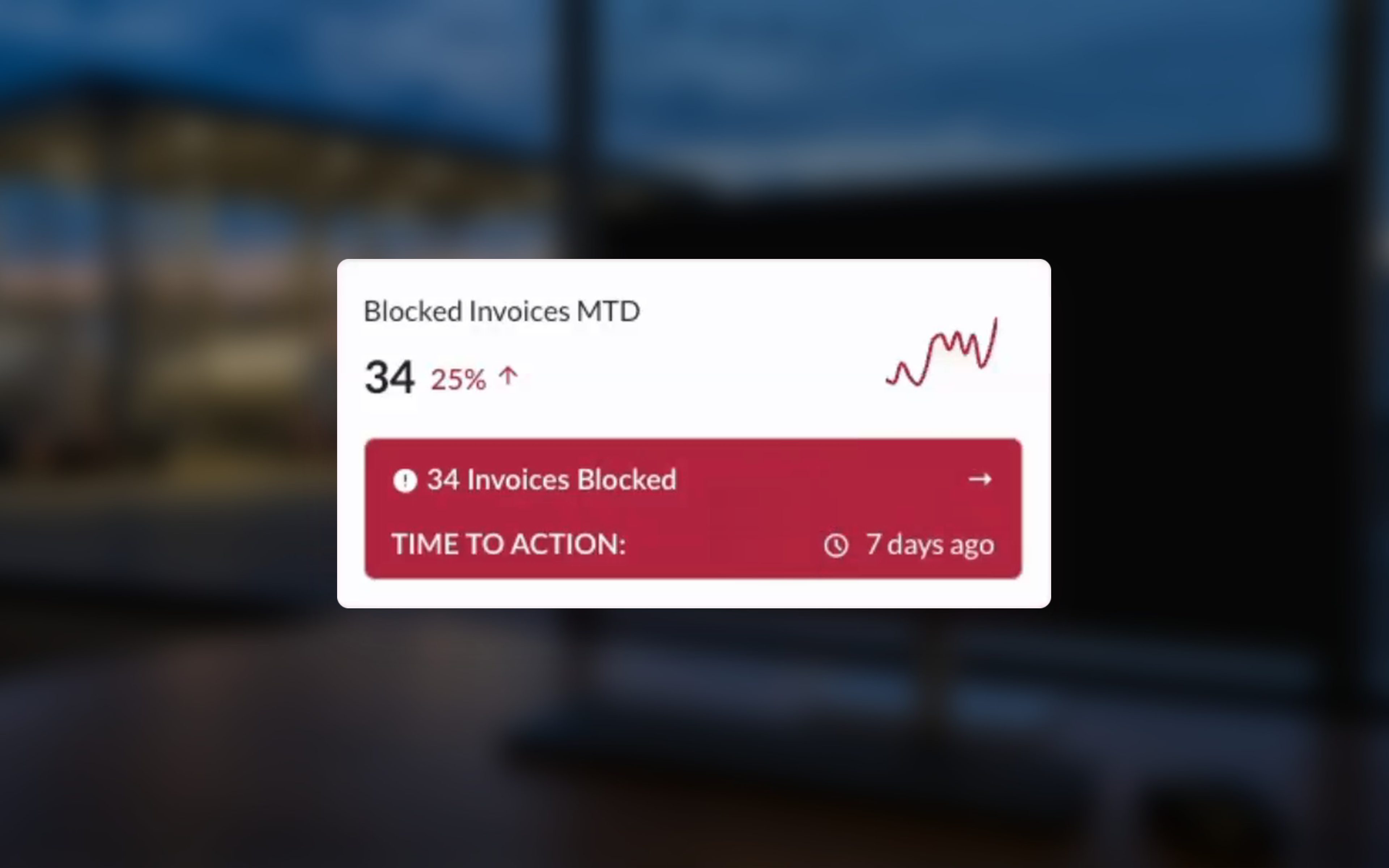
Exceptions used to surface days later, during reconciliation. The launchpad puts throughput, freight, accessorial and surcharge totals, blocked invoices and items needing attention in one place, and each opens the order or invoice behind it, down to the route and its line items.
The result
The client’s own software now bills freight, every charge traced to its contract.
In six weeks the client had a shippable module of about 170 features. The rules came first, so the engine and the screens were built against one model product and engineering had agreed, and every charge on a bill traces back to the contract that set it.
The result, in short
Every charge on a freight bill
Traced
from Spreadsheets, binders and email approvals
To the contract that set it, in the client’s own software
Freight scenarios supported
150+
Each one written into the blueprint before the build
Features shipped
About 170
Ratebooks, line items, credit and rebill, the launchpad
A sent invoice corrected
One diff
from A voided PDF, history rebuilt by hand
A credit and a rebill, every changed line marked
First workshop to shippable module
6 weeks
Four from Turbo, with the client’s backend team