Fuel deal agents
Agents for a fuel trading software consultancy, 2025
- What we did
- Two agents and their MCP serversA deal agent, a documentation agent and the chat in front of them
- When
- June to October 2025Proposal 25 June; both agents shown to the client 21 October
- The MCP layer
- 3 servers, 12 toolsOver stdio, from 11 August 2025, when MCP was nine months old
- Built with
- TypeScript, Python and MCPClaude and Ollama models, ChromaDB, bge-m3, Slack Bolt
A consultancy wanted its clients’ traders to enter a fuel deal in one sentence.
The client, a consultancy, implements Right Angle, the system its own clients trade and account for fuel in. There a deal is a set of coded records, every value matched to one the system already holds, and traders key them in by hand. The consultancy asked for two agents in one chat: one to turn a trader’s sentence into a Right Angle deal, and one to answer how the system is used, from its documents.
Read the full case
- The task
- A proof of concept for two independent agents in one chat: one that makes Right Angle deals from plain language, one that answers from a knowledge base with its sources.
How it ran
June to October 2025
Four months from the proposal to the demo.
- 25 June 2025The proposalDeals from plain language, with MCP as the layer between the agent and Right Angle.
- 9 July 2025The documentation agentIts pipeline built in a day: the documents, chunking, ChromaDB, a Slack bot and the queries.
- 11 to 25 August 2025The MCP serversThe first server on 11 August, Claude Code connected on 13 August, a bridge for Claude Desktop on 25 August.
- 15 September 2025Both agents in SlackThe two bots share one channel, and the deal bot reads every message as a deal.
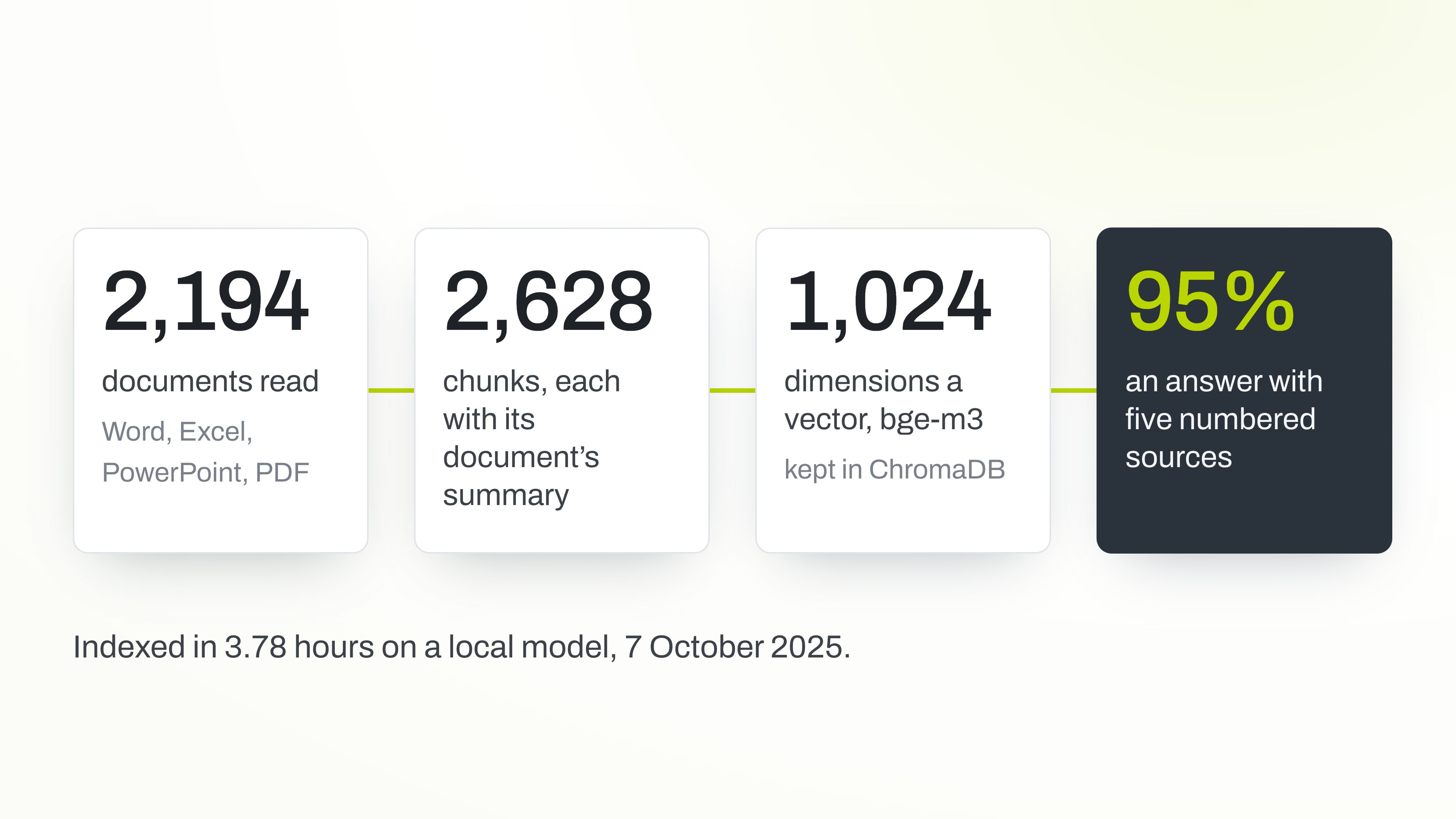
- 7 October 2025The index2,194 documents in 2,628 chunks, on a local model.
- 21 October 2025The demoBoth agents behind one chat, shown to the client.
The blocker
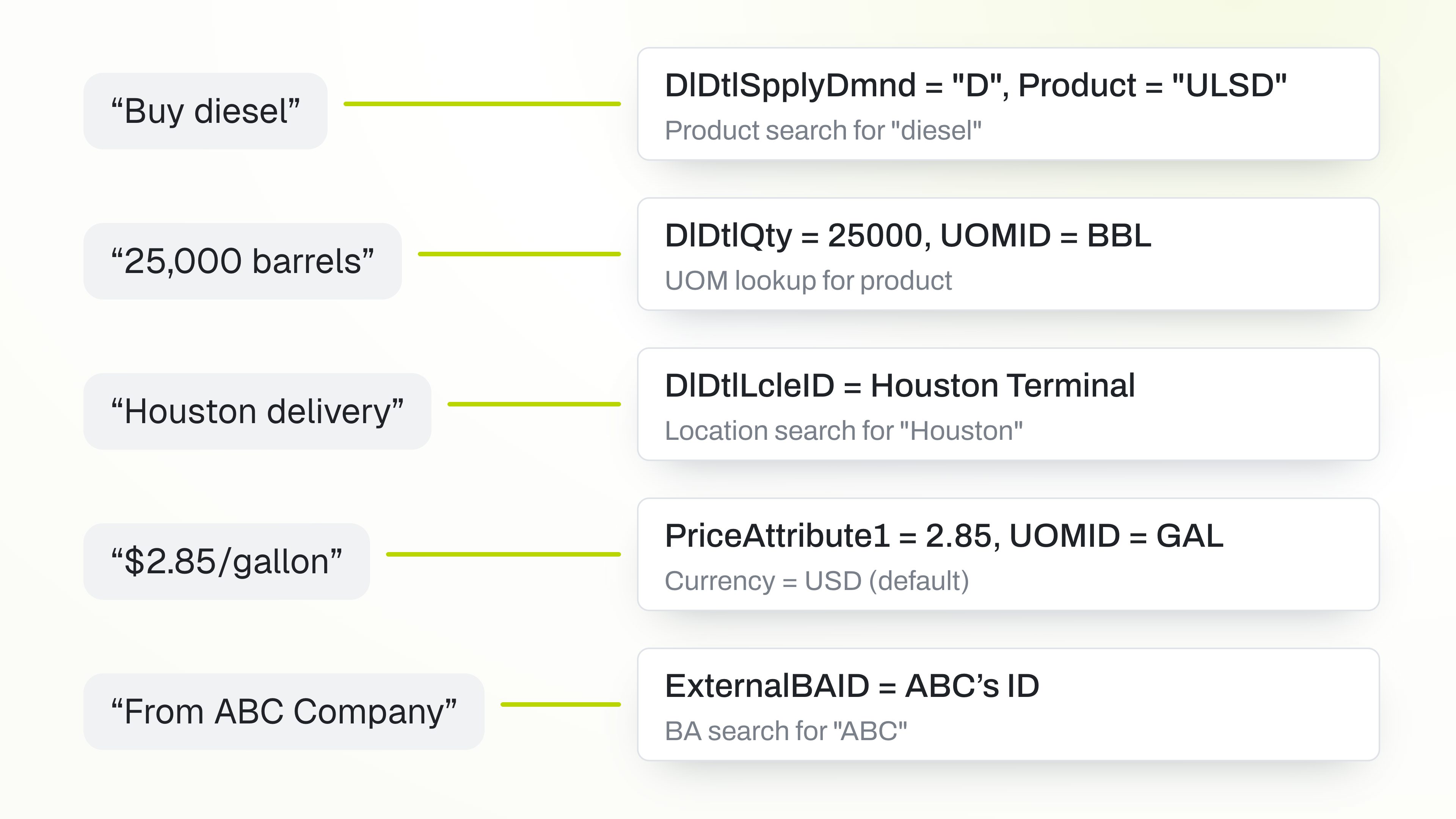
Right Angle takes a deal only as coded records matched to its own data.
“Buy diesel” is a product lookup, “Houston delivery” a location search, “25,000 barrels” a quantity and its unit. A deal is a header, a detail line and a pricing provision, and every value in them must be an id the system already holds. The schema the client shared puts the gap in one table.
The approach
Two agents would share one chat, and MCP would carry deals into Right Angle.
Turbo’s proposal of 25 June 2025 promised deals from plain language in under two minutes. It named MCP, released by Anthropic seven months before, as the layer between the agent and Right Angle: tools a model can call, each over the system’s own API. Beside the deal agent, a documentation agent would answer from an index of the firm’s training documents.
Two agents behind one chat
Where a trader asks
One box, two agents
The web chat
A picker between the two agents
Slack
Where both ran first
The agents
Separate contexts
The deal agent
Matches every name, asks for what is missing
- Customer
- Product
- Route
- Schedule
- Price
The documentation agent
Steps, a confidence and numbered sources
What they call
MCP tools and an index
qde-agent-mcp-server5 tools
Reference data, pricing, deals, the schedule
qde-customer3 tools
Customers, locations, frequencies
mcp-bridge4 tools
For Claude Desktop
ChromaDB index2,628
Chunks, each with its document’s summary
What they read
The system and its documents
Right Angle’s trade entry API
Every value an id it holds
Training documents2,194
Word, Excel, PowerPoint and PDF
- The web chat to The deal agent, 2
- The web chat to The documentation agent, 2
- Slack to The deal agent, 1
- Slack to The documentation agent, 1
- The deal agent to qde-agent-mcp-server: over MCP, 3
- The documentation agent to ChromaDB index: search, 3
- qde-agent-mcp-server to Right Angle’s trade entry API, 3
- qde-customer to Right Angle’s trade entry API: the mock, 1
- mcp-bridge to Right Angle’s trade entry API, 2
- The deal agent to Right Angle’s trade entry API: the deal, by direct HTTP, 2
- Training documents to ChromaDB index: chunked and embedded, 3
The chat
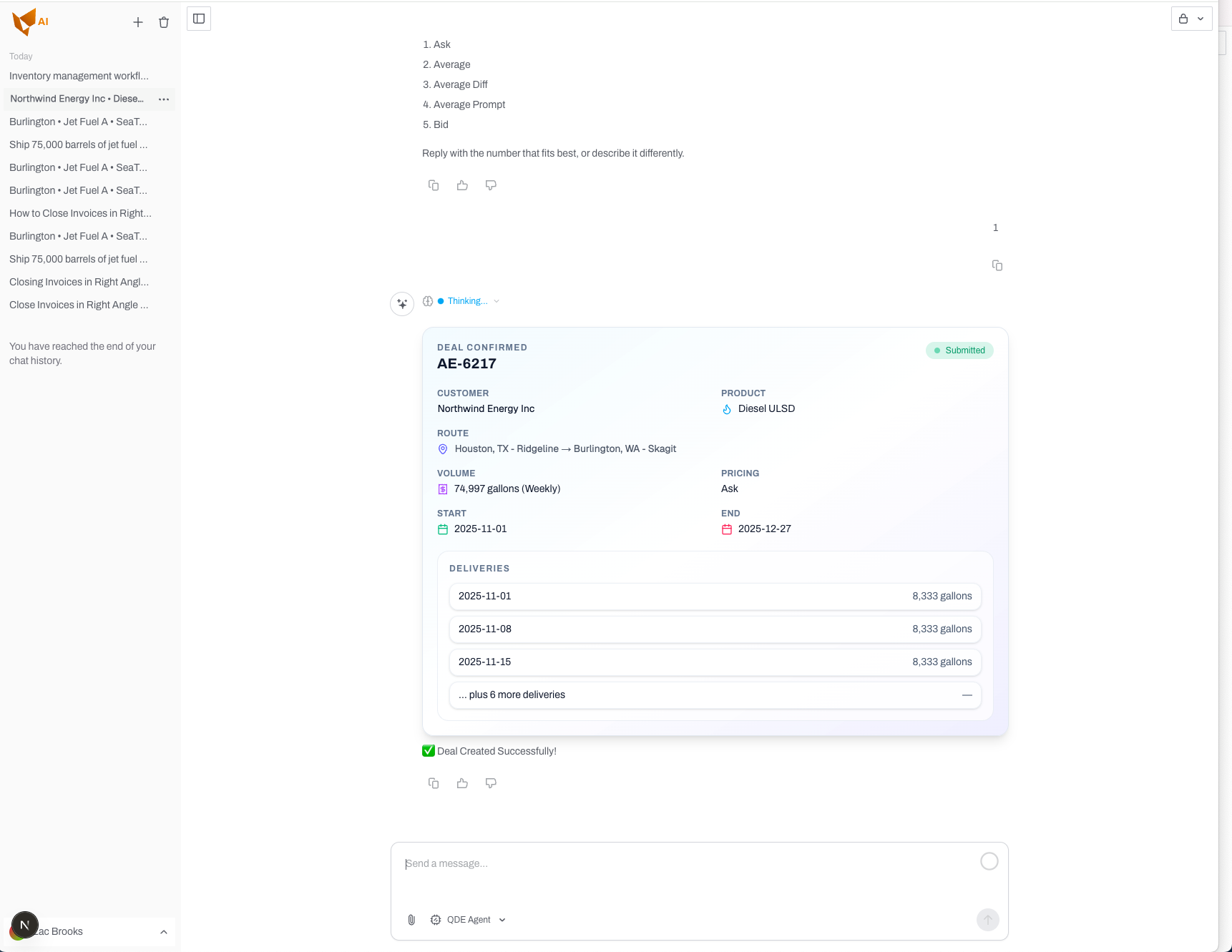
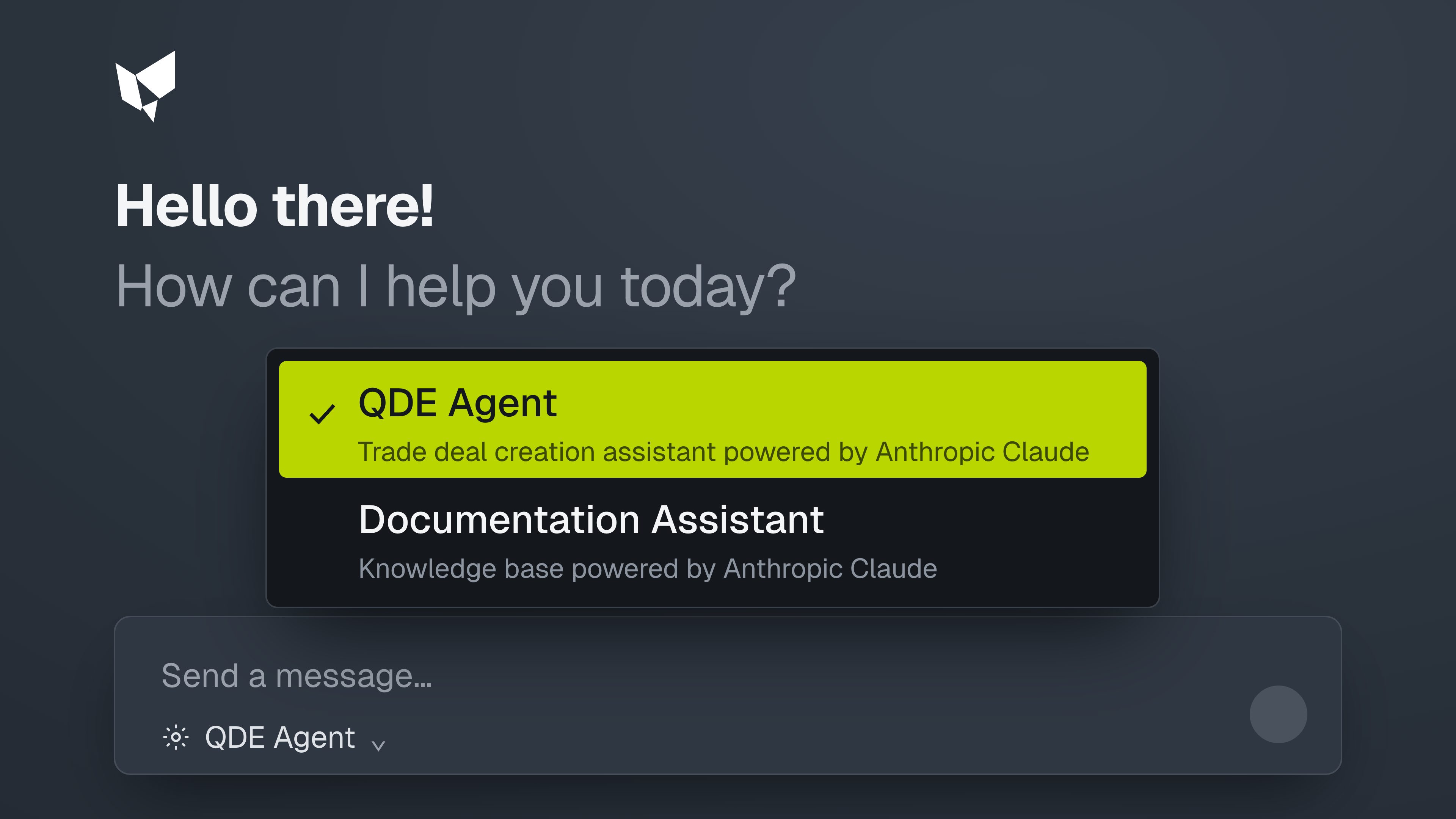
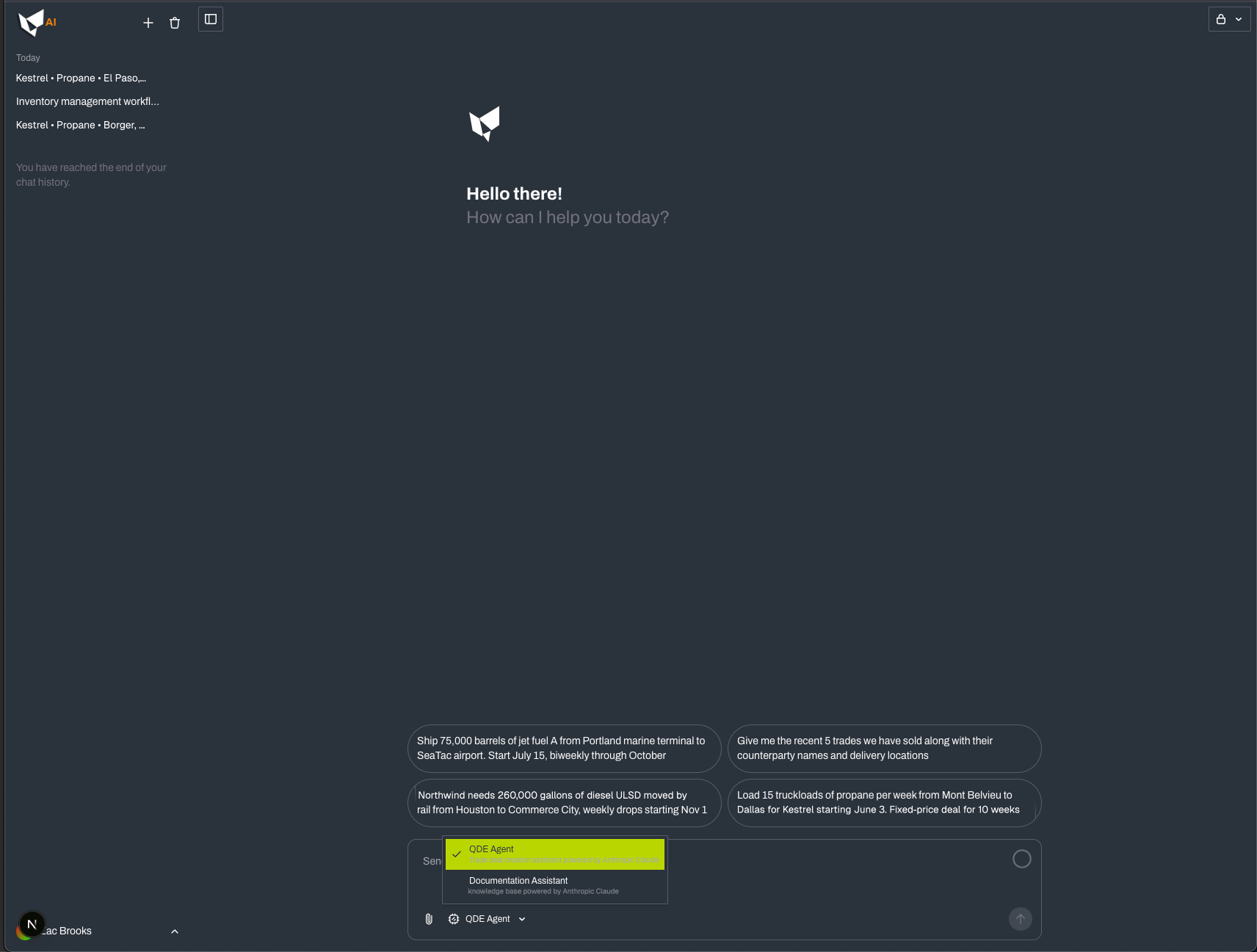
Both agents sat behind one chat, and the trader picked which to ask.
The two first met as bots in one Slack channel, where the deal bot took questions meant for the documentation bot as company names. By 21 October both sat behind one web chat on Vercel’s chat template, with a picker between the QDE Agent and the Documentation Assistant.
The deal agent
The deal agent builds a deal from one sentence, asking only what is missing.
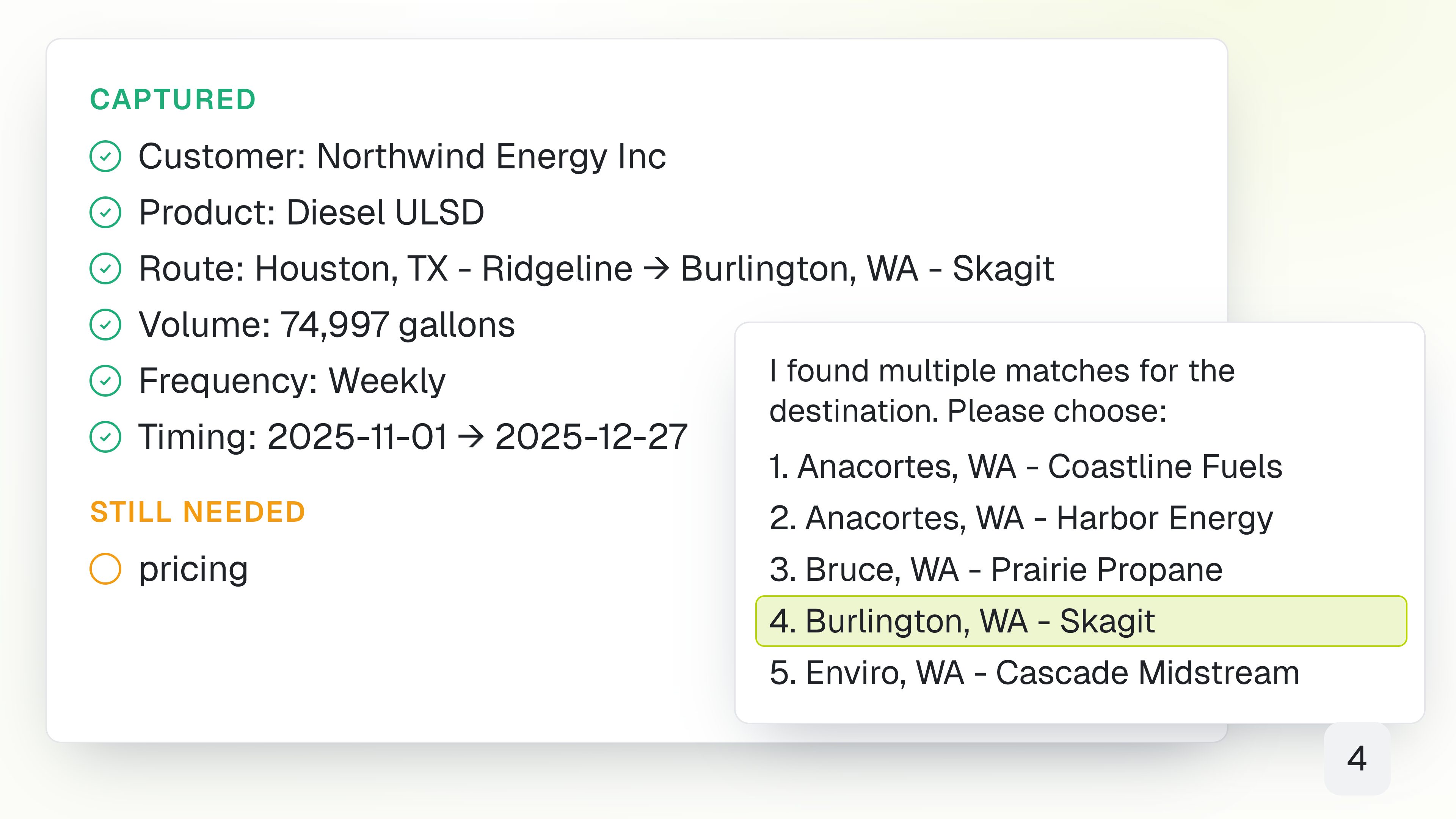
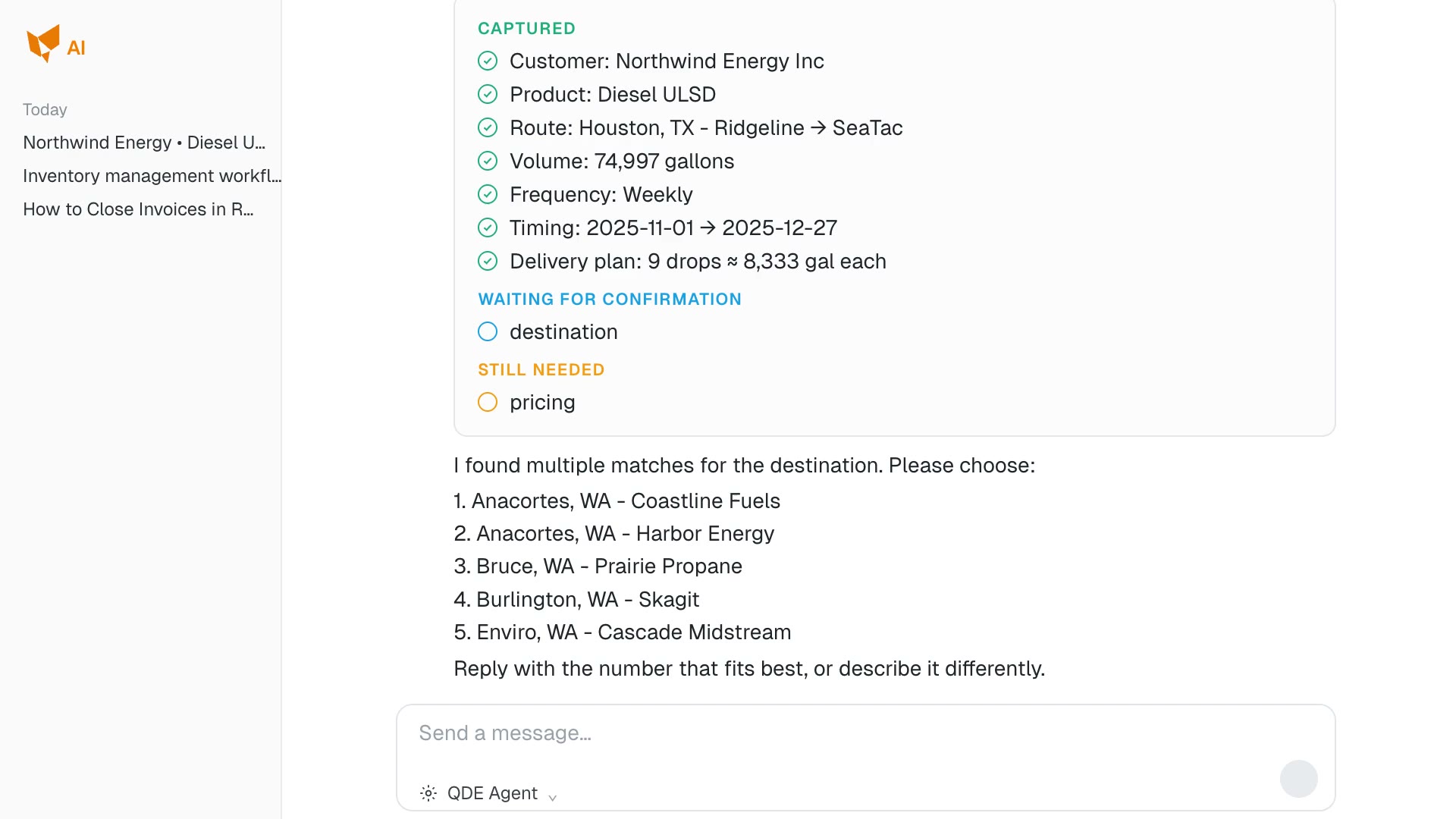
It reads the deal as the trader types it, matches the customer, product and terminals to Right Angle’s records, offers a pick when a name matches more than one, and asks one question at a time for whatever is left. A card shows what it has captured, what waits on a pick and what it still needs.
The run
A deal goes from one sentence to confirmed with two picks by number.
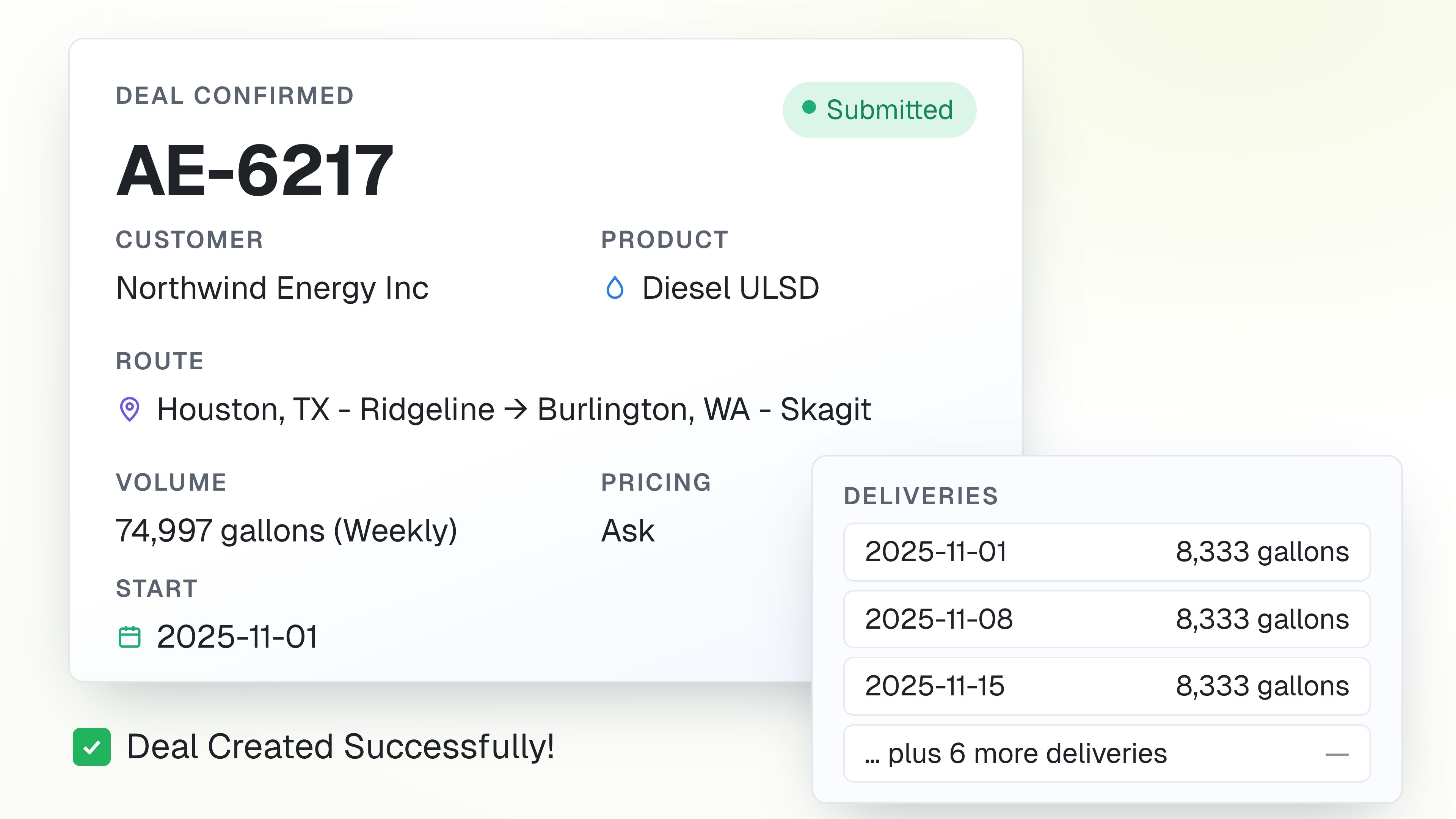
The demo’s own deal, replayed in the chat: the agent splits 75,000 gallons into nine weekly drops of 8,333, 74,997 gallons in all, asks which of five terminals and which price, and confirms it.
The MCP tools
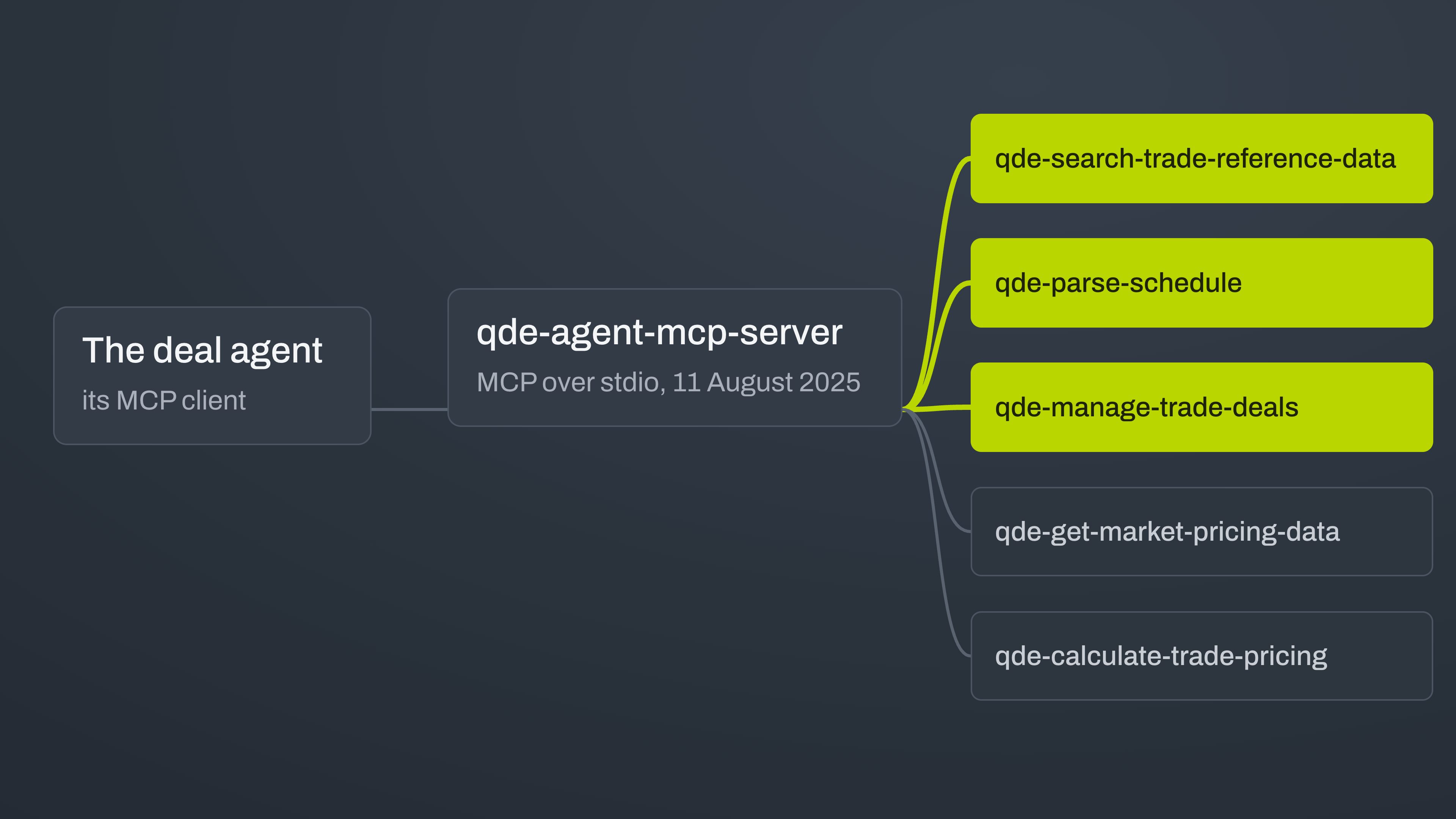
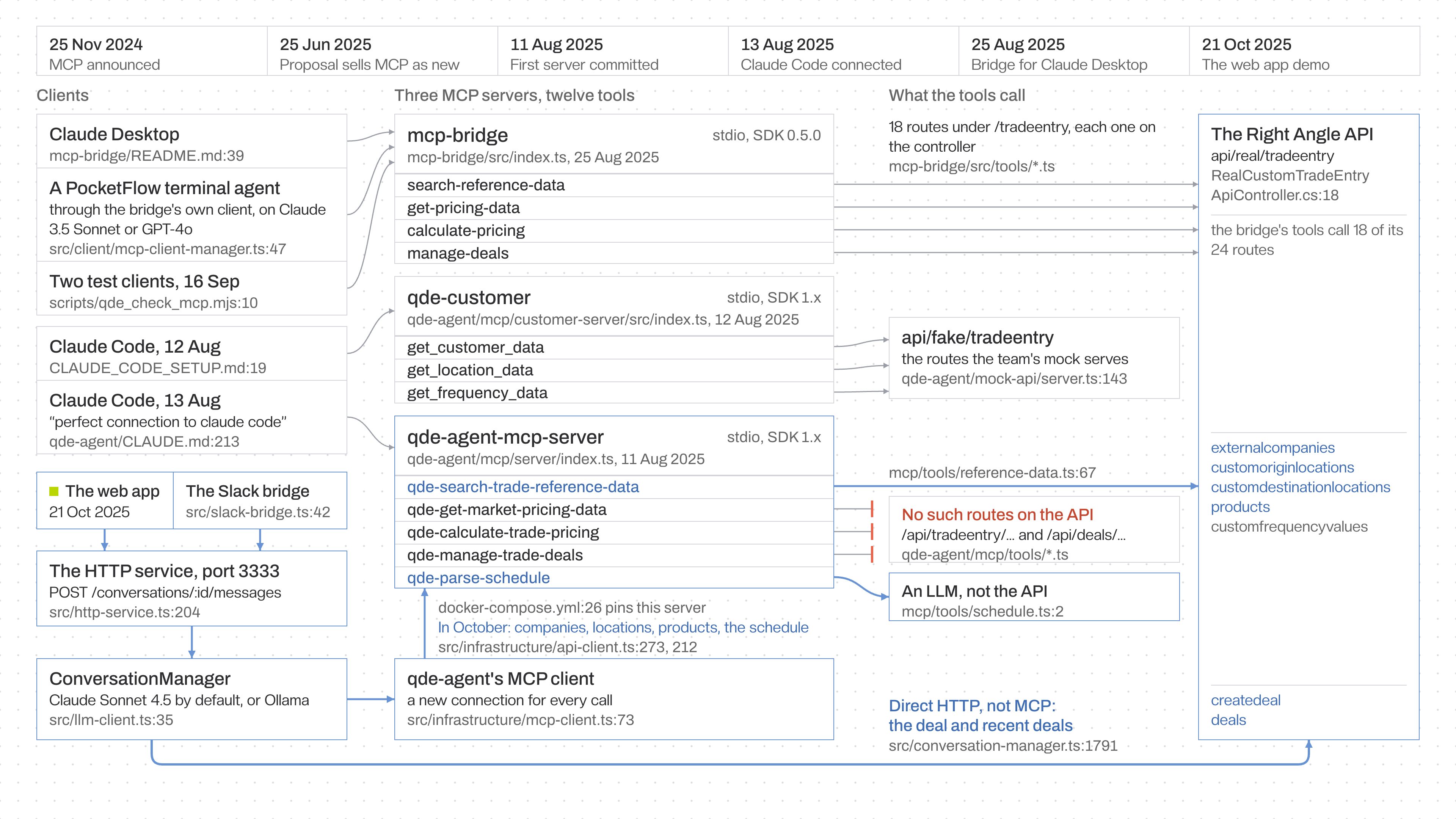
Three MCP servers, written while MCP was new, carried the agent into Right Angle.
The first server went up on 11 August 2025 over Right Angle’s trade entry API, a second on the team’s mock of that API the next day, and by 25 August a bridge carried four tools to Claude Desktop: twelve tools in all. The agent looked up companies, locations, products and the schedule through MCP, and wrote the deal itself by direct HTTP.
Any client
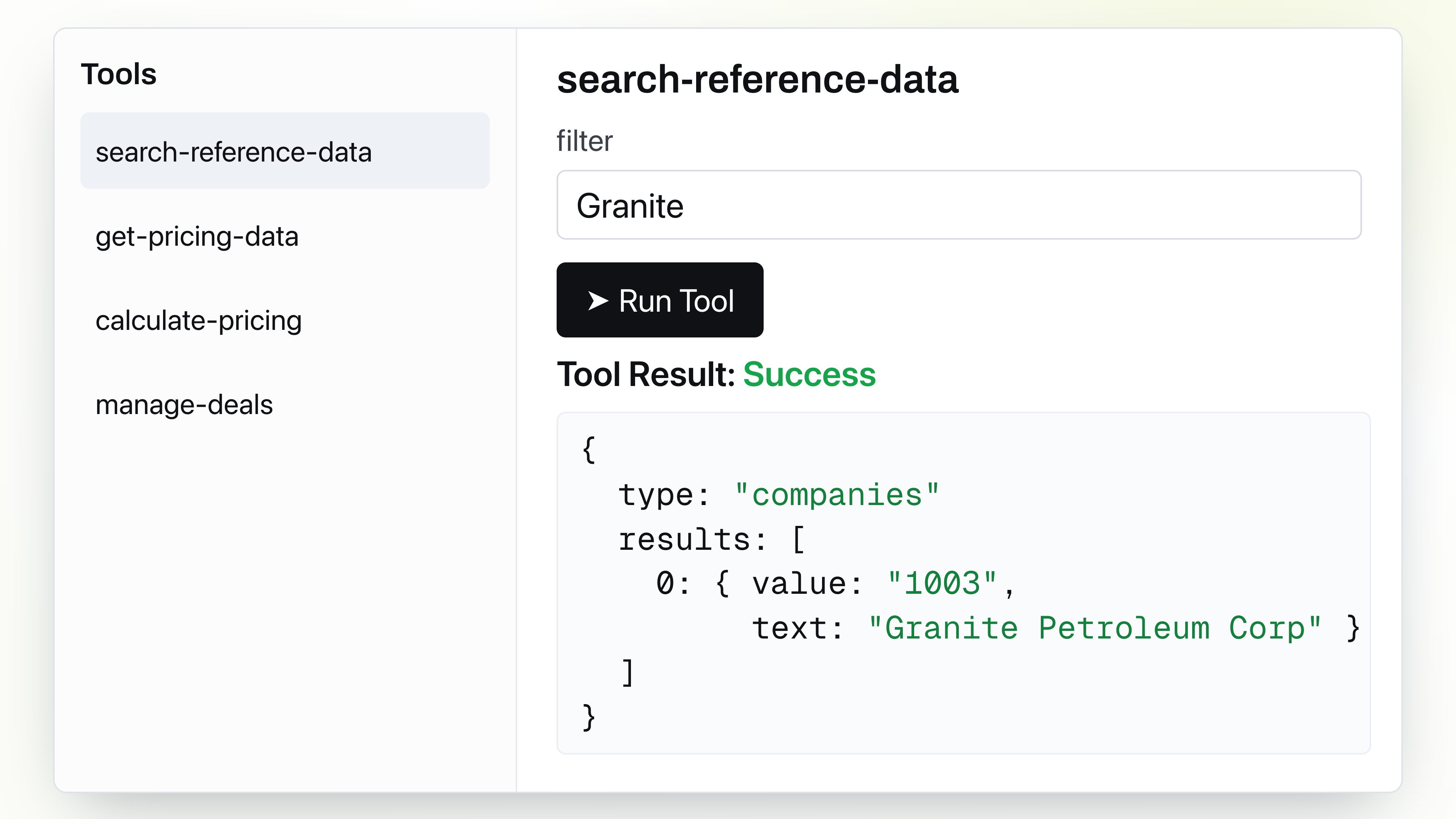
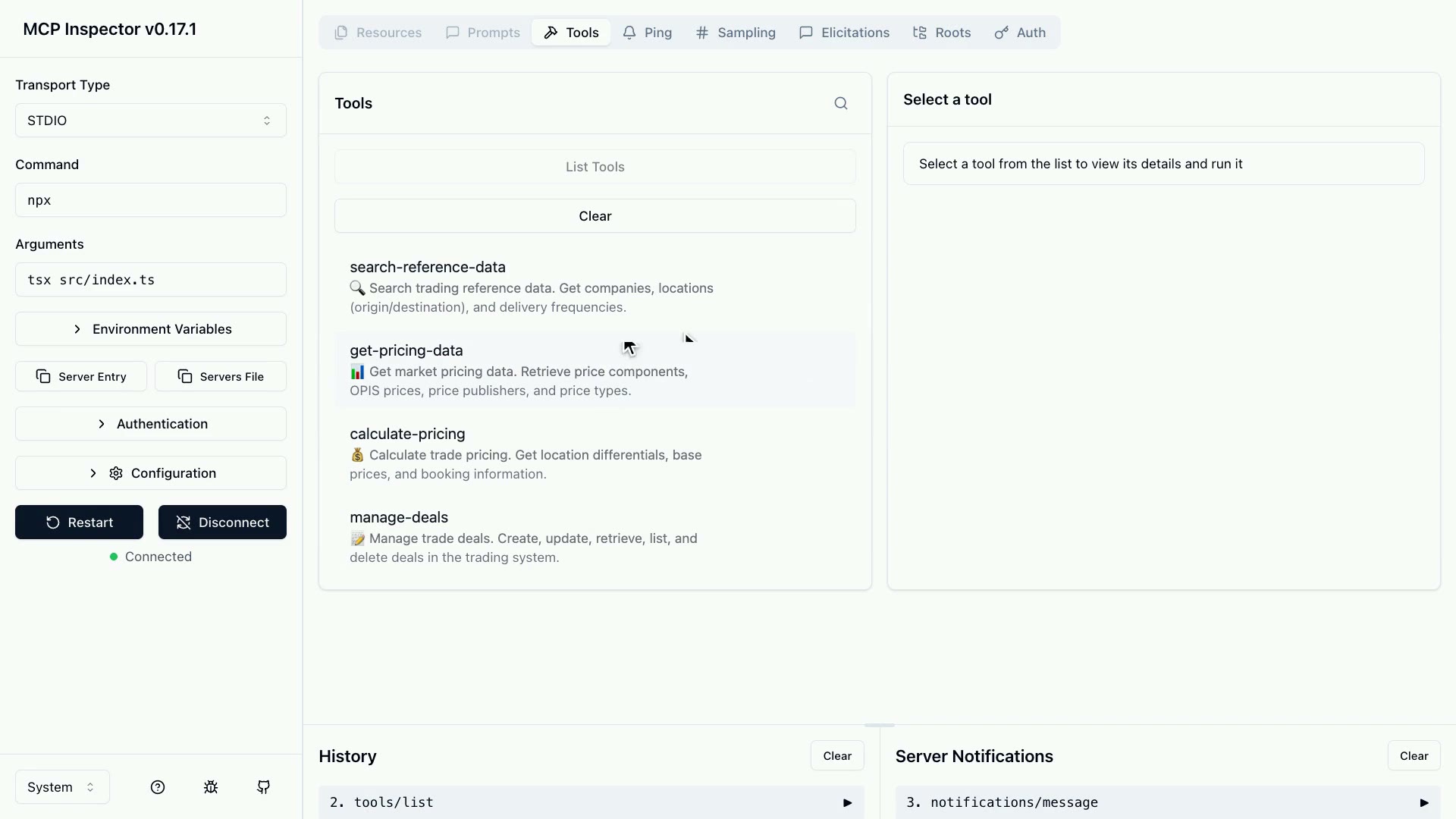
Claude Code, Claude Desktop and the MCP Inspector could all call the same tools.
On 17 August Claude Code ran the first deal interview through them, eight questions answered from the mock’s data. Here the bridge answers the MCP Inspector, run on the team’s own mock API.
The documentation agent
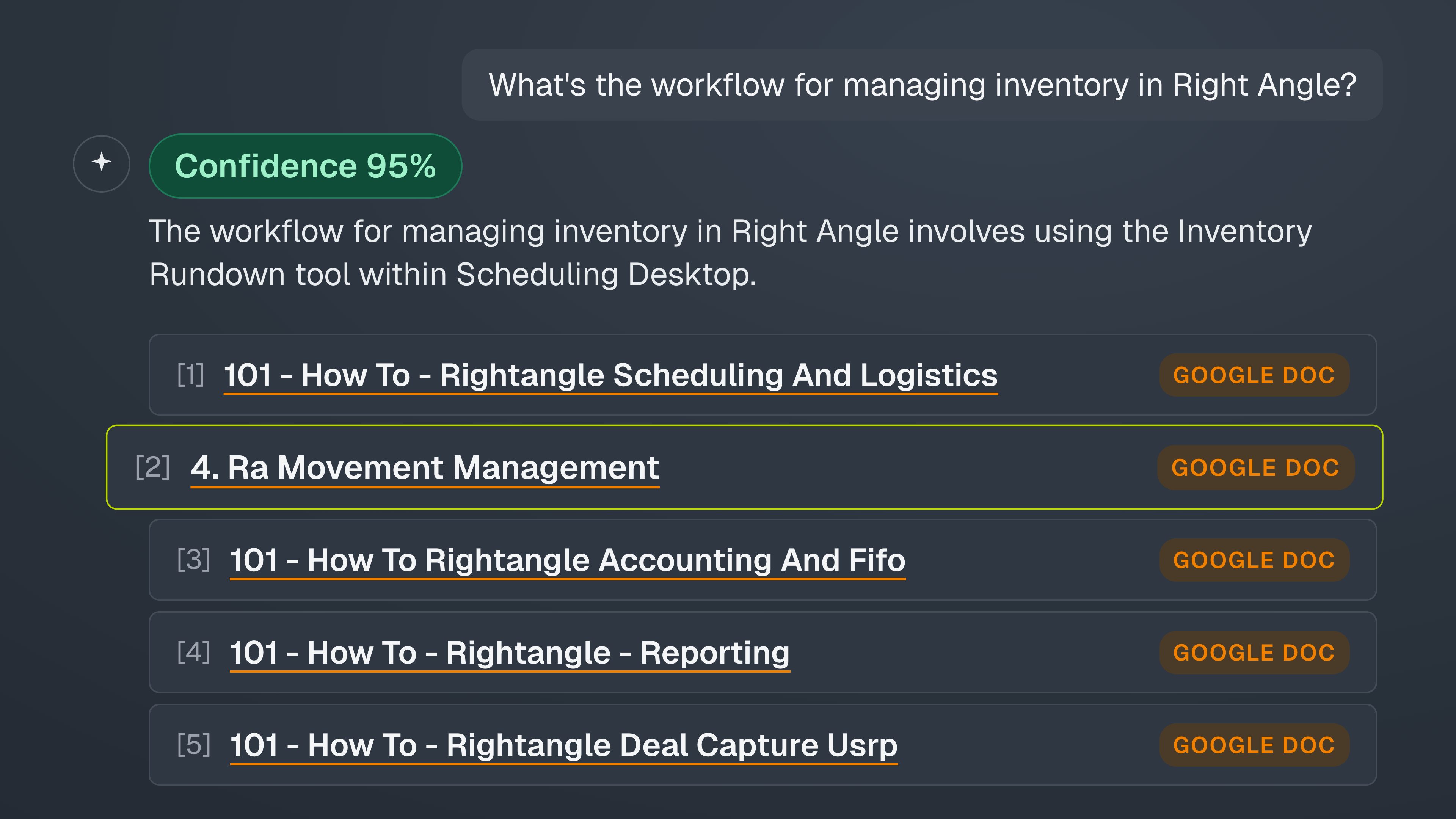
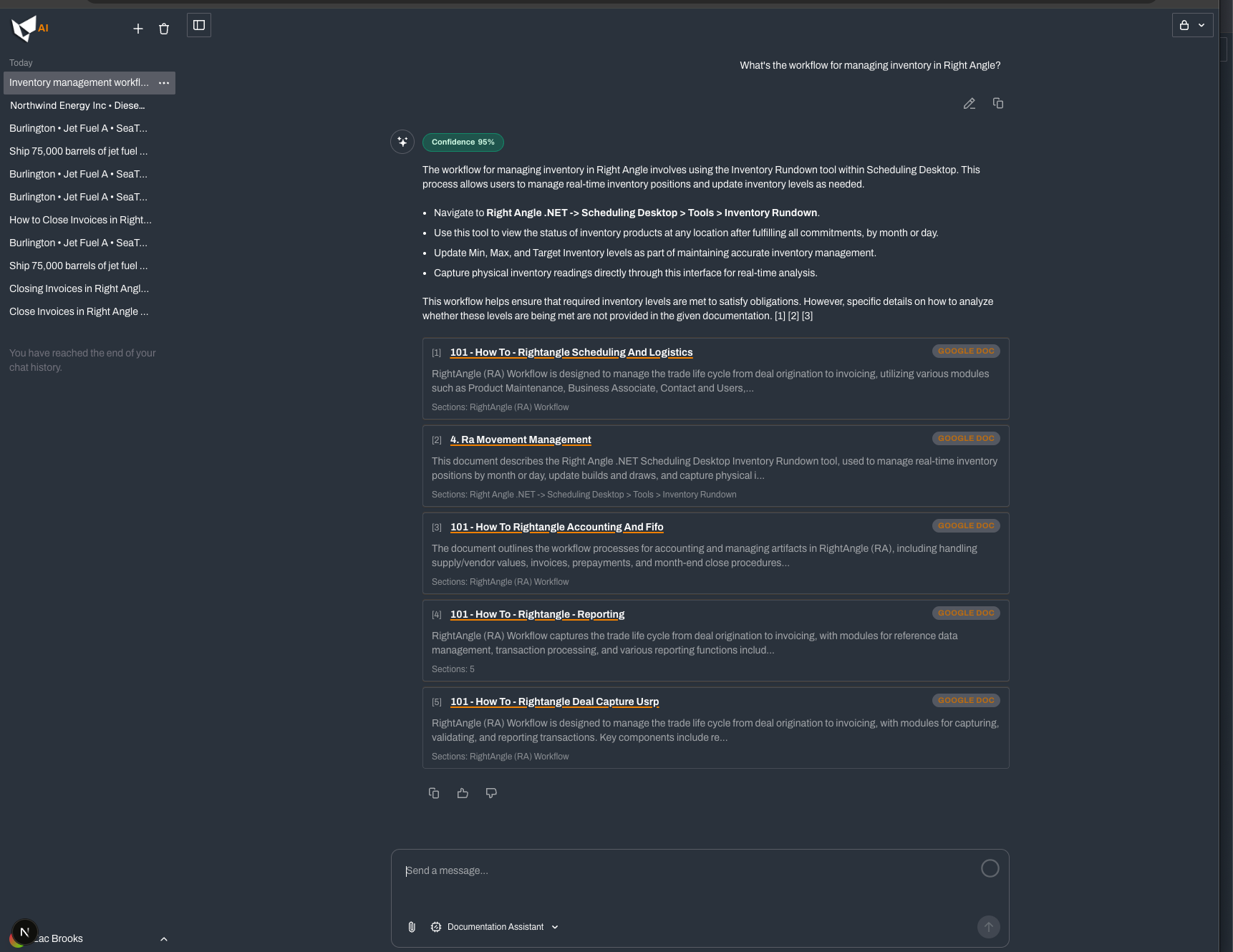
The documentation agent answered from 2,194 documents, citing each source it used.
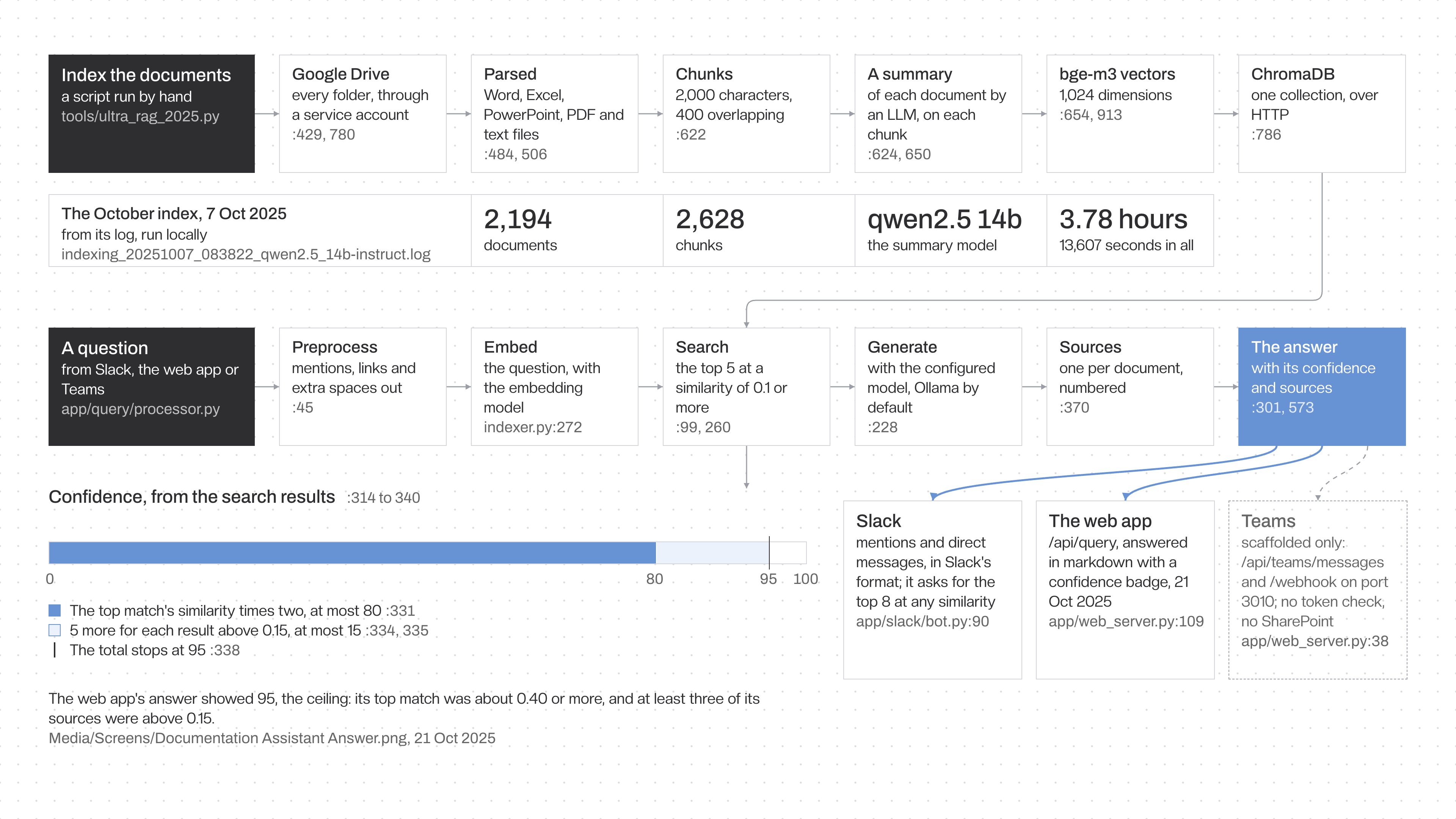
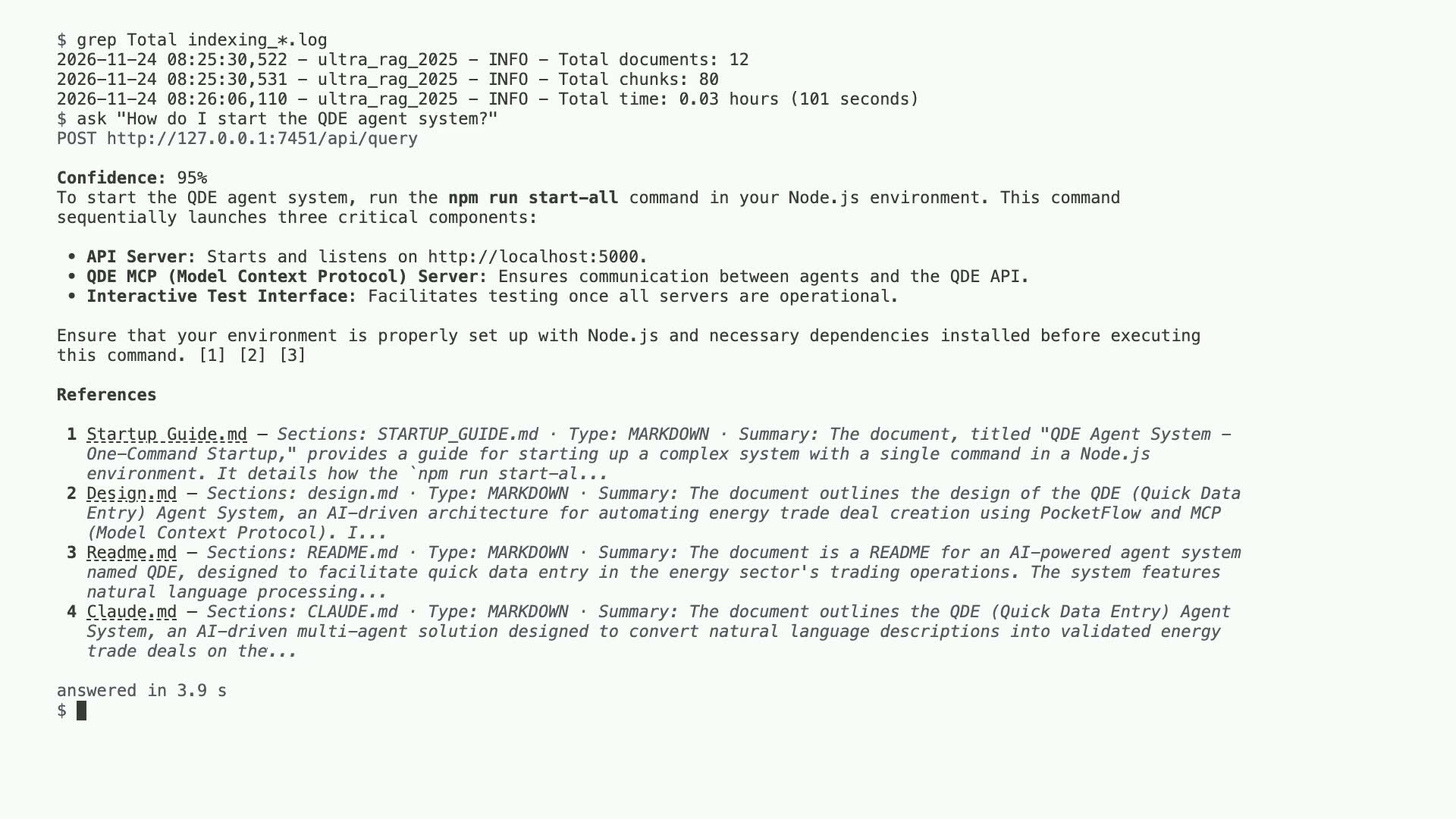
It read a Drive folder of Right Angle training documents in Word, Excel, PowerPoint and PDF, cut them into chunks, gave every chunk its document’s summary and kept them in ChromaDB. A question came back as steps with numbered sources, and a confidence from how closely the best passages matched.
The pipeline
Every document was chunked, summarised and embedded, so each answer keeps its sources.
The result
On demo day, one chat confirmed a fuel deal and answered from the documents.
Zac showed both agents to the client on 21 October 2025 and offered to license the chat to them, so they could demo it to their clients outside Teams. The documentation agent’s handoff documents went over on 2 October.
The result, in short
Deal confirmed in the chat
AE-6217
Diesel from Houston to Burlington, 74,997 gallons in nine weekly deliveries, priced on Ask
Documents indexed
2,194
2,628 chunks in 3.78 hours, on a local model
MCP tools
12
On three servers, from 11 August 2025
Answer confidence
95%
The code’s ceiling, with five numbered sources
Proposal to demo
4 months
25 June to 21 October 2025