Memora
Turbo’s own venture, 2025 to 2026
- What we did
- Product, brand and businessThe generator, the app and shop, the print files, the launch film and the agents that ran it
- When
- December 2025 to February 2026The first page on 19 December, the launch on 7 January
- Sold
- Three paid customer ordersFrom 26 January to 13 February: 2 books, a canvas and a Starter Kit
- Built with
- React, Supabase and StripeGemini’s image model for the paintings, Ether’s layout engine for the pages
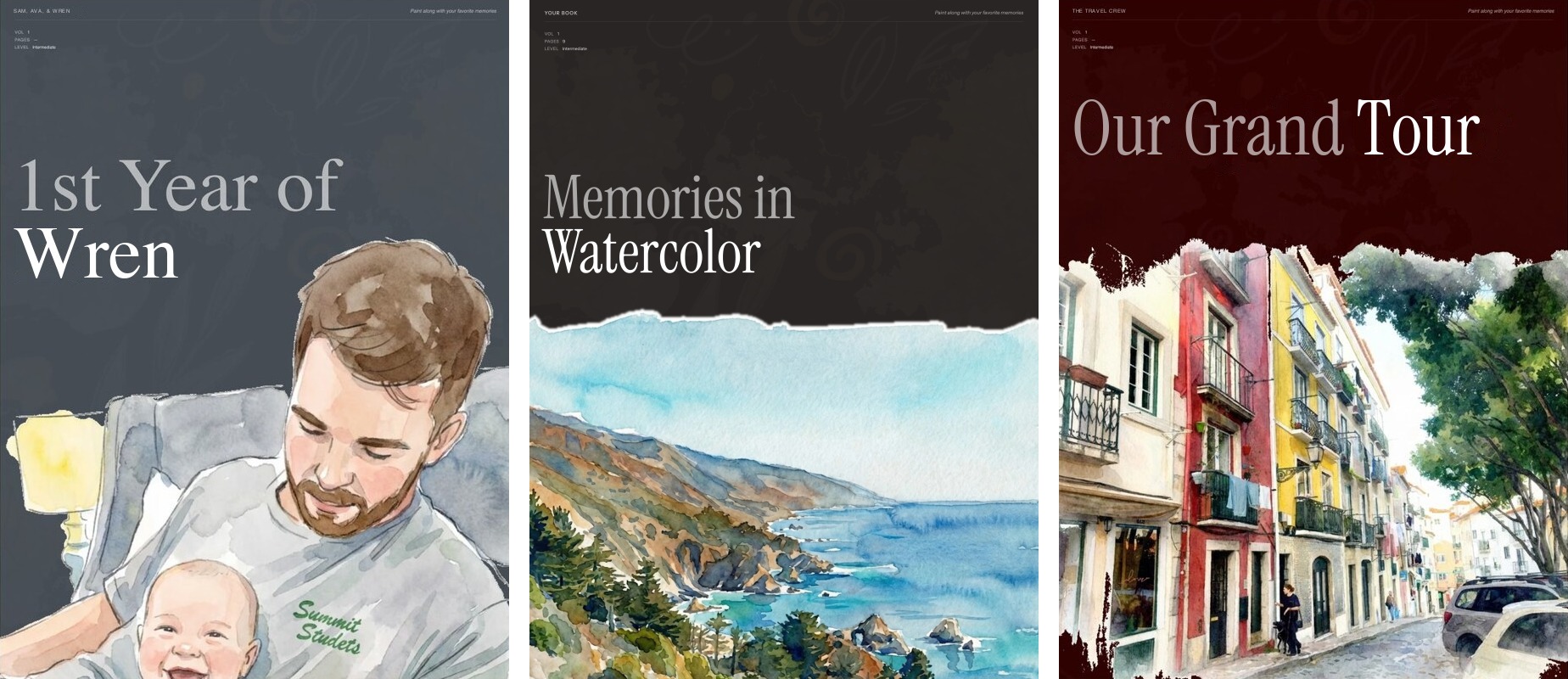
Memora turns a family’s photos into a watercolor book to paint, printed to order.
Personalized gifts are made once and then sit on a shelf. Zac, Turbo’s founder, wanted a gift a family could live in for hours: their own memories as watercolor paintings, with a guide to paint each one. Making one such book by hand took him days. Memora is the software and the shop that make it for any family, from the upload to the printed book at the door.
Read the full case
- The task
- Turn any family’s photos into a painting guide someone who has never painted can follow, sell it online, and print, bind and ship every book to order, with one founder.
- The scope
- The generator (the watercolor, its palette, its steps and its sketch, at three levels); the app and shop (upload, review, cart, Stripe checkout, gift cards, discount codes, affiliate links, an admin); the print files for the print shop’s press; the book, its starter kit and its packing; the brand and the launch film; seven agents with charters and inboxes.
- On screen
- Memora’s own media: the launch film, the landing’s films and Zac’s 4K recordings of the live site. The Figma file the first pages were laid out in. The cart and checkout run from the app’s own code on the founder’s book, with nothing paid. The agents’ real files. Zac’s photographs of the printed books, the kit and a canvas.
How it ran
December 2025 to February 2026
Seven weeks from a Christmas present laid out by hand to paid orders for books and a canvas.
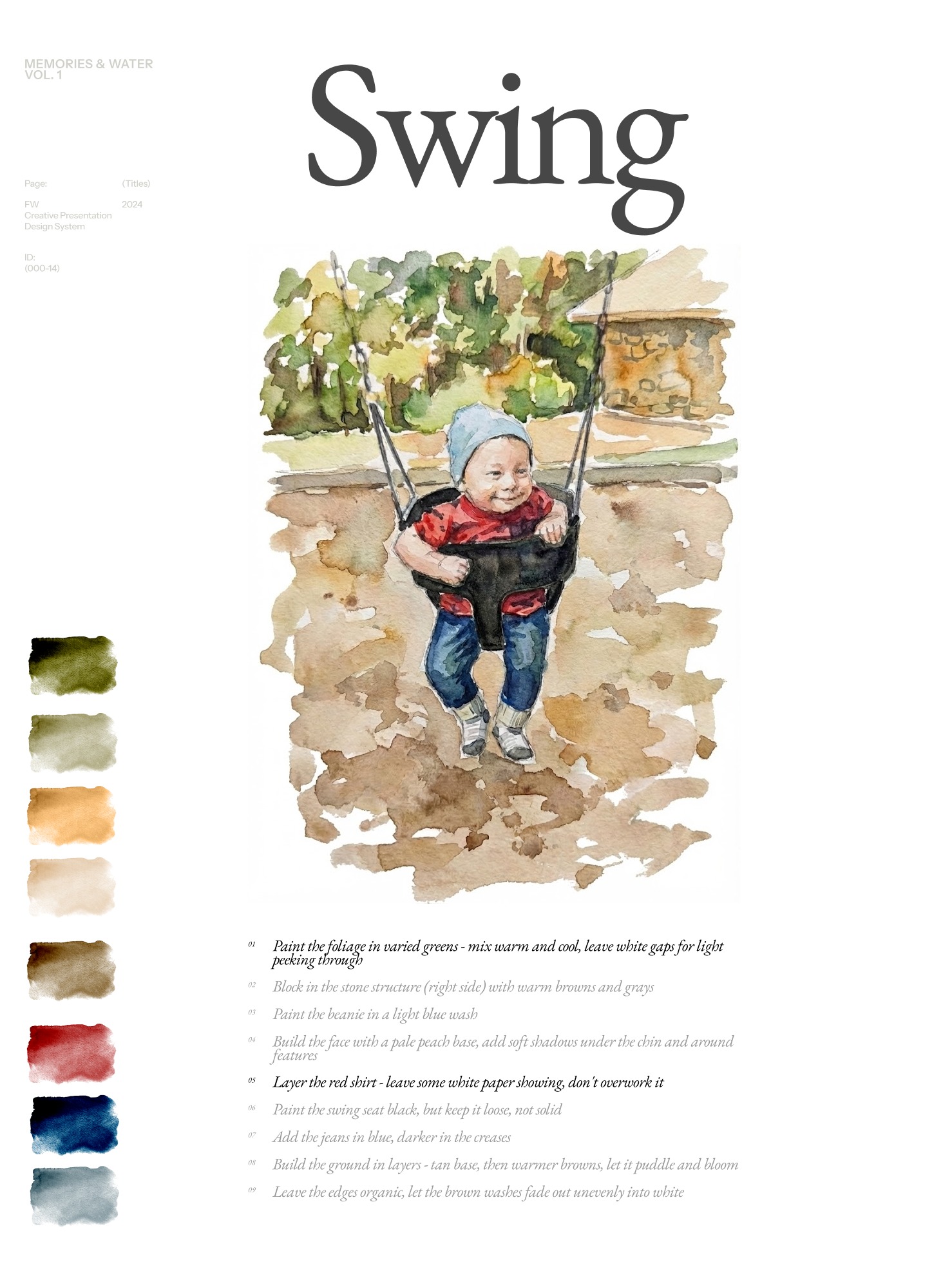
- 19 December 2025The giftZac lays out the first guide page, Swing, in Figma, for a book his wife Beth can paint from.
- 22 DecemberThe appWork starts on the app, the day the first two books’ covers are finished.
- 23 DecemberTwo booksA local printer prints the two Christmas books page by page.
- 7 January 2026The launchThe launch film is posted and the landing offers 250 books for January.
- 14 to 16 JanuaryPrototypesNine printed prototypes; seven agents file thirteen requests for software, all done the next day.
- 26 JanuaryFirst paid ordersThe first two customers pay through the site: one for a book and a Starter Kit, one for a canvas.
- 30 JanuaryFirst print runSix books, the founder’s own among them, go to the print shop.
- 13 FebruaryPaid ordersThree paid customer orders since 26 January: two books, a canvas and a Starter Kit.
The pipeline
Uploaded photos become a painted book, a checkout, print files and a shipped box.
By February every step between a customer’s upload and the box ran on Memora’s own software, and every step only a person could do had a person assigned. In Zac’s words, “I have a full e-commerce site that a ton is automated.”
The pipeline, step by step
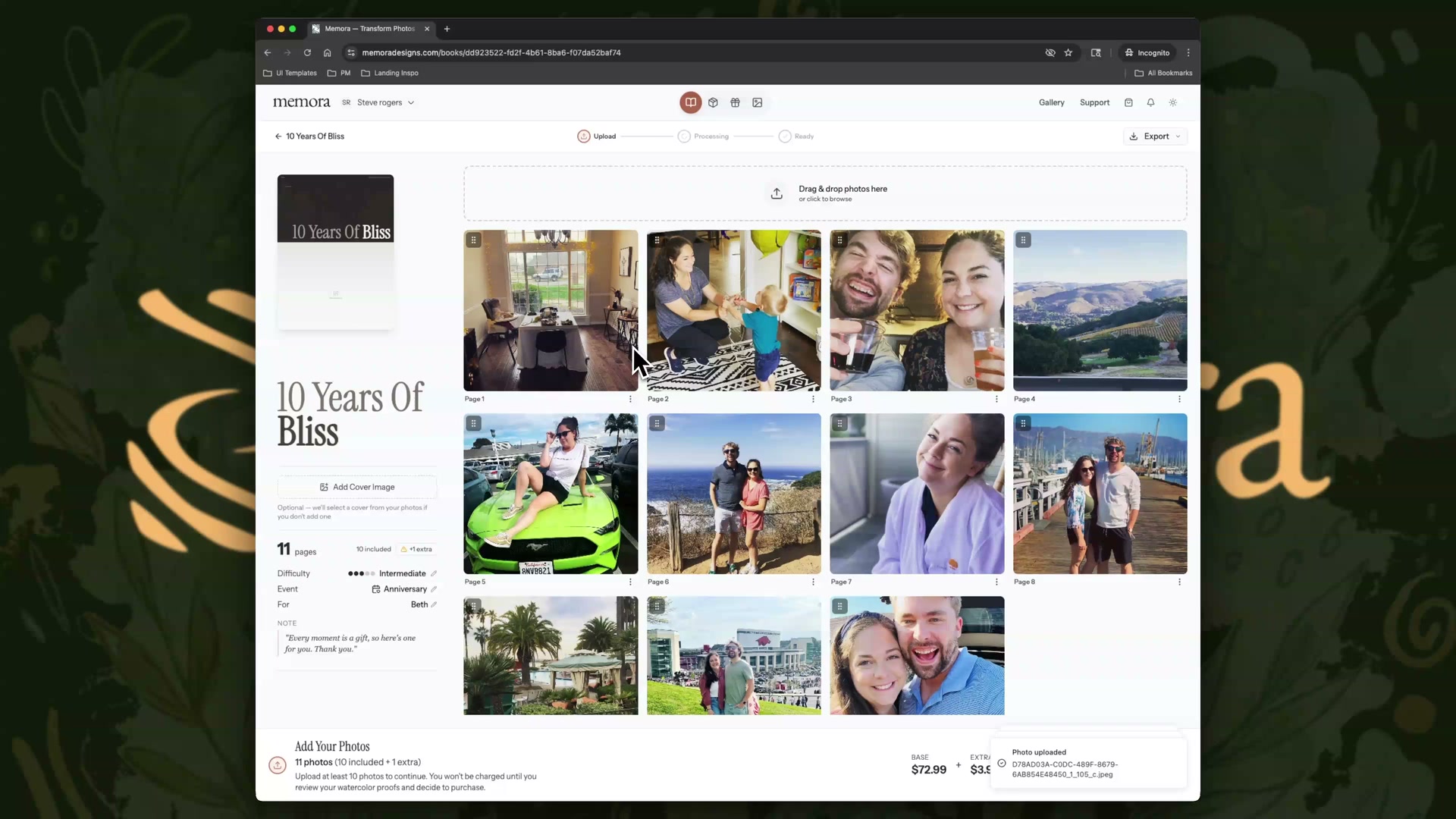
The customer’s part takes minutes. Sign up, which Zac timed at five seconds; name the book and write its dedication; drop in the photos. Each photo comes back as a watercolor painting, its colours pulled out as swatches, its steps written for that picture at the level the customer chose, with a pencil sketch to print faintly on the watercolor sheet. The customer scrolls the finished book page by page and pays only after seeing it.
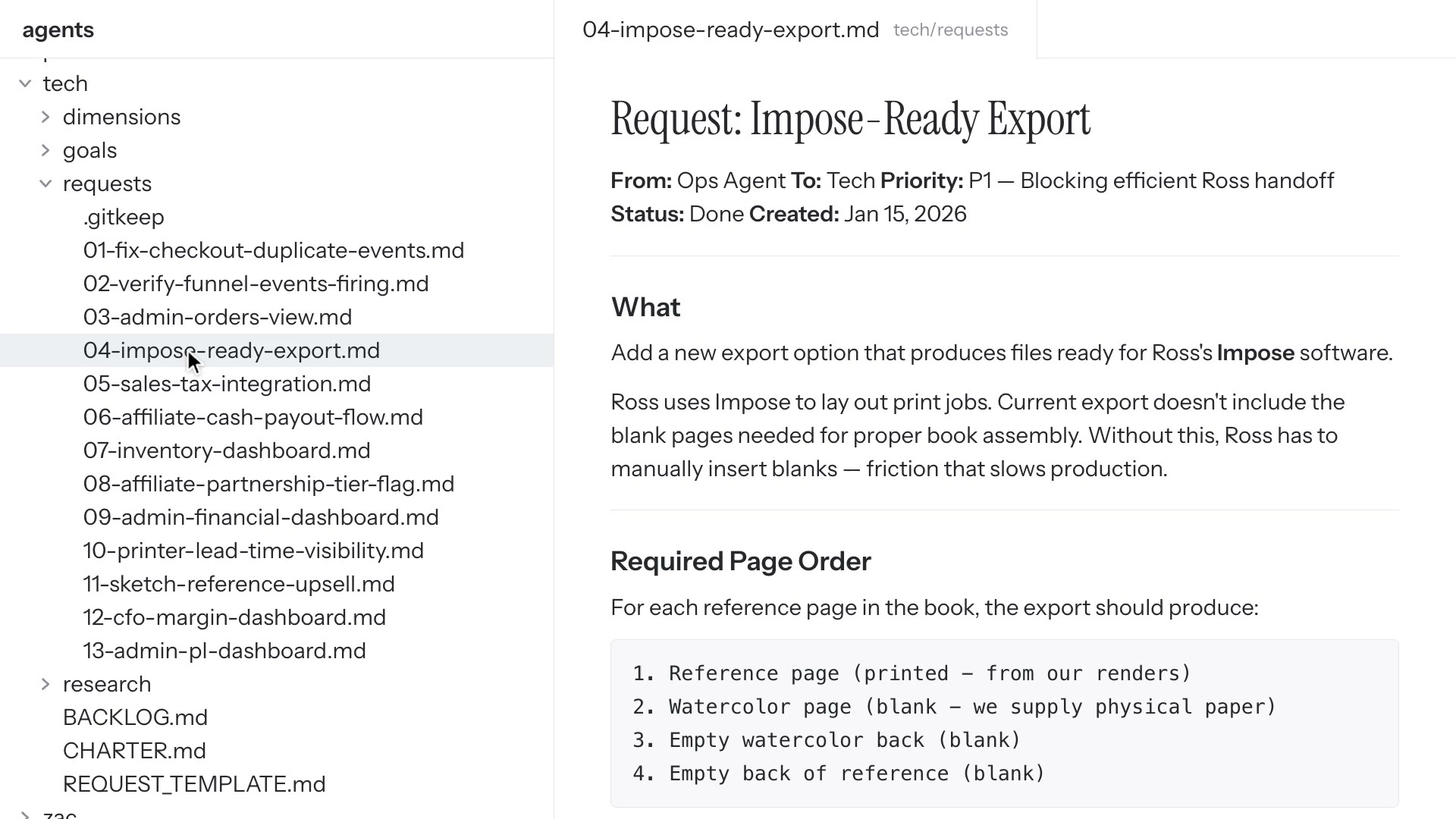
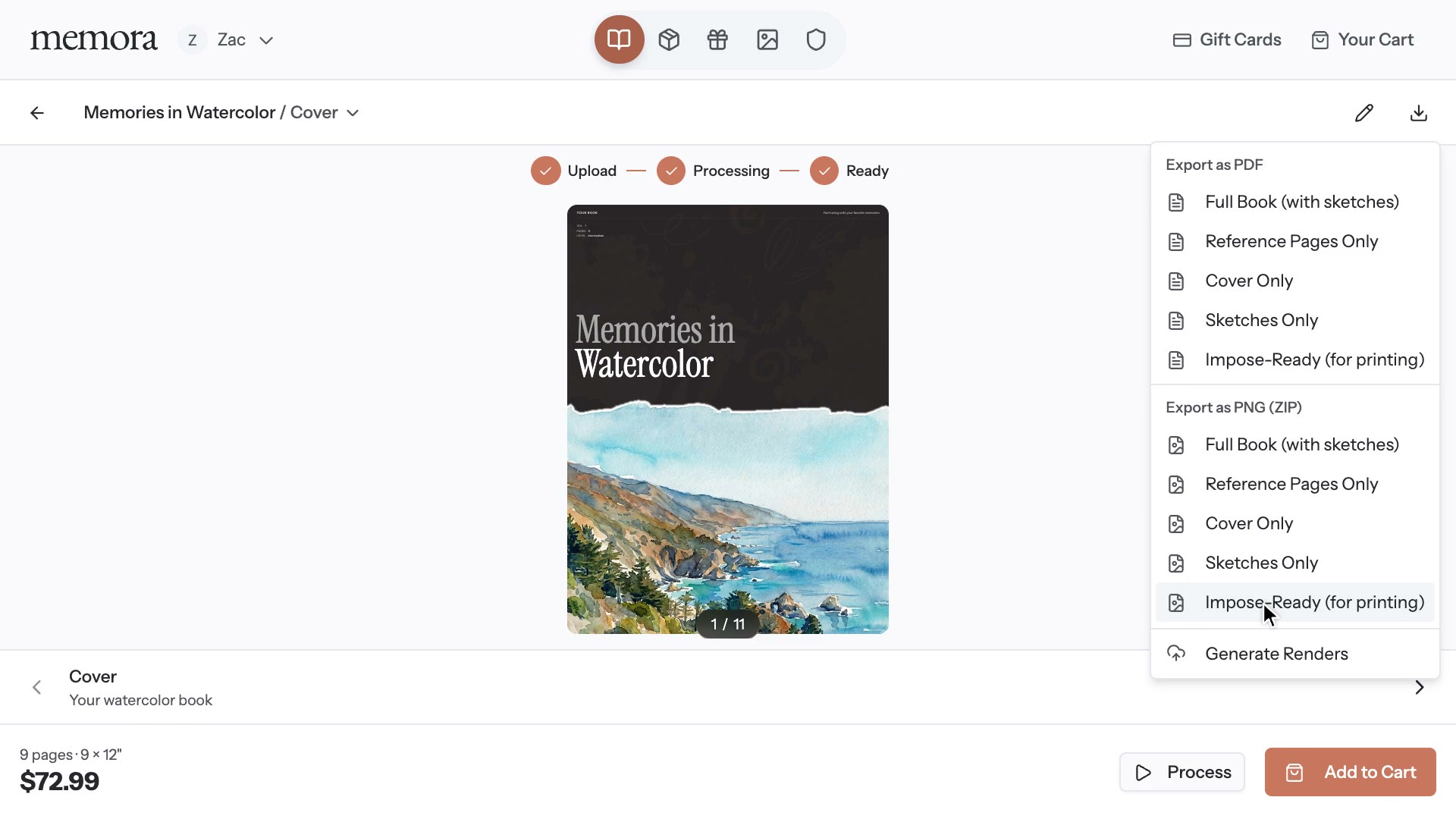
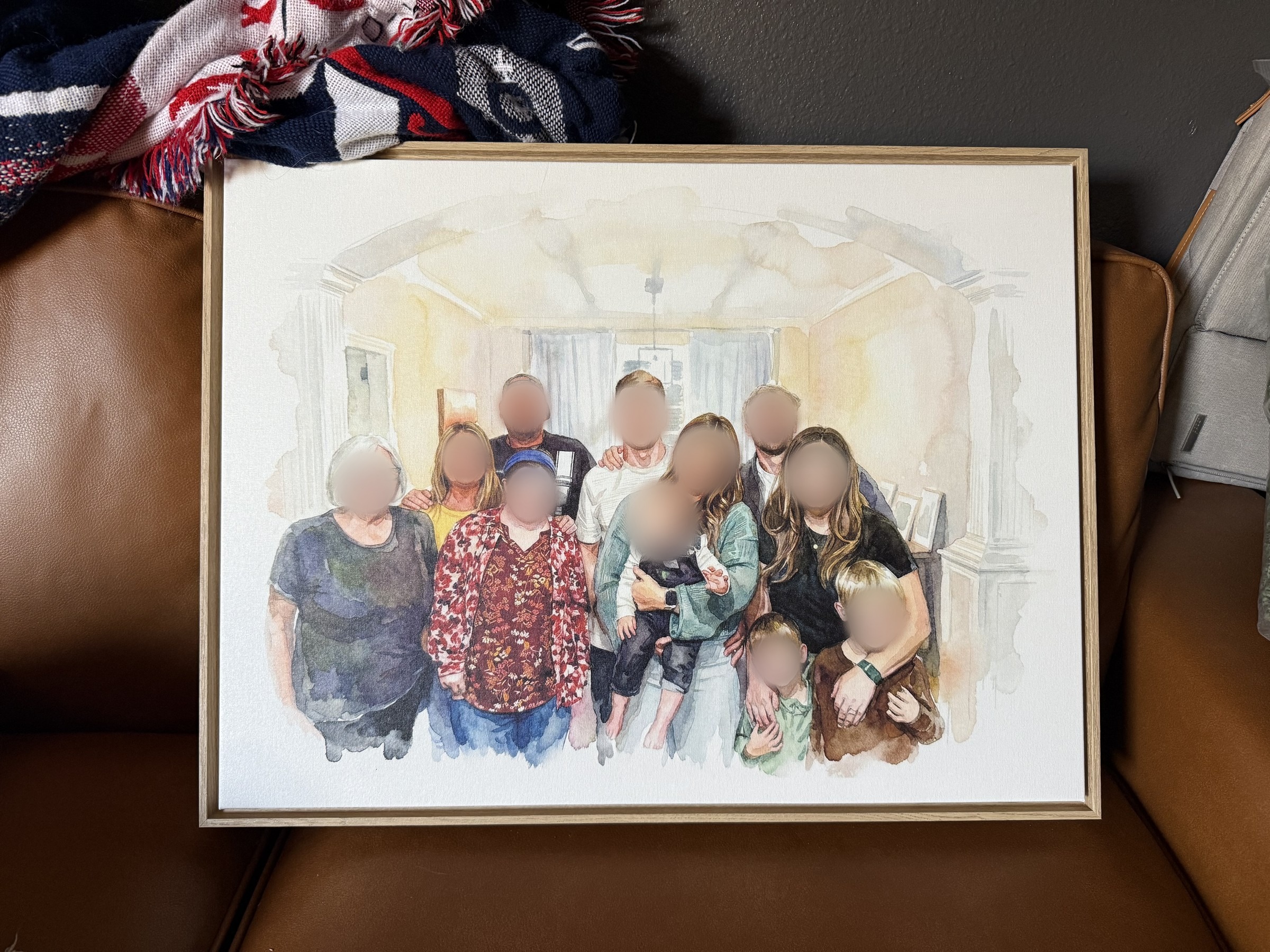
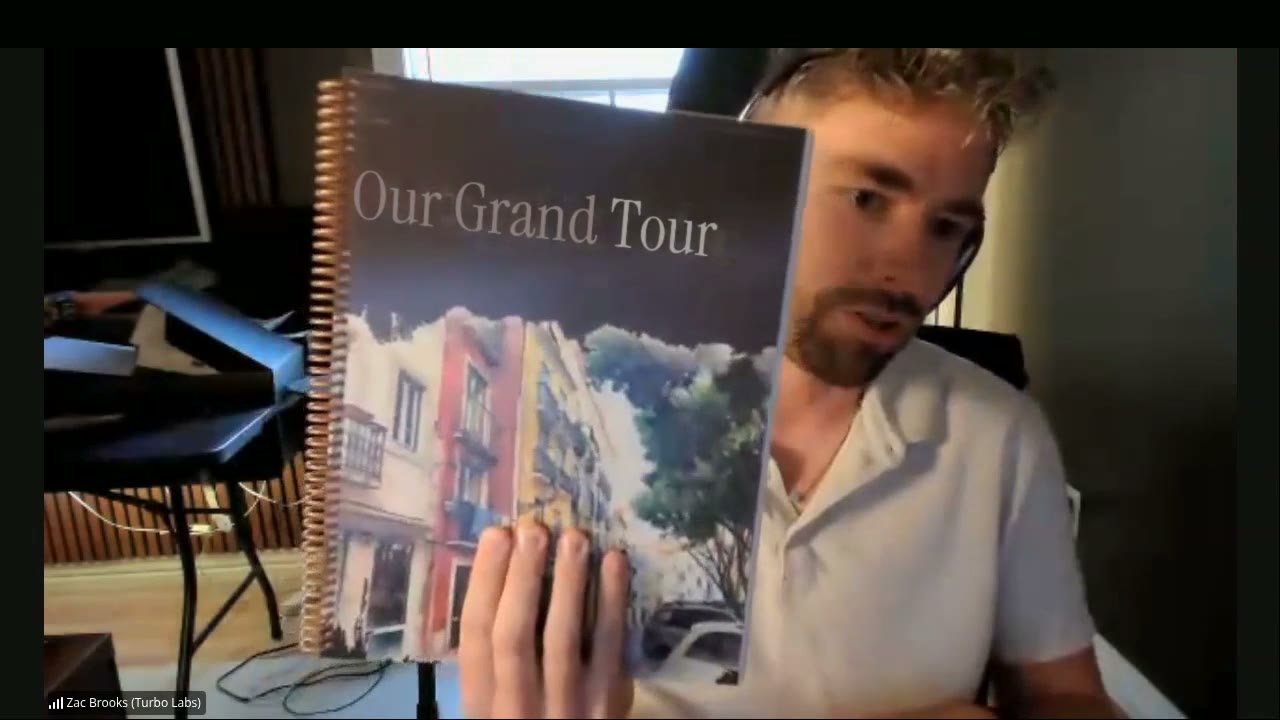
Behind the checkout, every order is its own print job. The founder checks each page in the admin. The app writes an impose-ready file in the order the shop binds it: each guide page, then the blank sheets the shop asked for. The shop prints and binds the book on a spiral around watercolor paper and chipboard; Zac sets the elastic, presses the mark onto the starter kit’s tote, packs the box and ships it. Canvases are upscaled for print and go to Gelato, which prints, frames and ships them.
Around all of it sat seven agents: Ops, Affiliate, Marketing, Customer Success, CFO, Product and Tech, each with a charter, goals and an inbox, and Zac as “the human in the loop.” When an agent needed software it filed a request with Tech; when it needed hands it filed one with the founder. On 15 January thirteen requests went to Tech, among them the impose-ready export the print shop had asked for the night before, sales tax, an orders view and sketch pages with a price. Every one was done on 16 January.
“Everything is pretty much automated from the generation, the order, the checkout,” he wrote in February. “I’ve got the whole ops completely modeled in the tool itself.”
By hand in Figma
Guide pages laid out by hand in Figma could not scale past one gift.
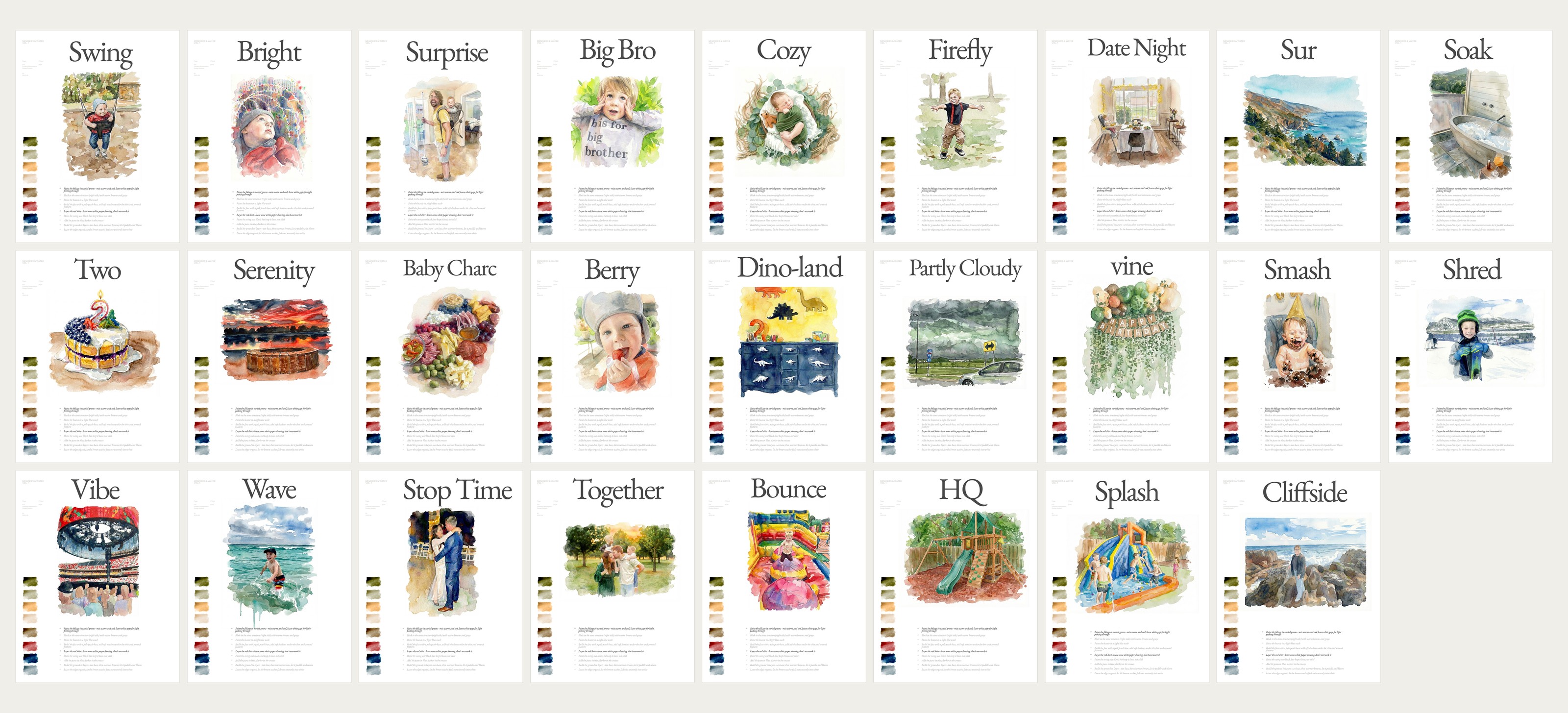
Memora began as a Christmas present. Before dawn on 19 December 2025 Zac wrote that he had “a wild christmas idea for beth”: watercolor paintings of their memories, bound as a book she could paint from. He laid out each page by hand in Figma, and every page after the first carried the first page’s steps.
How the first book was made
His model was a store-bought tutorial workbook whose spread held a finished painting, its sketch, its colour swatches and numbered steps. He painted the photographs with image models, first Midjourney and then Nano Banana for softer, more organic edges, and asked the question that started the file: “is letter the right figma dimensions for the reference page in the book.”
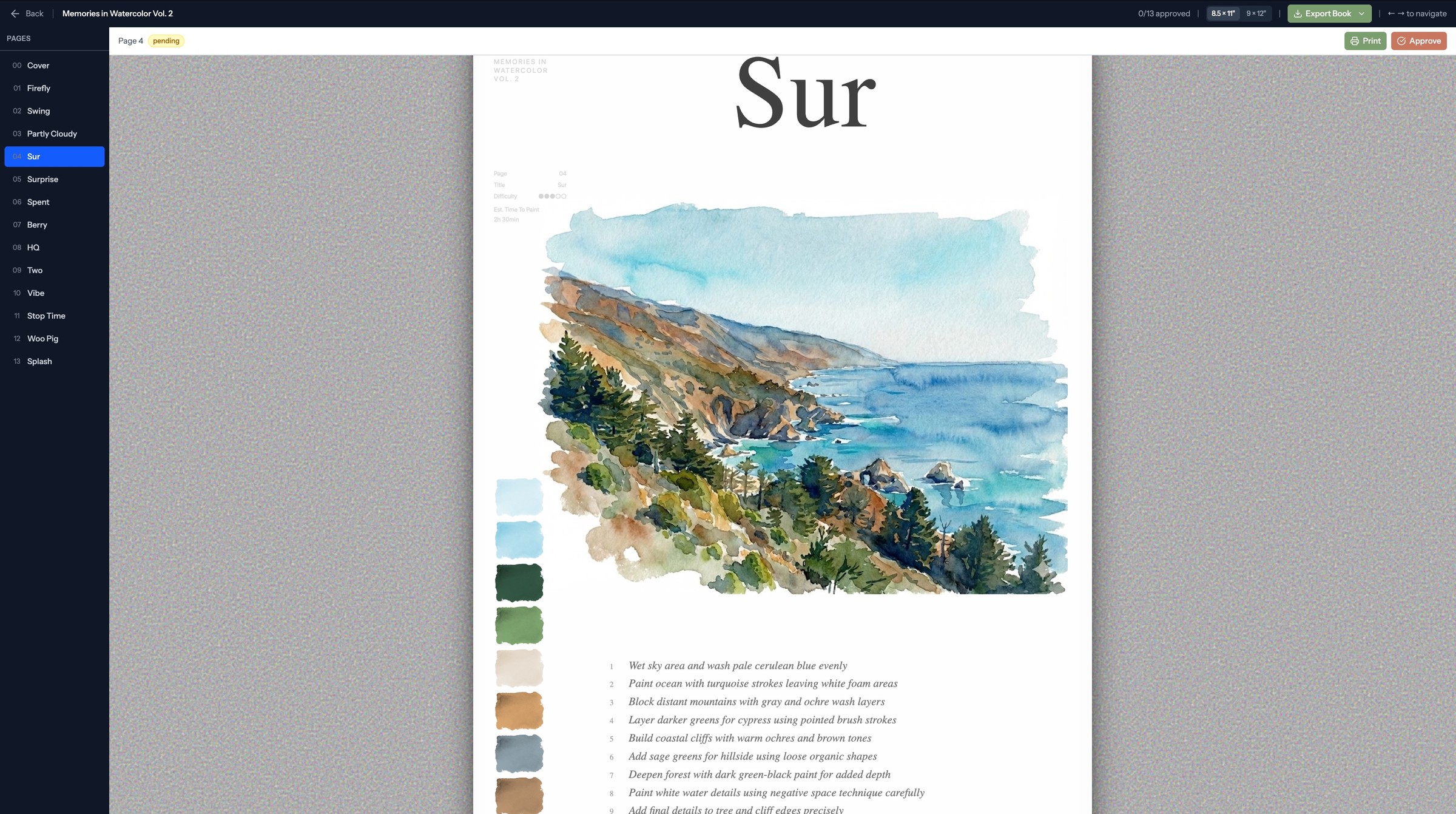
The Figma file opens that night. Swing is its first page: a toddler in a park swing, eight hand-cut watercolor swatches down the left and nine steps written for that picture, from the beanie in a light blue wash to the swing seat painted black but kept loose. The swatches were the hard part (“i literally don’t know how to do that swatch effect”). Twenty-nine more pages followed, each with Swing’s swatches and Swing’s steps pasted in, so the coastline of Sur tells its painter to paint a beanie. By hand, one page could be right; the steps could not keep up with the pictures.
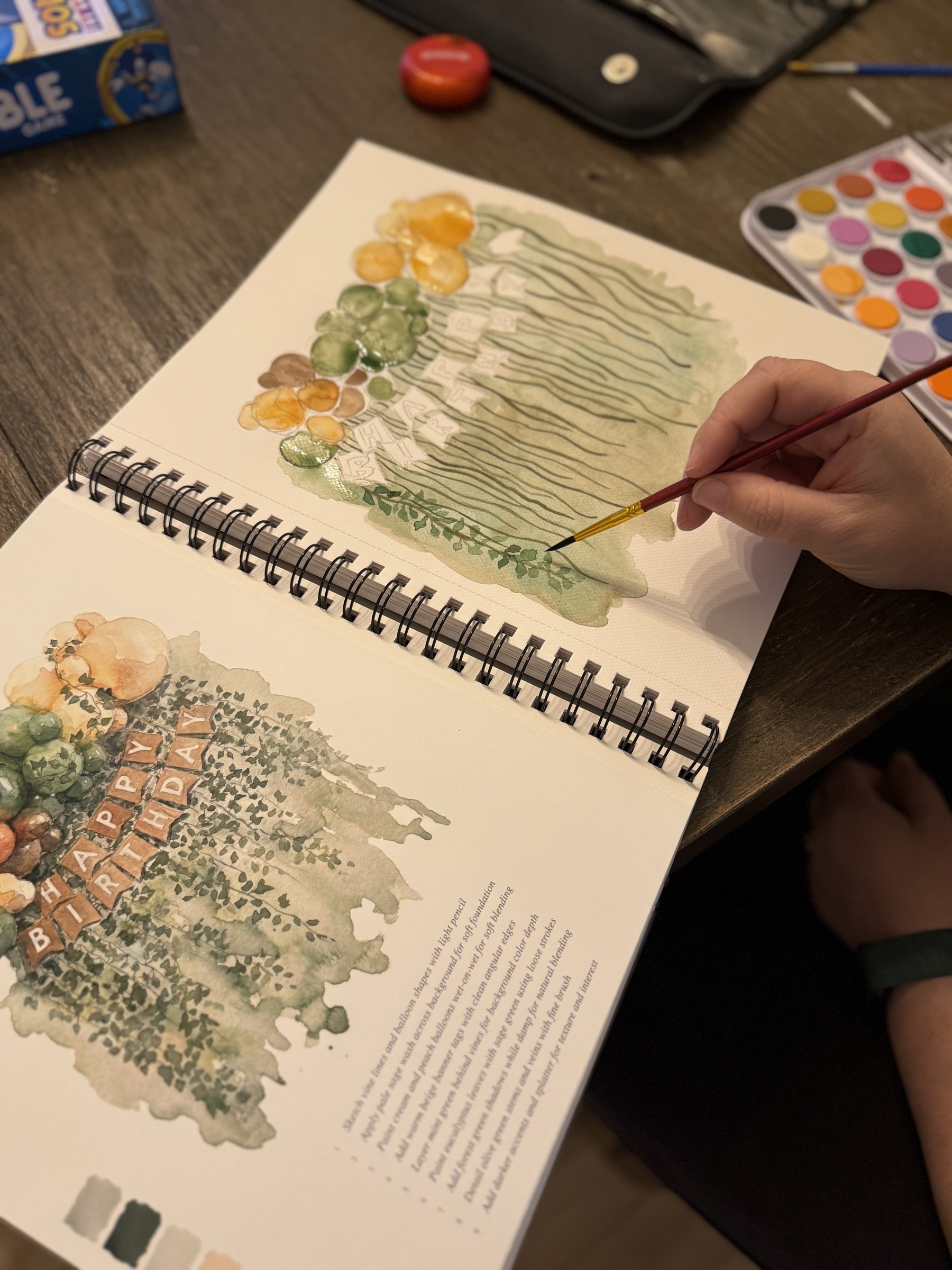
Two books went to a local printer on 23 December, printed page by page and cut to nine by twelve. Three days after Christmas the vine page was being painted, its garland already washed in. A week later, in passing: “wife loved hers.” Over the next weeks the same file turned into a company: a landscape Sur moved the swatches into a row along the foot, the row the printed pages kept, and the mark was drawn in gold on botanical green.
“I took our memories and by hand for a minute, did it in Figma, but created this book where she could paint our memories,” he told a venture partner in February. A gift that took days to make by hand could not be sold to anyone else. The steps had to be written for each picture, by software.
The generator and the guide
The generator paints each photo and writes its palette and steps at three levels.
“This was actually a Christmas present for Beth that took too much time, so I used Ether to build the app for it,” he wrote on 30 December. Ether’s slide engine, built at Turbo to lay out decks, became the layout engine for guide pages.
How the page became software
Each photo goes to Gemini’s image model for its watercolor; its palette is drawn from the painting as swatches; its steps are written for the picture in front of them; and the layout engine sets the page as it once set slides, with the painting, the swatches, the level, the time to paint and the steps. Zac called it “a product only possible by deep AI and print as code systems we formed elsewhere. an art + tech hybrid if you may.”
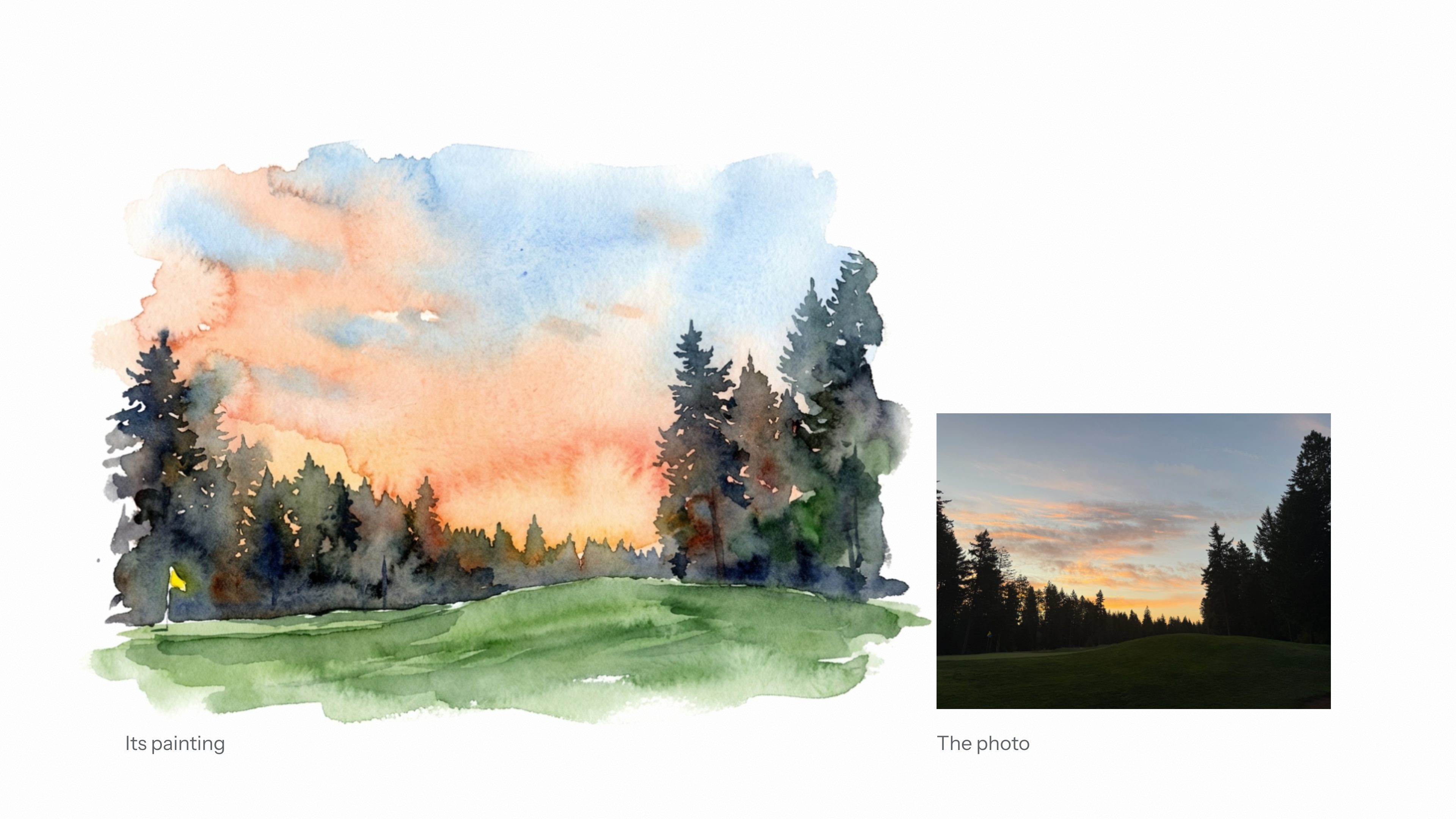
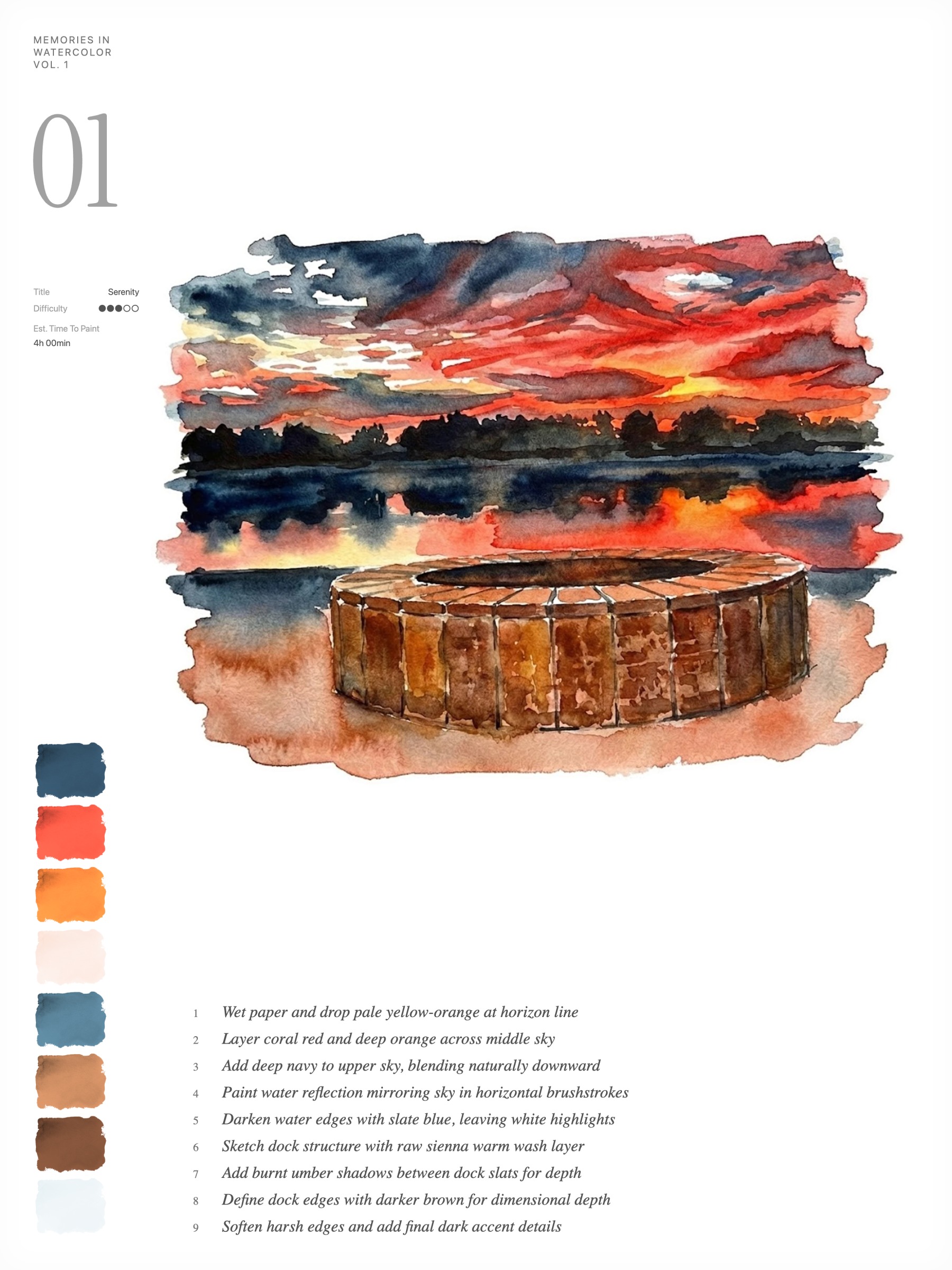
Three levels came early, beginner, intermediate and advanced, and on 7 January he saw where the first fell short: “the paintings are gorgeous on intermediate and advanced. something so sentimental about watercolor. but... the beginner loses that vibe throughout the book.” The generator’s answer was a pencil sketch of each painting and a faint ghost of it, printed on the watercolor sheet so a beginner starts from the painting’s own lines.
The nine printed prototypes of 14 January did not have the sketch yet, and the people who held them asked for it: “a heavily requested option.” The CFO agent asked for sketch pages to carry a price, and the book’s footer came to offer them. By February the books carried “sketch outlines for the painting that are super minimal but look hand done on the watercolor paper,” and a full render of each painting to tear out and frame.
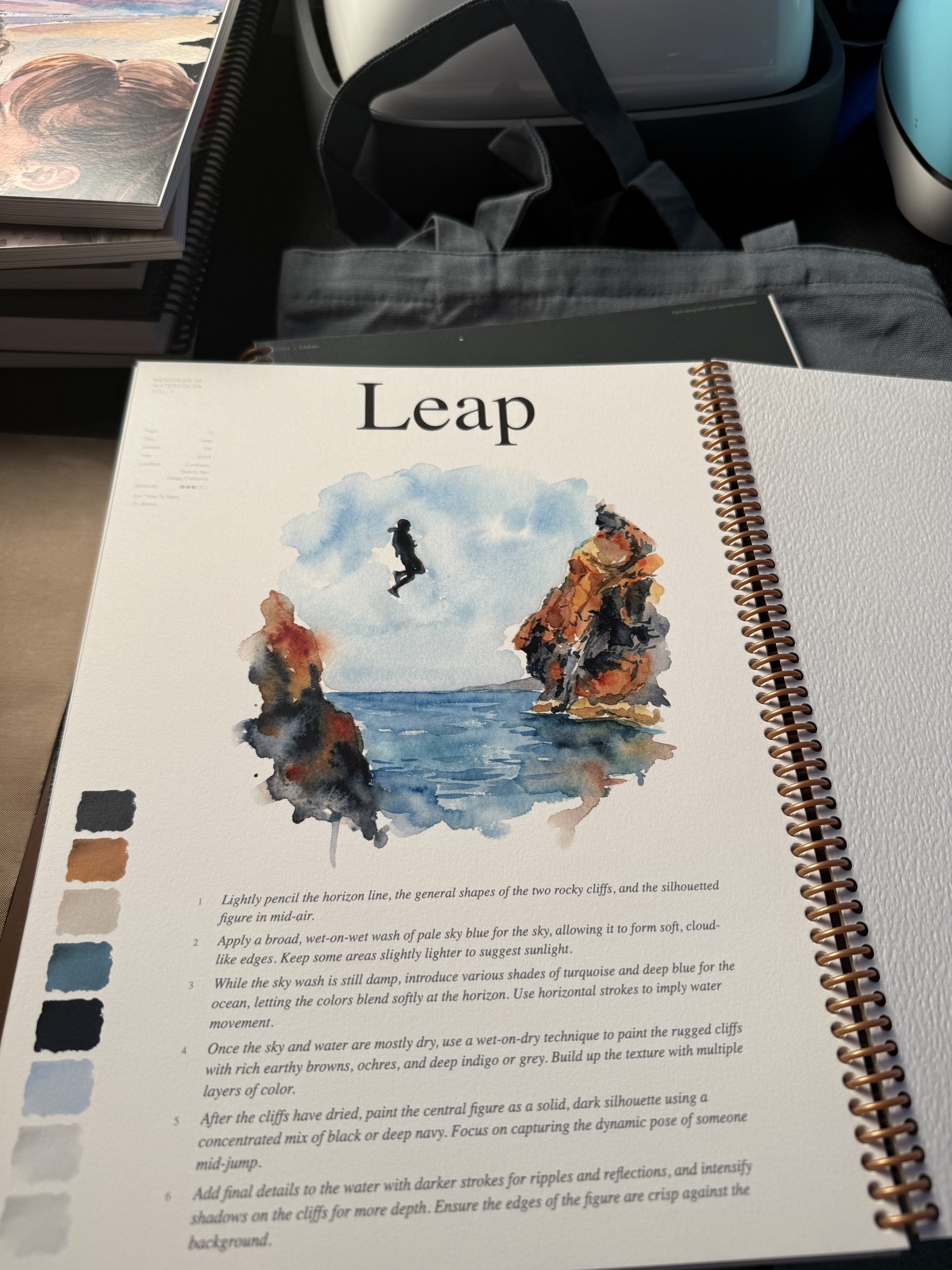
Printed, the page is the one Zac had cut by hand in Figma, made true for any photo: Leap’s cliff and sea, its nine steps written for that picture, its swatches in a row along the foot, bound beside the blank sheet it is painted on.
The app
Customers make a book, watch it paint, and scroll every page before they order.
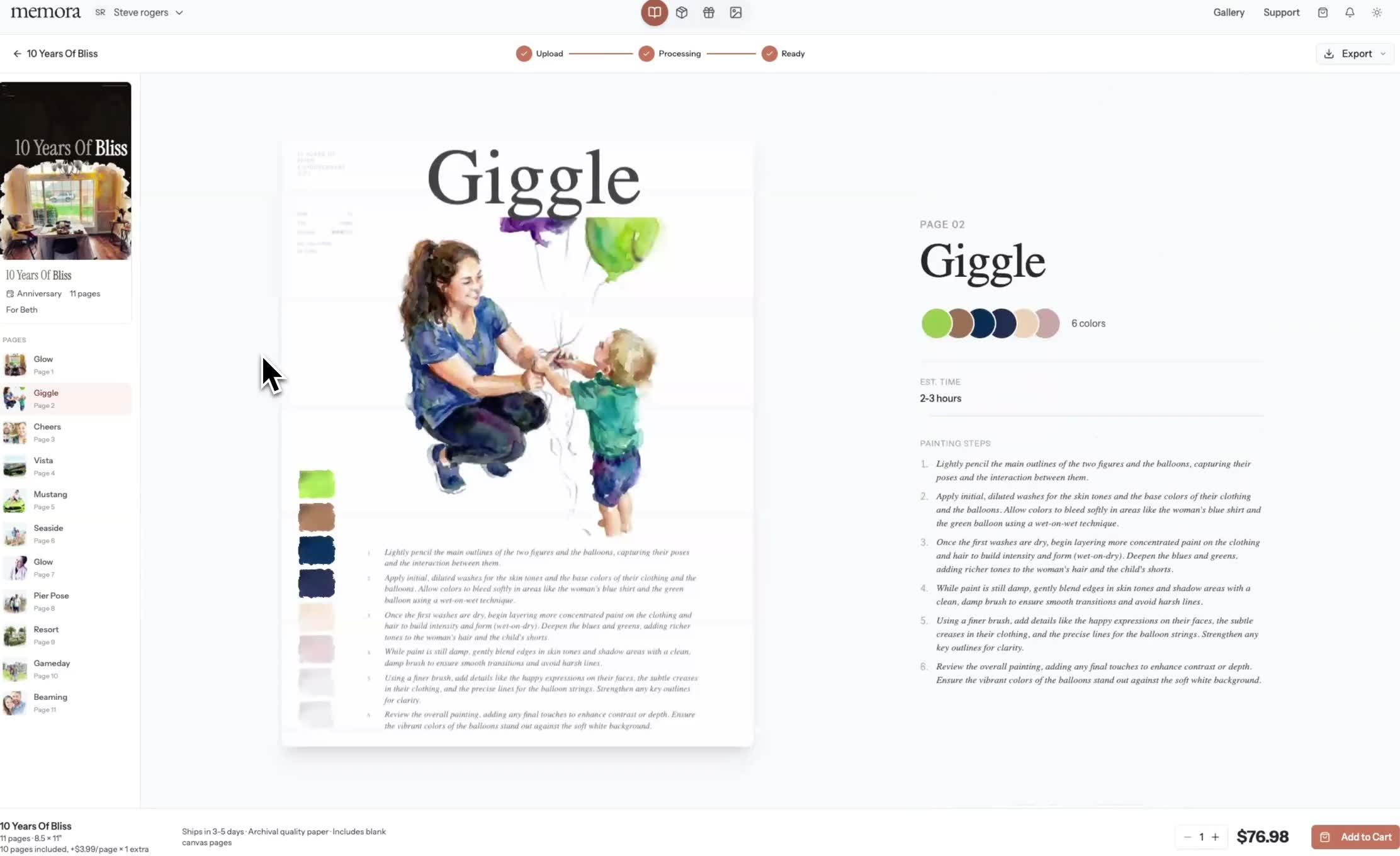
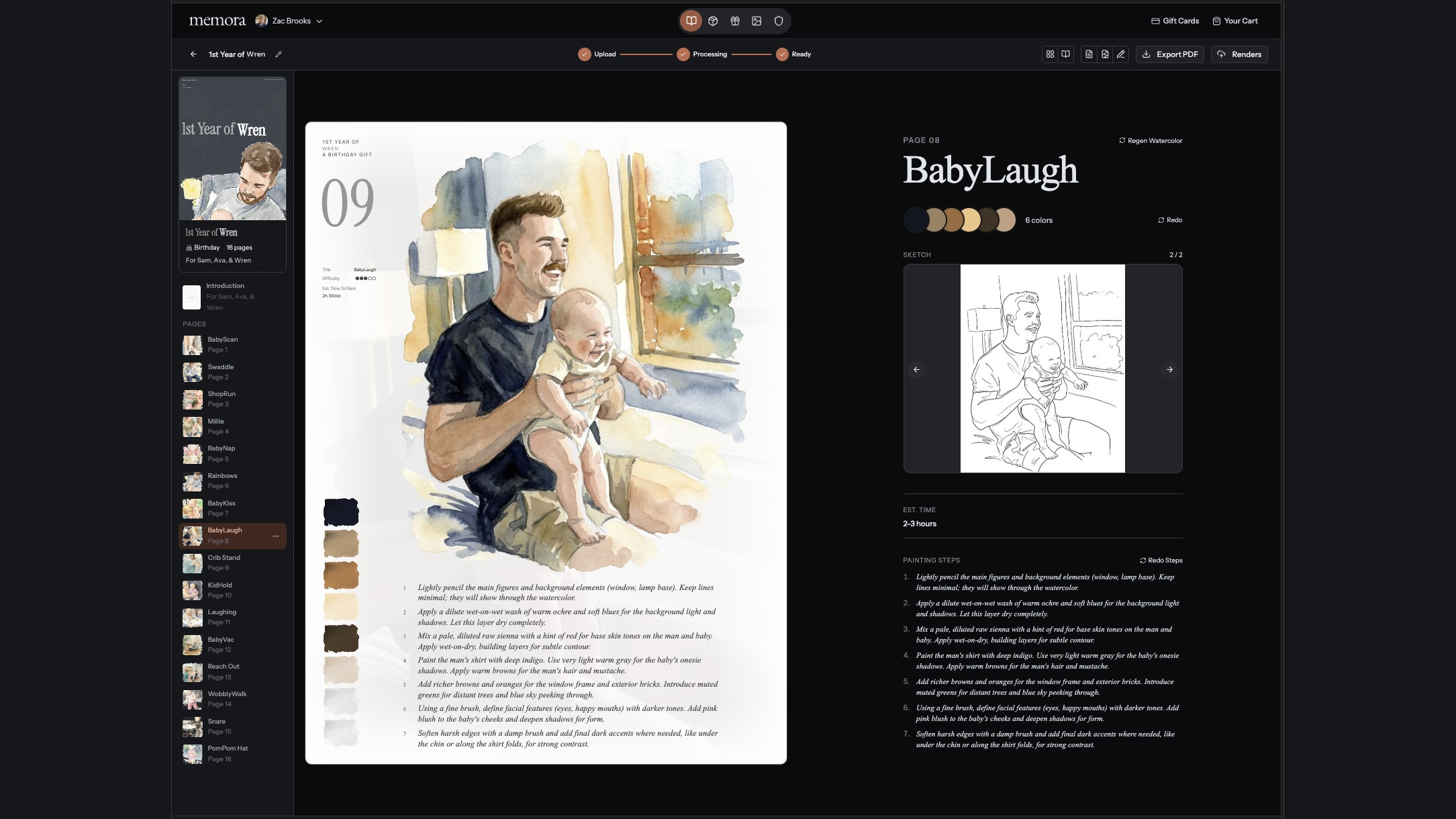
Zac storyboarded the app the way a customer meets it: sign-up that “literally can happen in 5 seconds,” a book, the photos, a note that it is ready, then “the beautiful review screen. (killer ux).” The review screen is the book itself, recorded here as a person scrolls a family’s book on the live site.
How the app grew
The landing went up on 26 December, and the book preview, Stripe checkout, orders and the admin’s page review were in by the end of the month. In the viewer the pages sit in a rail; the page stands still beside a column of details, its title, its palette, its time to paint and its steps, and scrolling the column makes each page the active one as it passes.
By 8 January a whole book processed from one click: “I literally just clicked a button for the full on book processing. So I do nothing in that scenario.” The same day he rebuilt the PDF export from the page’s own React render, for the printer.
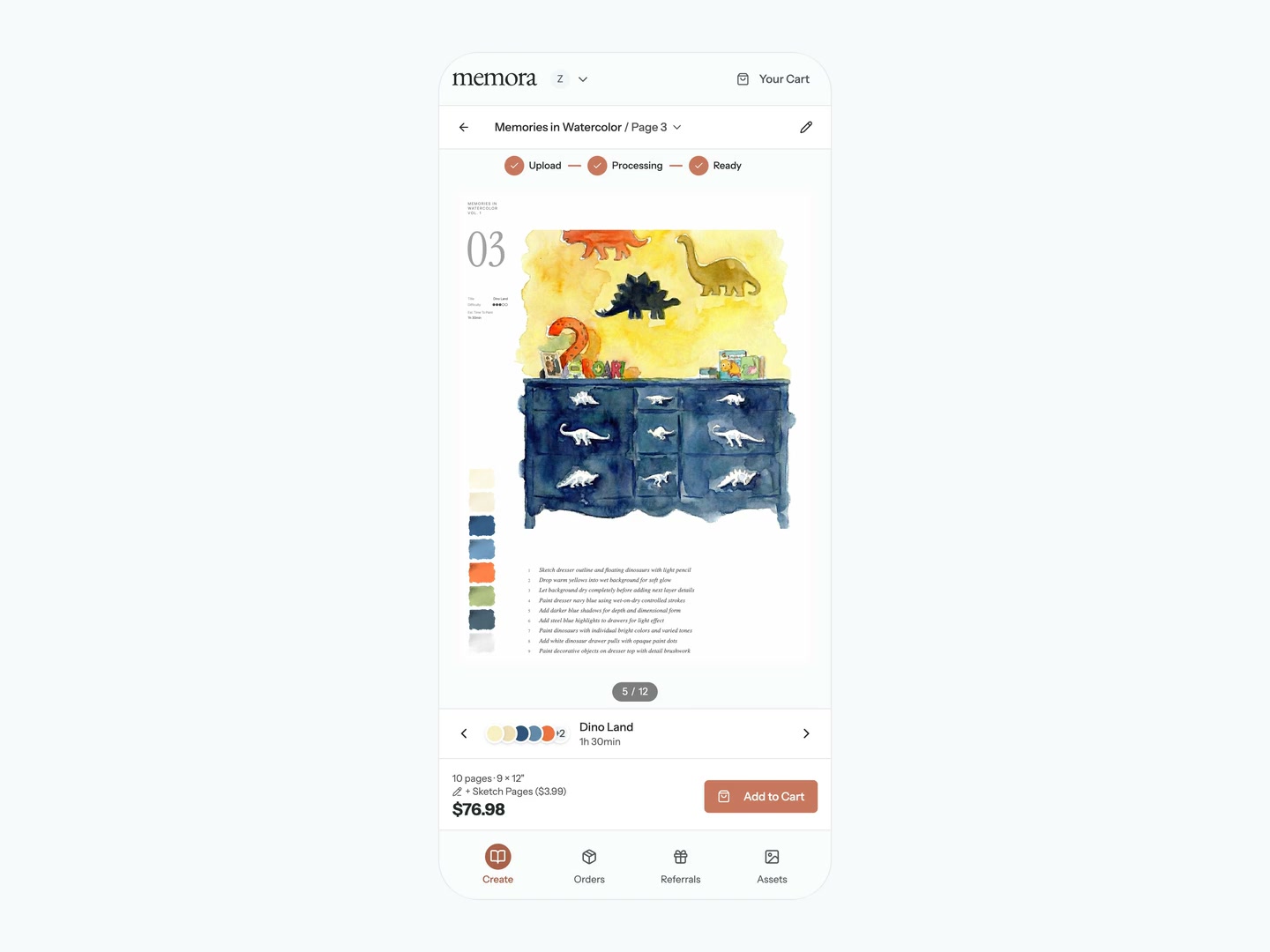
Then the shop filled in. By 12 January there were four products: the Memora Book, the full book, at $72.99 with ten pages and $3.99 a page after; the Memora Mini, the small book, at $36.99 with ten pages and $2.99 a page after; the Memora Canvas at $69.99; and the Starter Kit of watercolors and supplies at $44, an add-on, with a Starter Bundle of book and kit at 10% off. A Coloring Book at $24.99 came later. Around them went gift cards, discount codes, an affiliate link for every buyer, and a sell-ahead flow in which a salesperson’s QR code sold a credit. He wrote the test list himself, “I have a lot I need to test since I’ve moved so quickly,” and when Claude padded it he cut it back: “can you only use what i said?”
The app outlived the launch. Sketch outlines and gift cards went in on 25 January, and in September the viewer, in its dark scheme, still showed a family’s book from the first print run, its palette, its sketch beside the painting and its steps.
The launch film and the landing
A launch film and the landing introduced a gift no one had seen before.
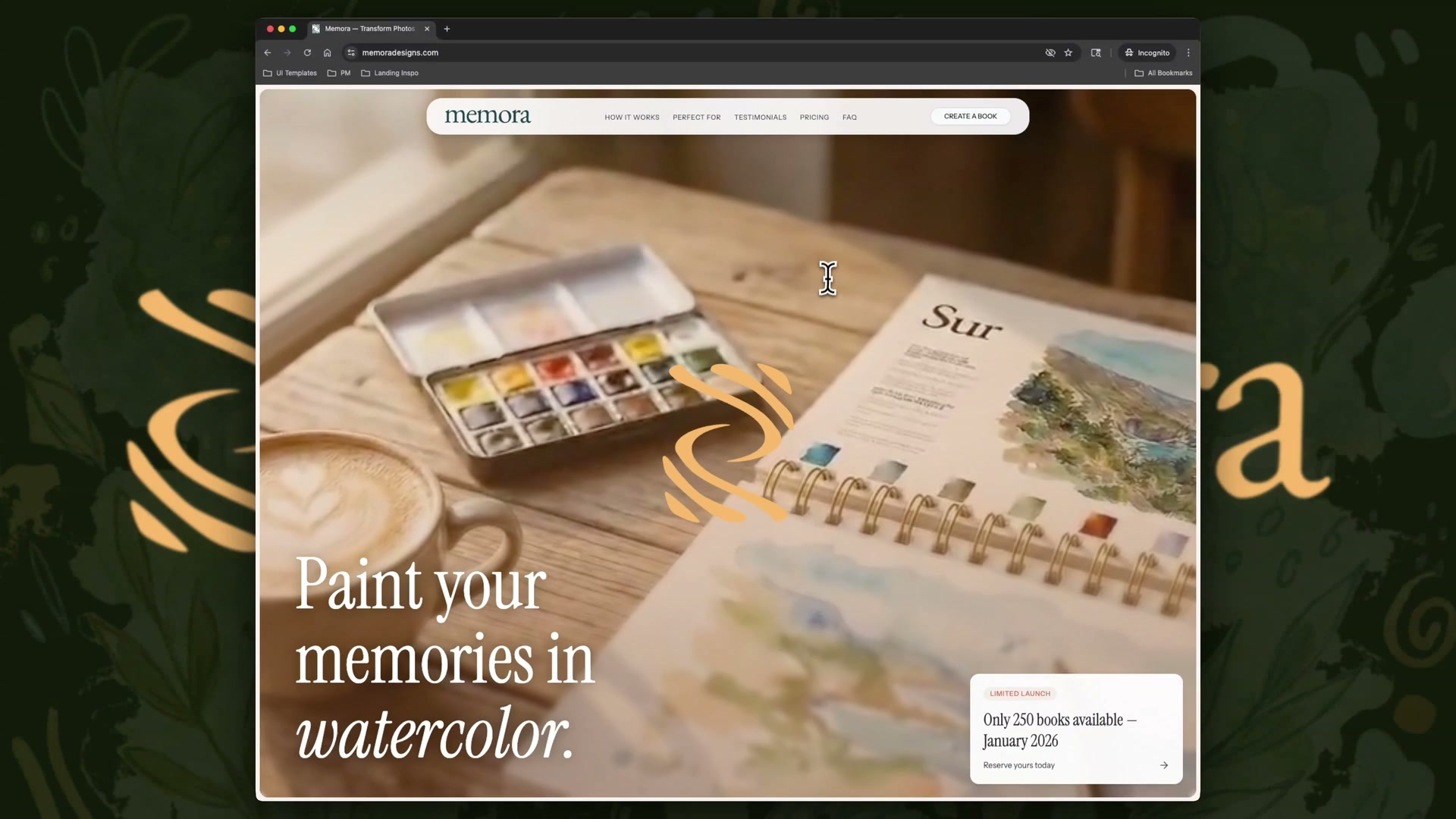
On 7 January Memora launched with a film Zac storyboarded that day, in “deep sage, bright terracotta (chinese lantern), and gold,” and a landing that offered 250 books for January.
How the film was made
He named the pain himself: “most personalized gifts aren’t multi-functional - they don’t let you live in the moment. they don’t tug on your heart because quality traditionally was expensive and took time.” The film opens on it. Green ink blooms into the gold mark; then the mugs, the photo blanket, the coaster and the keychain, “And then they just... sit there.” Then the definition card, “memora (n): custom, insane quality, watercolor paint-along guidebooks,” the landing, a hand painting, the two steps (upload your photos; we reveal your book for order), the notification, a family’s book scrolled in the viewer, and the lockup on terracotta.
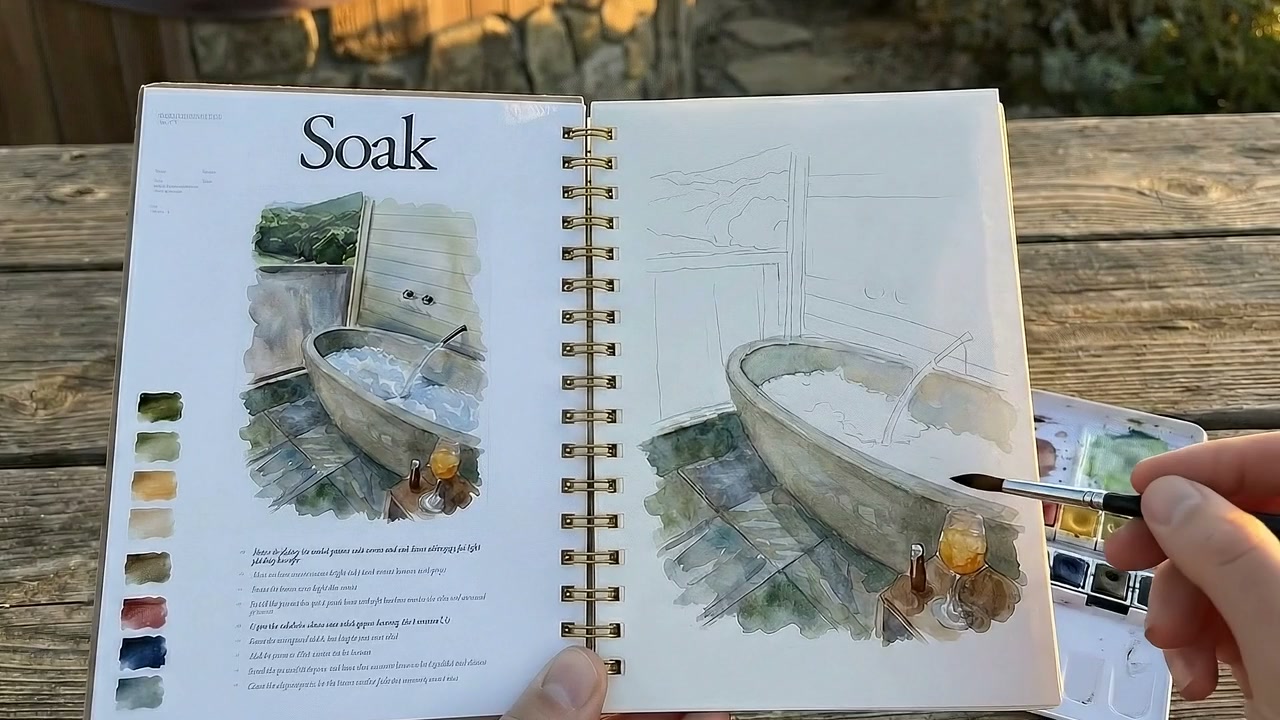
It was cut from Memora’s own media. The screen passages come from Zac’s 4K recordings of the live site, and the landing hangs here as he recorded it, scrolled from its hero to its footer. The product passages come from the films made for the landing, each a generated scene of the product in use: the mini beside a latte, a canvas lifted from a green Memora box, a hand painting Soak at golden hour.
The next day he posted it on LinkedIn in his own voice, after sending the drafts back: “you need to really try to match my tone.” “We are going to raise the bar on personalized gifts,” the post said. “Mouths will drop when this is gifted. We believe we have a factory for happy tears.”
Checkout, the books and the canvas
Orders went through Stripe to a print shop, and books and a canvas shipped.
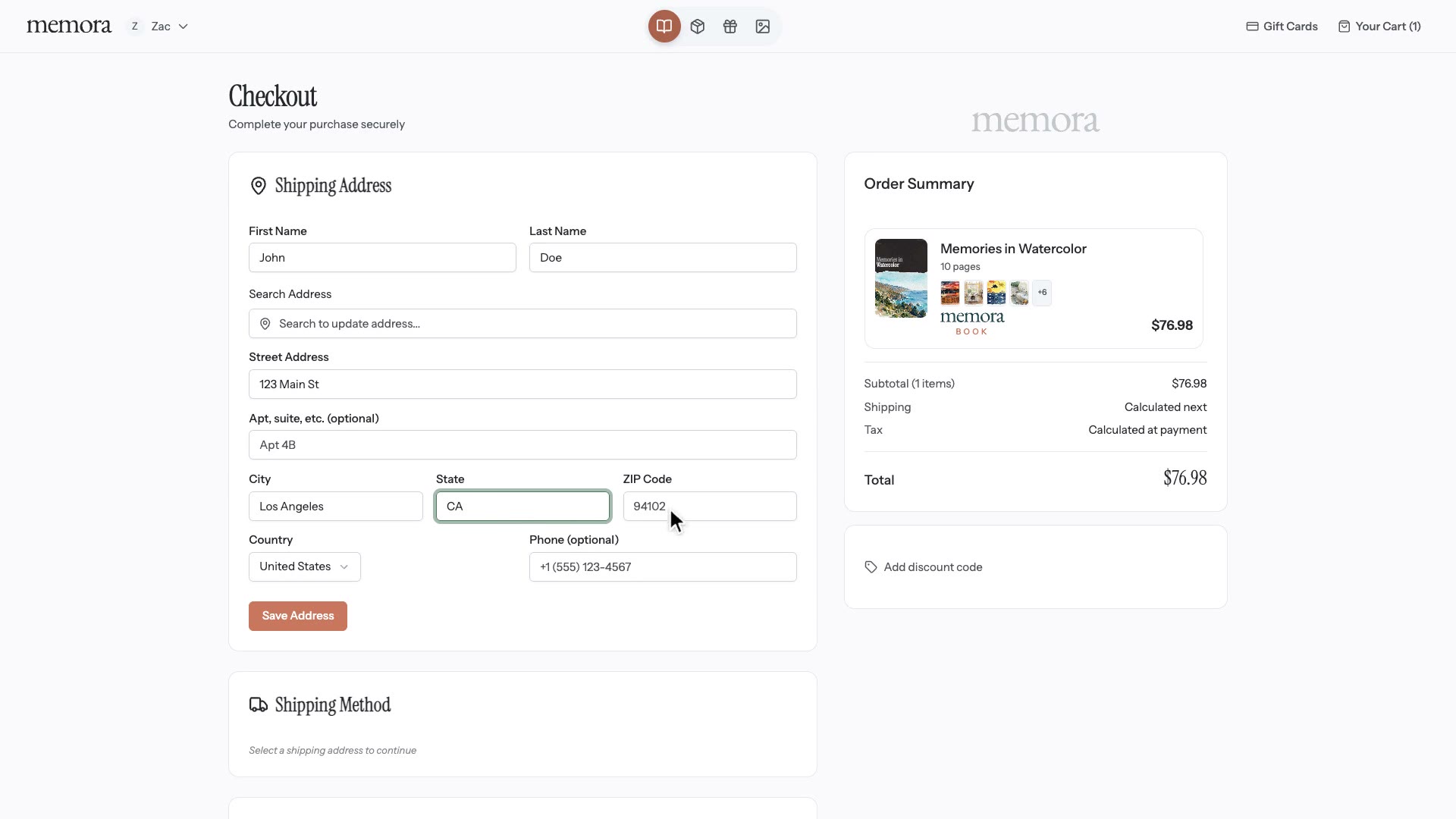
The checkout came after the review on purpose: nobody paid for a book they had not scrolled. The Memora Book checked out at $72.99 for its first ten pages. Every order became a print job, and from 26 January the paid customer orders became books and a canvas.
From the first quote to the first books
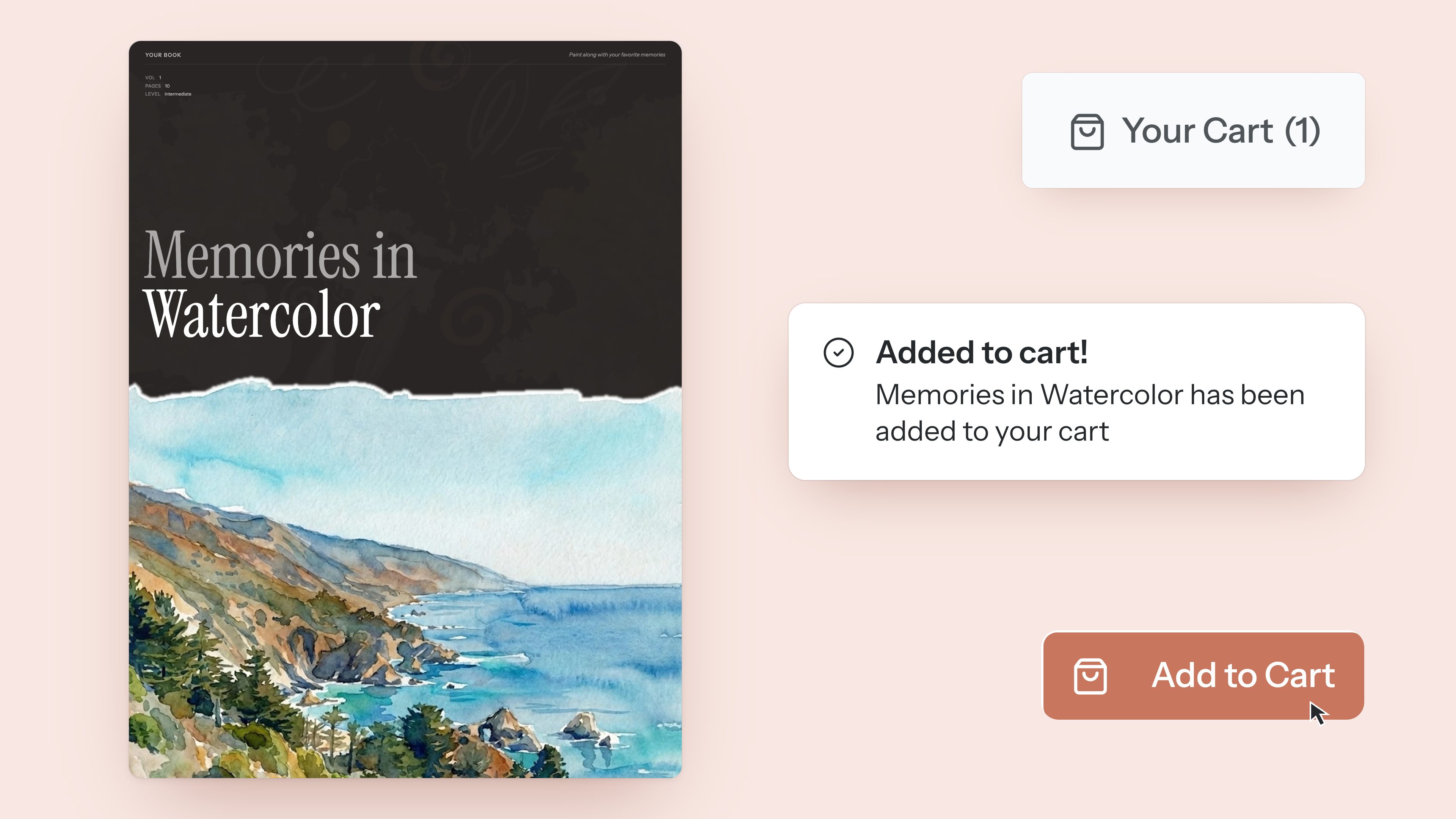
The cart holds the book with its options and offers a canvas of one of its paintings; the starter kit, a tote with the gold mark and a paint set with its brushes, sold beside the book for people who had never painted. Checkout takes the address and a shipping method, works out the tax, and hands the payment to Stripe’s own form. The recording is the app’s own cart and checkout, run on the founder’s book; nothing was paid.
The printing was found as fast as the software was built. On 31 December he set the line, “I WILL NOT sacrifice quality or the plan,” and the arithmetic said printing 250 books at home would take about 145 hours, so the books went to a local print shop. Its quote came in on 5 January: “Dude!!! That’s lower than expected!! How exciting!”
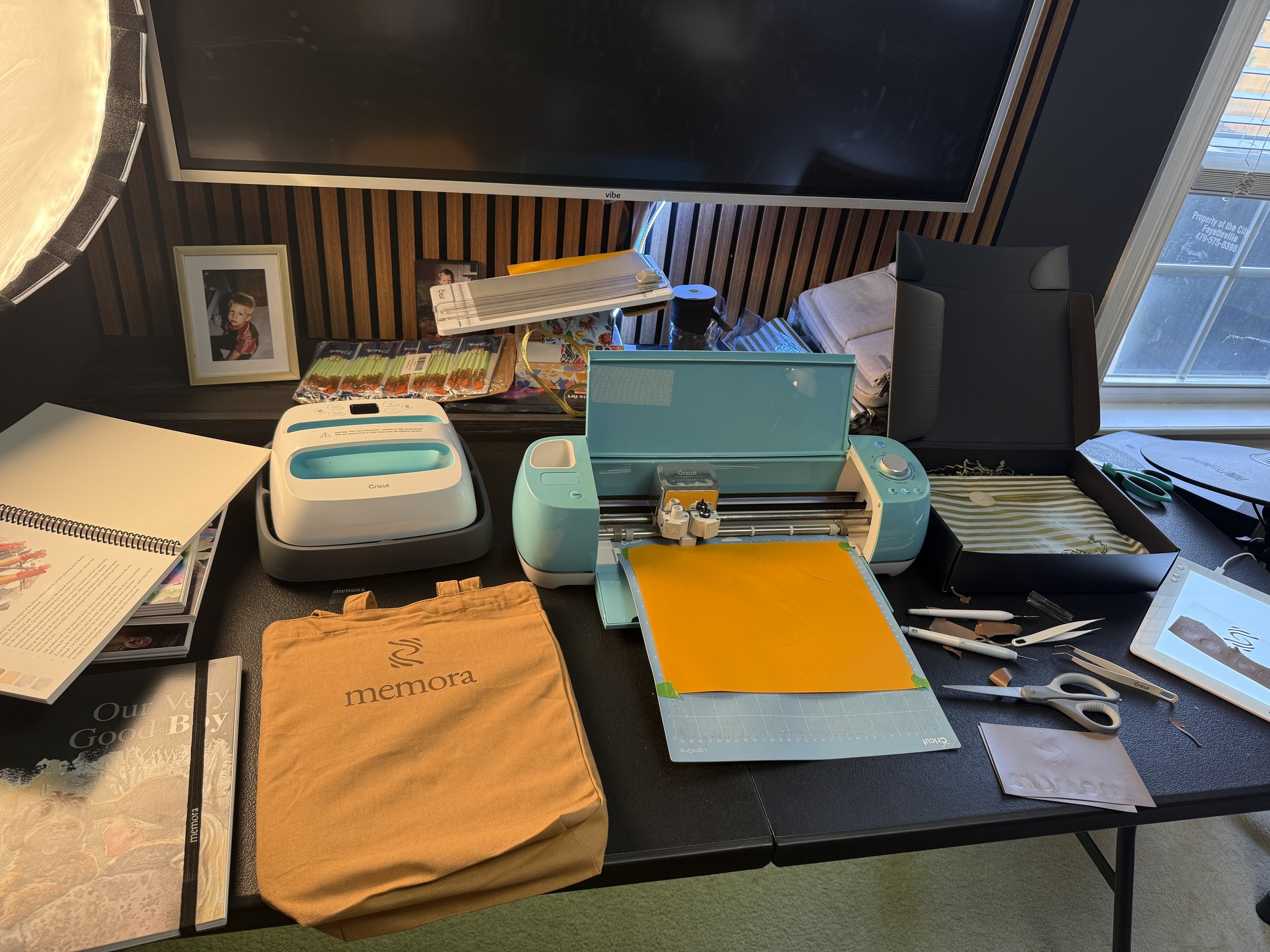
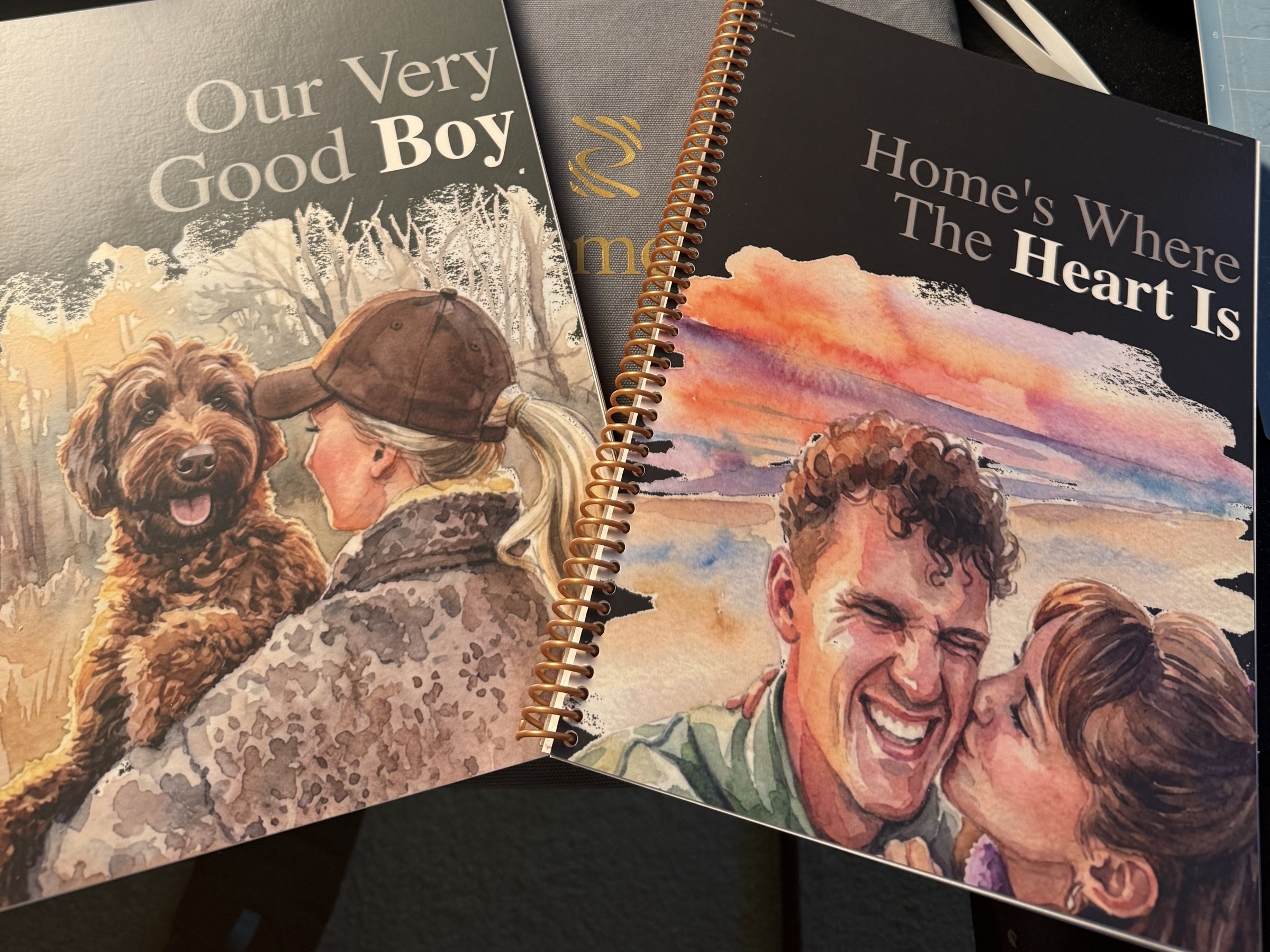
Nine prototypes came back on 14 January, and he liked that “they feel more like a workbook than they feel like a big canvas book.” On 15 January he weeded his first logo on a borrowed Cricut, and by the 16th the kit table held a heat press, the Cricut and totes with the wordmark.
Selling was harder than making. “I sent out 70 texts yesterday to all my friends and family. 10 responded with excitement. One signed up.” He kept going. The first two customers’ orders came on 26 January, six books, the founder’s own among them, went to print on 30 January, and by 13 February three paid customer orders had bought two books, a canvas and a Starter Kit, the canvas printed by Gelato. “This batch almost made me tear up whenever I saw them.”
The result
Seven weeks after a hand-made gift, Memora had its first paying customers.
One founder, a generator, a shop, a print pipeline and seven agents took Memora from a Christmas present to orders printed, packed and shipped. “This iteration of the books are insane quality,” he wrote on 13 February.
The result, in short
From the first page to books shipping
7 weeks
The first page laid out by hand on 19 December 2025; books shipped to buyers by 13 February 2026.
Paid customer orders, 26 January to 13 February
3 orders
Two books, a canvas and a Starter Kit through the site; the books bound by a local shop, the canvas by Gelato.
Launched
7 January 2026
Nineteen days after the first page, with a film and a landing.
Run by
1 founder and 7 agents
Thirteen software requests filed on 15 January, all shipped the next day.