Straata AI Transformation
AI-native services, 2026
- My role
- BuilderI built the brain’s mining, the skills and Abacus with the founder
- Team
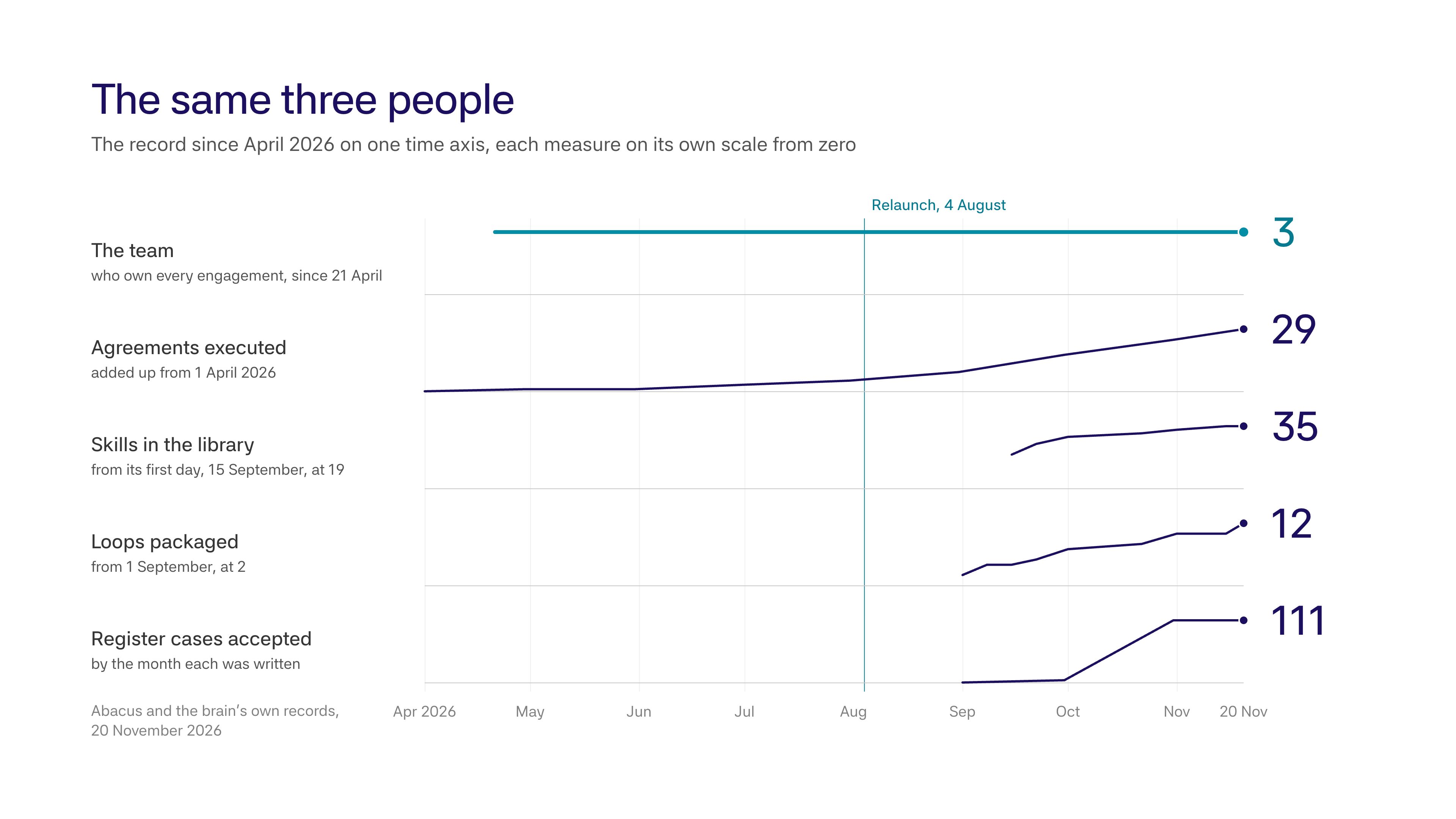
- Three peopleBrian Abernethy, his colleague and me, the same three from April to November
- When
- From April 2026The brain began on 16 April; the launch on 4 August
- Built with
- Claude CodeAgent Skills, MCP, Supabase and React
Straata’s customers wanted results, not another platform, and three people had to deliver them.
After the payments platform Turbo built with Straata (the previous case), its customers made plain they did not want one more system to sign in to. They wanted what the analysis finds, recovered and fixed. So the firm turned to selling high-value services: diagnostics, residual audits and the work that follows them. The work here was to give a team of three the capacity of a far larger one: a first brain that mined the methods of Straata’s founder, Brian Abernethy, a chain of skills that runs the diagnostic, and Abacus to hold every engagement.
Read the full case
- The task
- Give a lean payments practice the capacity to sell and deliver high-value services, diagnostics and residual audits first, without adding people.
- The scope
- The first brain, the diagnostic’s chain of skills with an agent checking every agent that works, the brand that sold the services, and Abacus, where every engagement, its Data Room and its register live.
- The figures
- Read from Abacus and the brain on 20 November 2026. Aggregates only: no client is named and no client’s figures are shown.
How it ran
2026
Eight months from the first brain to offering residual audits at scale.
- April 2026The turnThe founder asked how agents could change the service business, and the platform’s next features were paused for it.
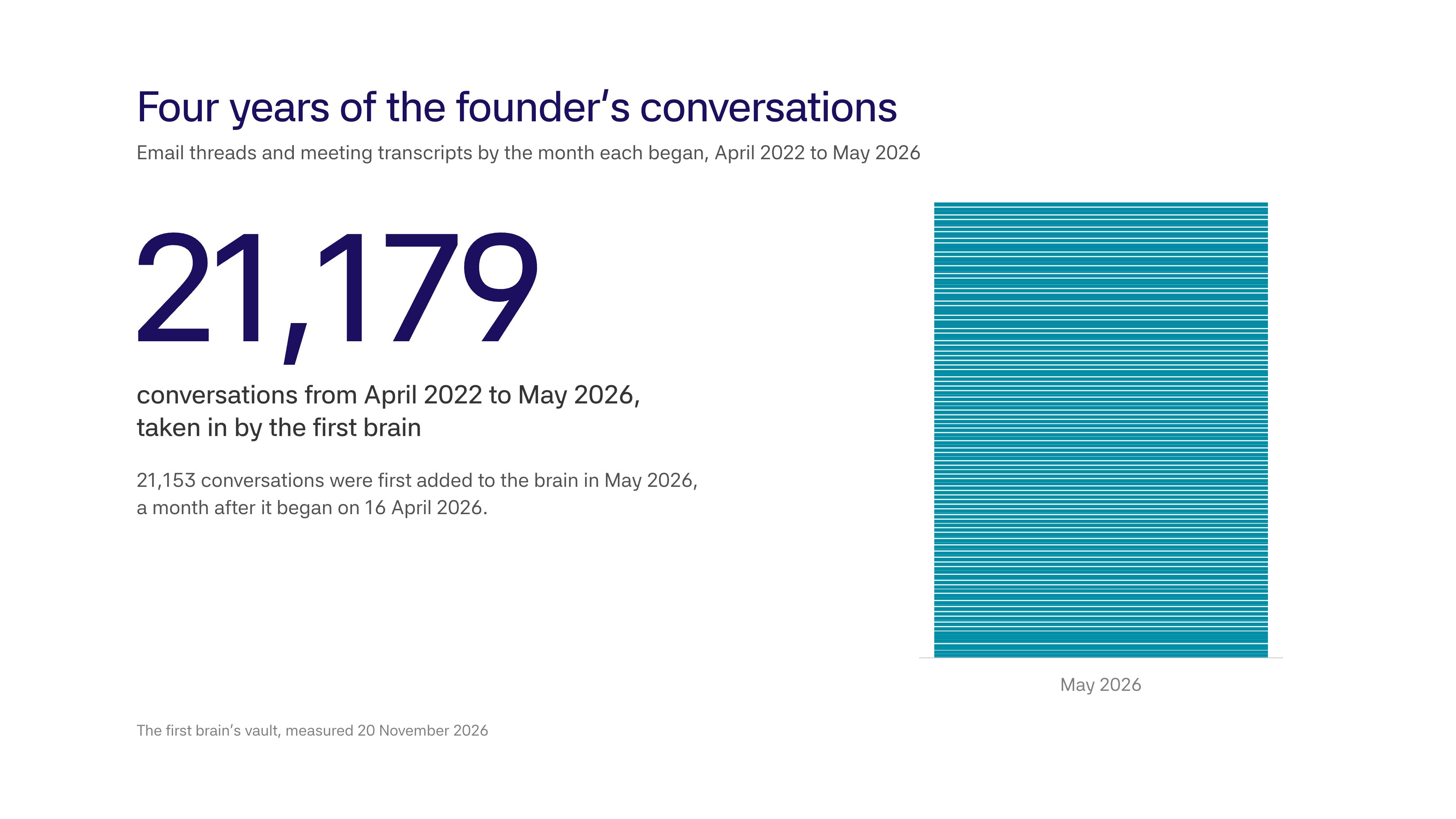
- 16 April 2026The brainThe first brain began. In May it took in the founder’s mail and meetings back to April 2022, more than 21,000 conversations.
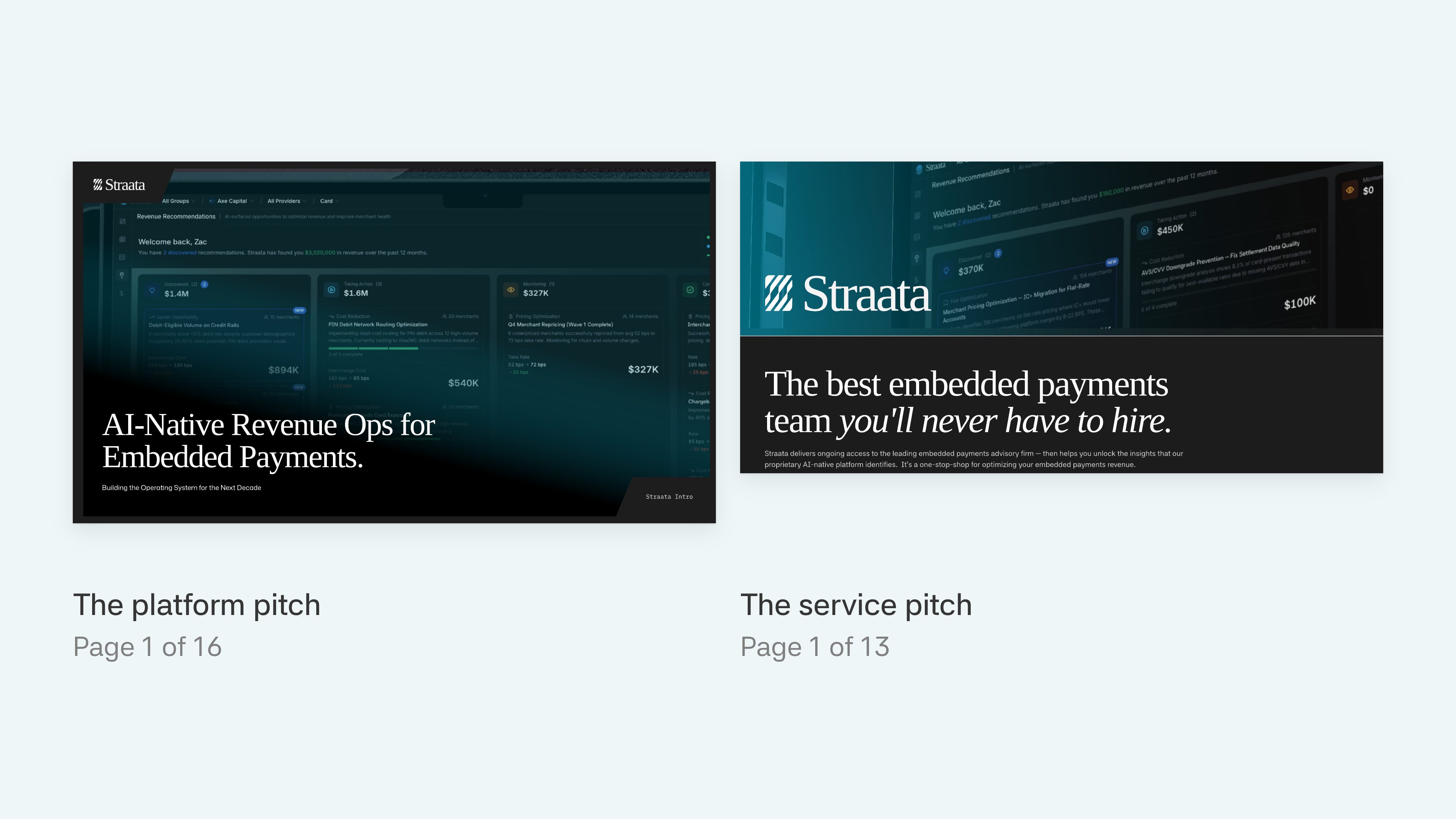
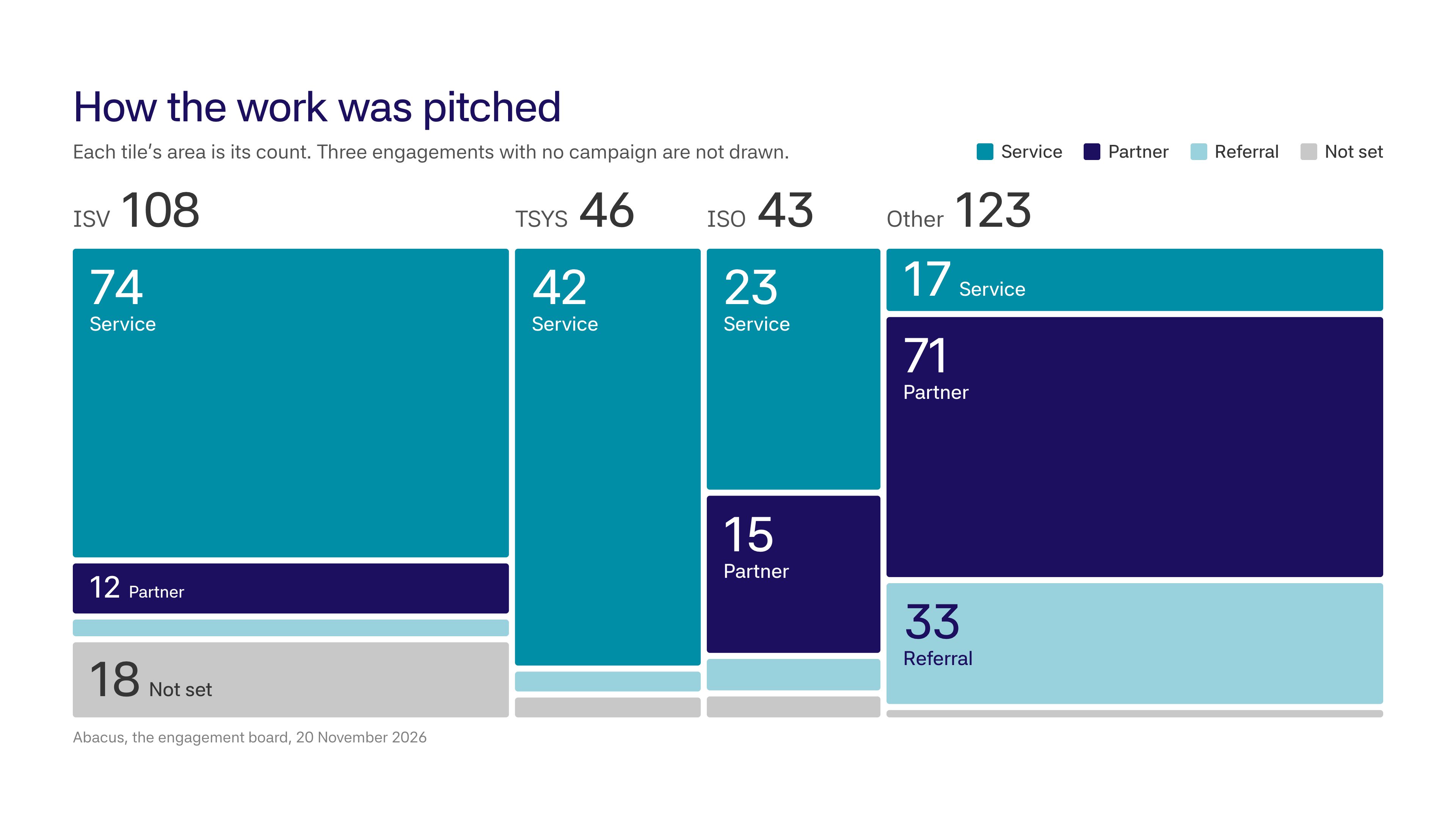
- 4 August 2026The launchStraata launched with its site and launch film, and the pitches went out to software platforms, ISOs and partners.
- August to September 2026AbacusThe diagnostic was set up in Abacus on 14 August, and by 3 September its seven standard services were there.
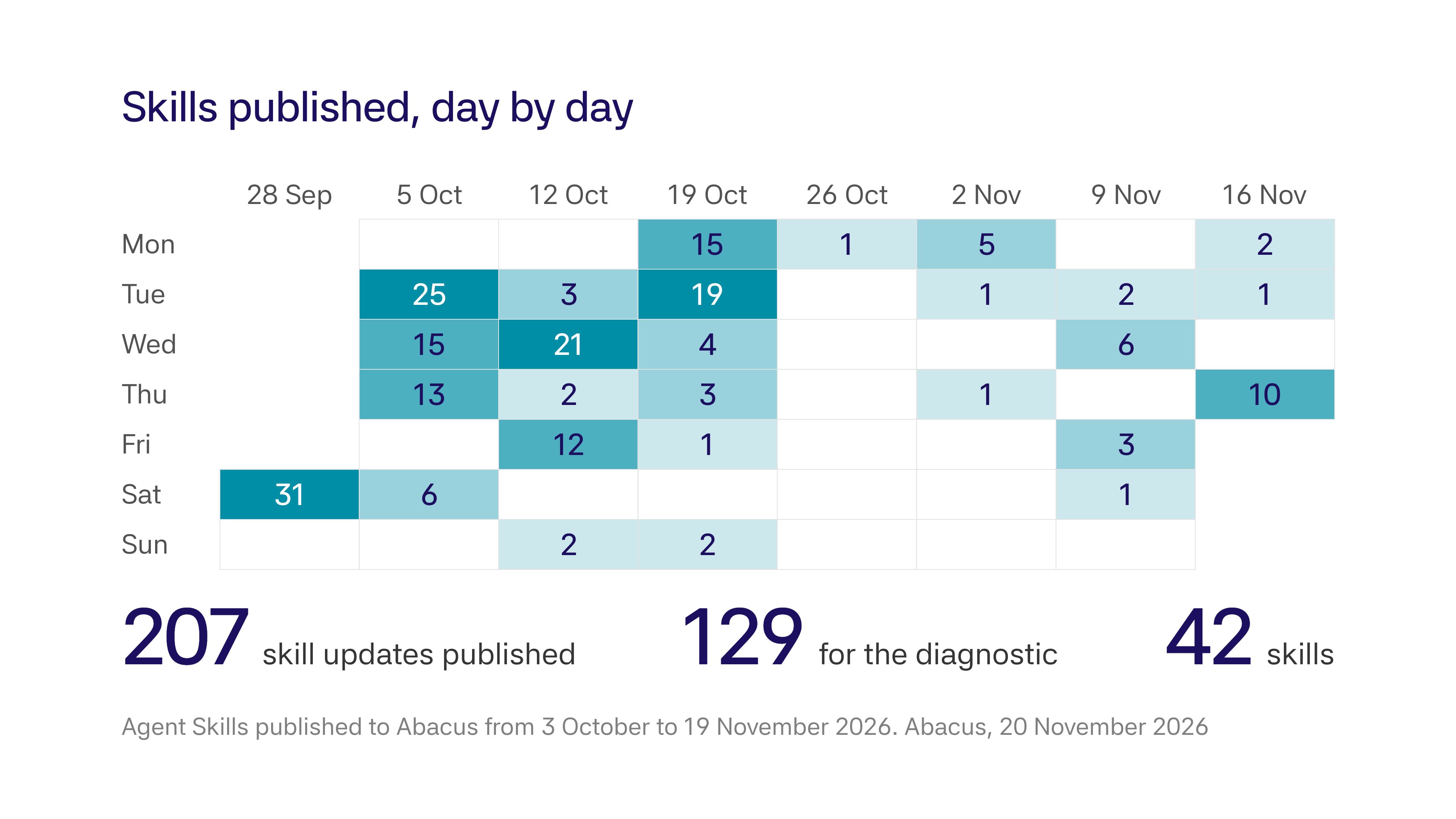
- September to November 2026The diagnosticThe skill library opened in mid September; from 3 October every skill was published to Abacus, and the diagnostic registers filled.
- 20 November 2026Today323 engagements on the board, 42 past the pitch and 64 accepted residual audit findings, on the same three people.
The turn
Customers wanted the result, not another system, so Straata sold it as a service.
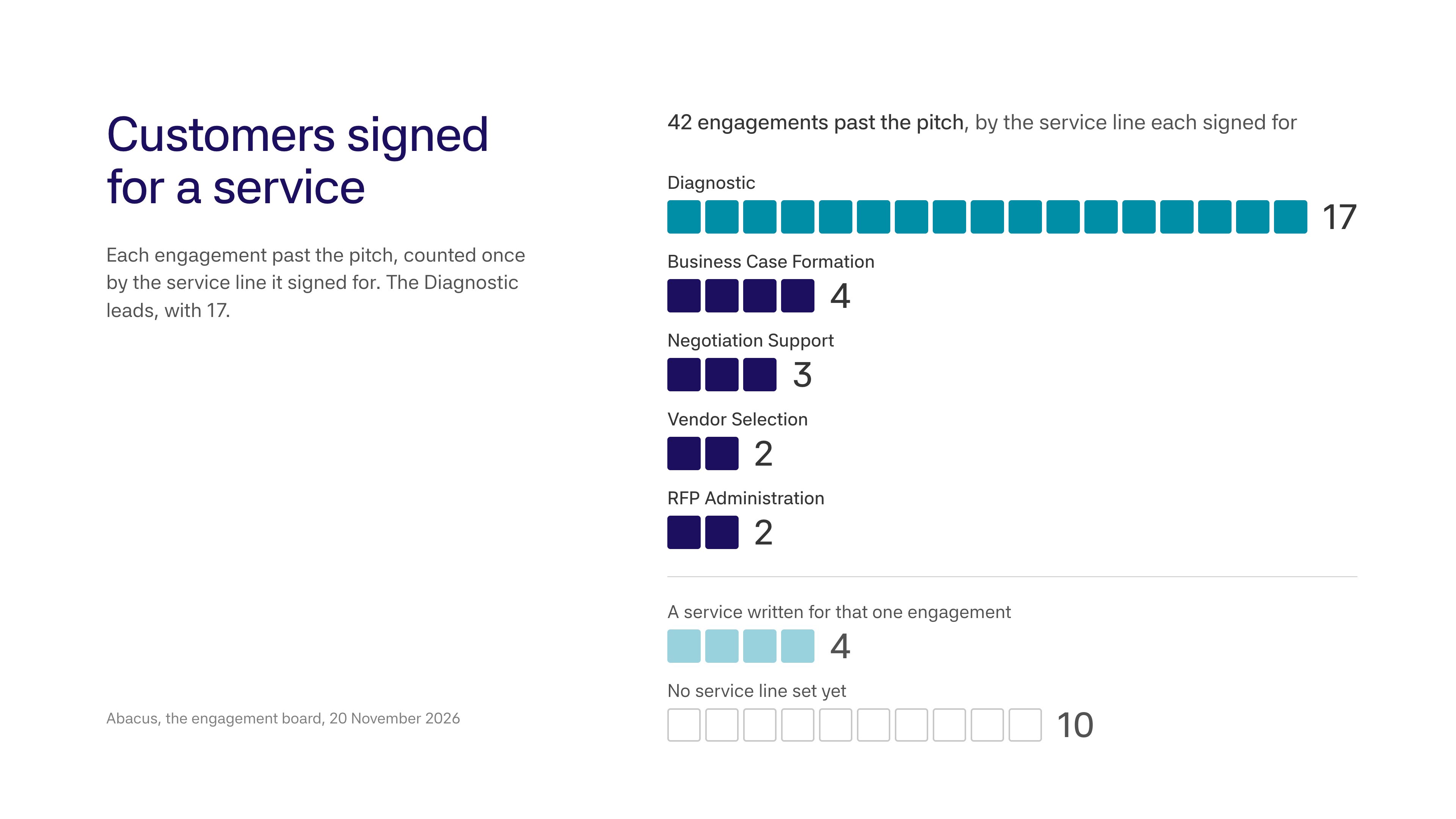
The pitch changed from software a platform would run to a team that does the work: find what its payments lose and get it back. On the Abacus board today, 42 engagements are past the pitch, and the diagnostic is the service most of them signed for.
The blocker
Every conversation and method lived with the founder, so three people could not scale.
Four years of the founder’s mail and meetings held the firm’s practice: who each client was, what had been promised, and how each service was done. None of it was written down anywhere a second person, or an agent, could use. Selling services meant more conversations and more engagements, all landing on him.
What one diagnostic asks
Four kinds of file, in whatever shape each processor sends them.
Conversations he carried
21,179
Email threads and meeting transcripts from April 2022 to May 2026.
People to do it
3
The founder, his colleague and me.
The approach
Conversations were mined into methods, the methods into skills, the skills into checked cases.
Each stage hands the next something it can use. The brain reads the conversations and sets down people, companies, observations and how each service is done. Those methods become Agent Skills, each published to Abacus. The diagnostic runs the skills on a client’s files, one agent working and another checking, and what survives lands on the engagement’s register as an accepted case.
From conversations to cases
What the founder carried
April 2022 to May 2026
Email threads20,326
Meeting transcripts853
The first brain
Mined in April and May 2026
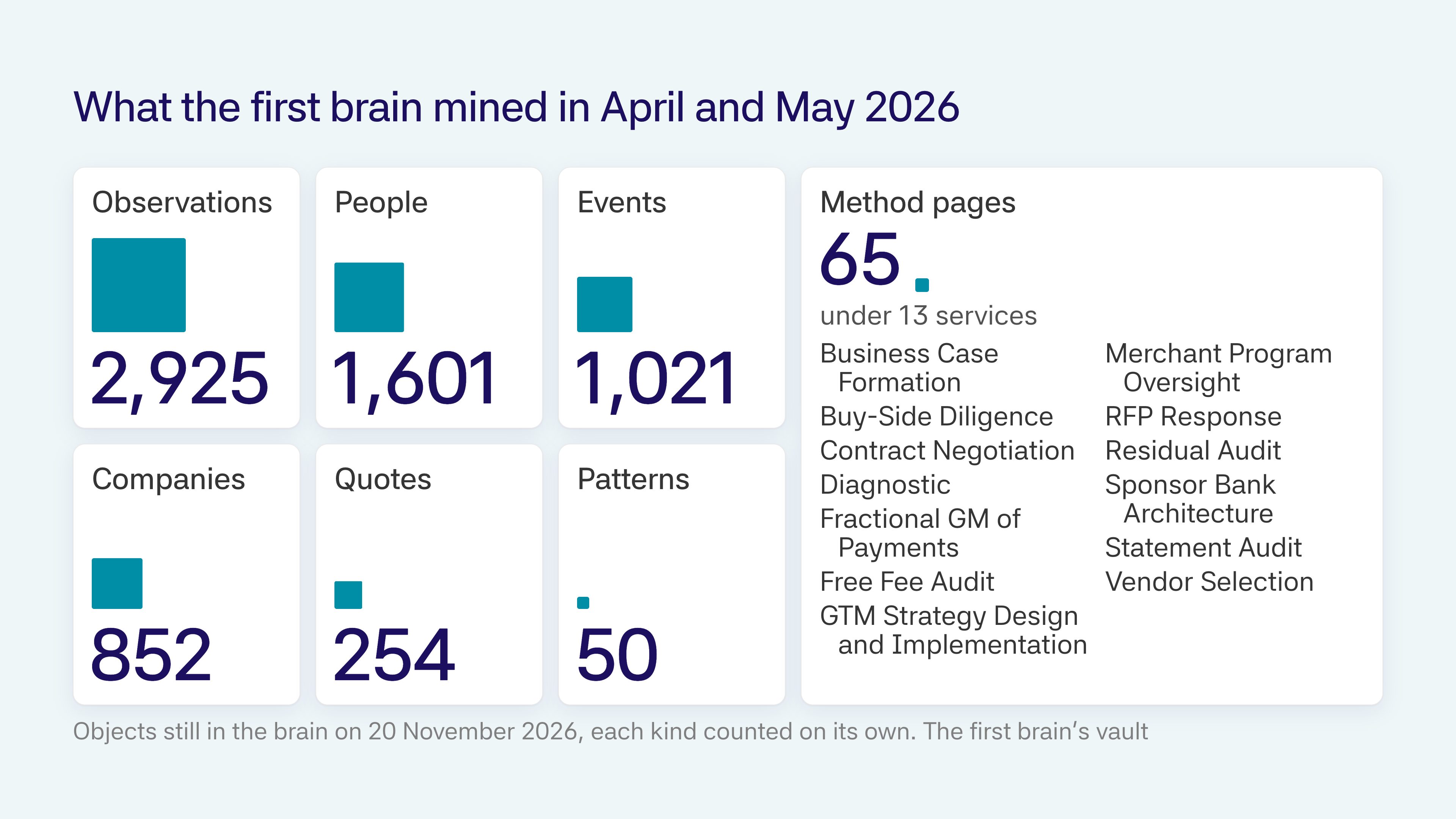
People and companies1,601 and 852
Observations2,925
Service methods13 services
65 method pages
Skills
Published to Abacus from 3 October
Agent Skills42
207 updates published
The diagnostic6 sections
7 agents work, 7 check them
- Reads any format
- Checks payment
- Finds interchange savings
Abacus
Read on 20 November 2026
Engagements323
42 past the pitch
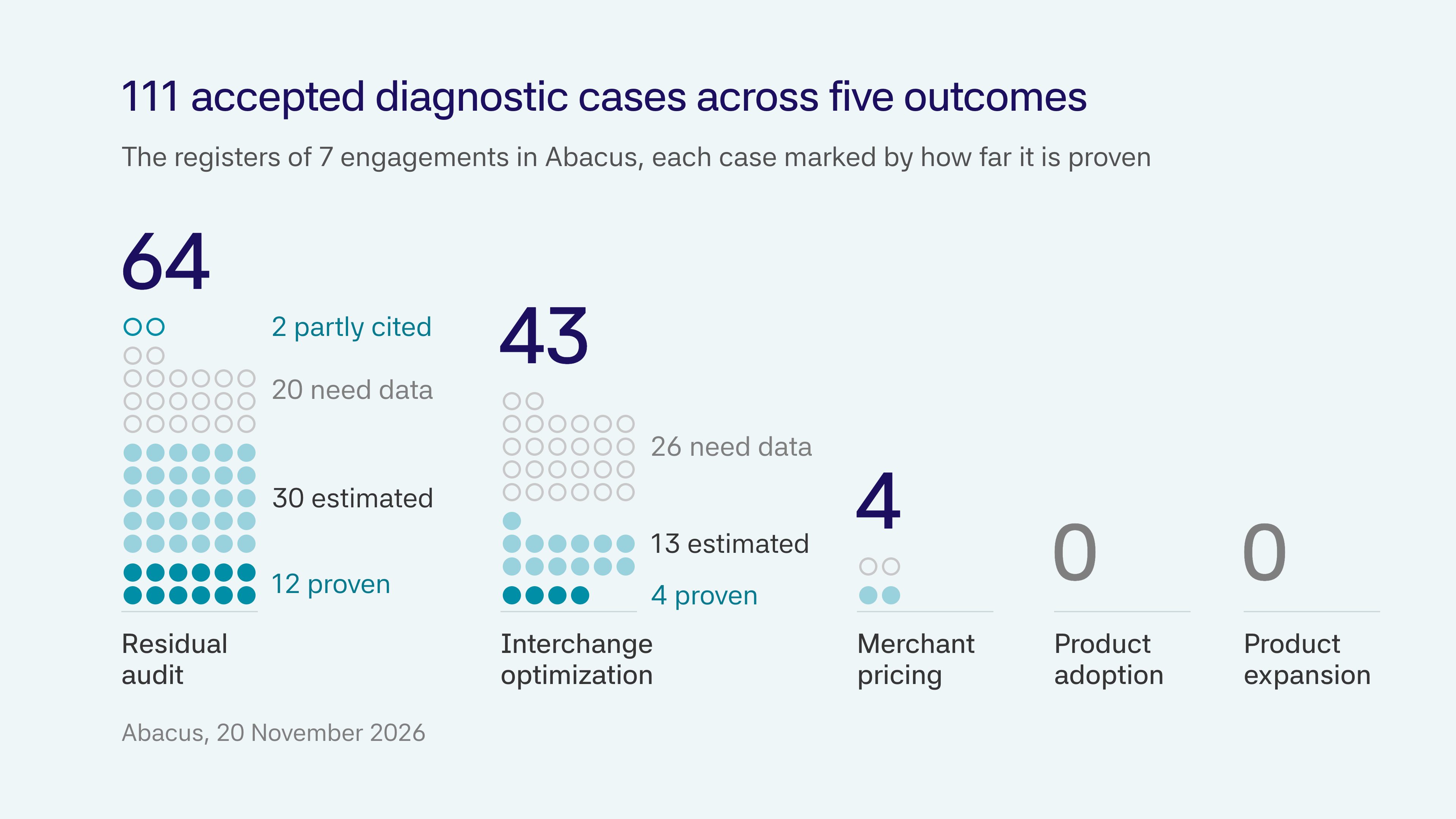
Accepted cases111
- Residual audit64
- Interchange optimization43
- Merchant pricing4
- Email threads to People and companies
- Email threads to Observations
- Email threads to Service methods
- Meeting transcripts to Service methods
- Observations to Service methods
- Service methods to Agent Skills: packaged
- Agent Skills to The diagnostic
- Engagements to The diagnostic: client files
- The diagnostic to Accepted cases: checked
The first brain
The first brain took in four years of conversations and wrote down each method.
The brain began on 16 April 2026. In May it took in the founder’s mail and meetings from April 2022 on, and in its first two months it mined 2,925 observations, 1,601 people and 852 companies from what it read, with the methods of 13 services set down plainly. It carried the volume he had carried alone, freed him to work with agents, and showed him what the next service was.
The diagnostic
A skill chain reads files in any format, checks payment and finds interchange savings.
The diagnostic runs in six sections. Every step is done by one agent and checked by another that did not do it, and nothing reaches a client until Abacus has published it and read it back. Since 3 October, 42 skills have been published to Abacus, and the registers on seven engagements hold 111 accepted cases, 64 of them residual audit findings.
The brand
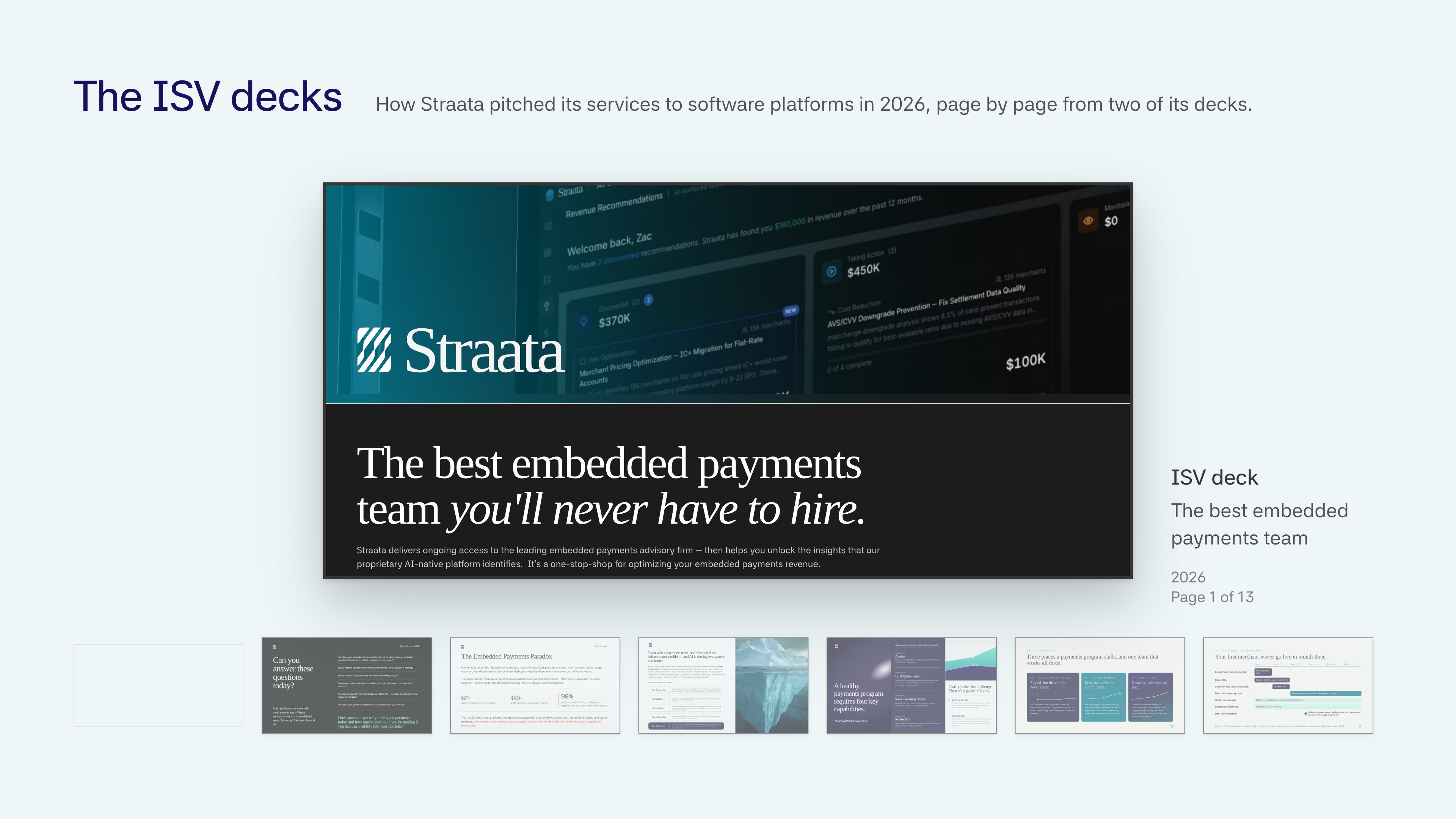
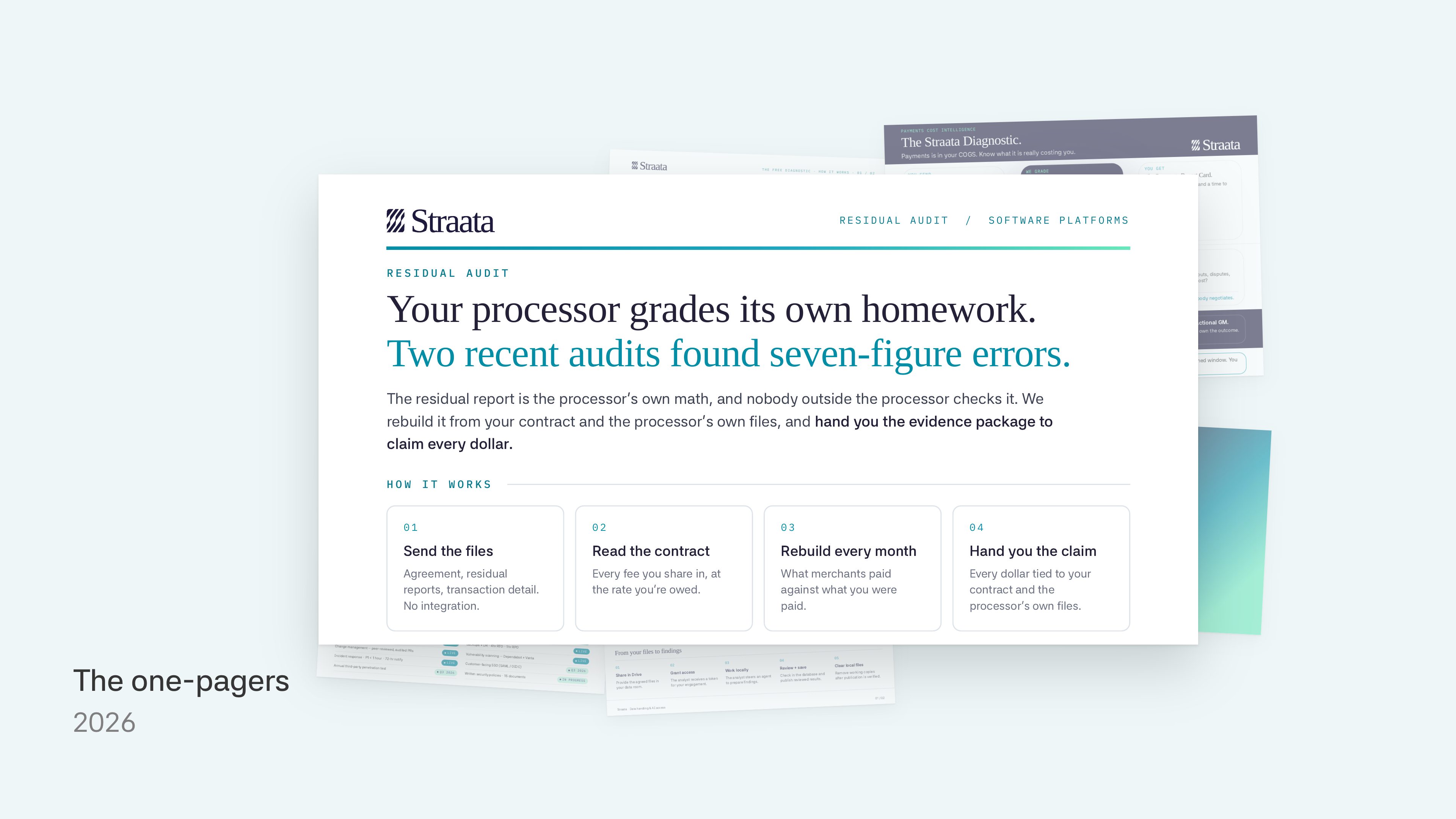
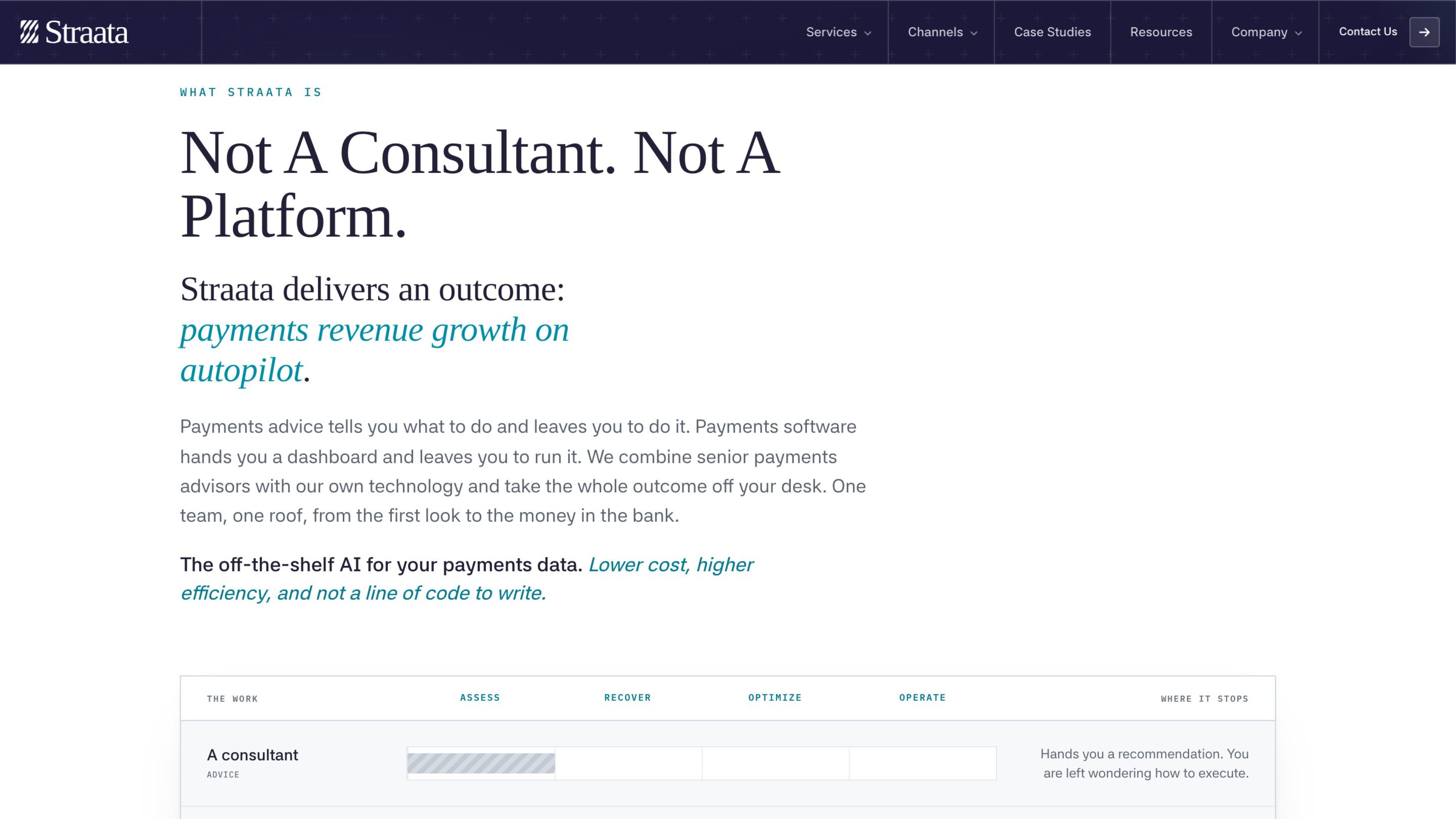
The decks, one-pagers and site sell a payments team platforms never have to hire.
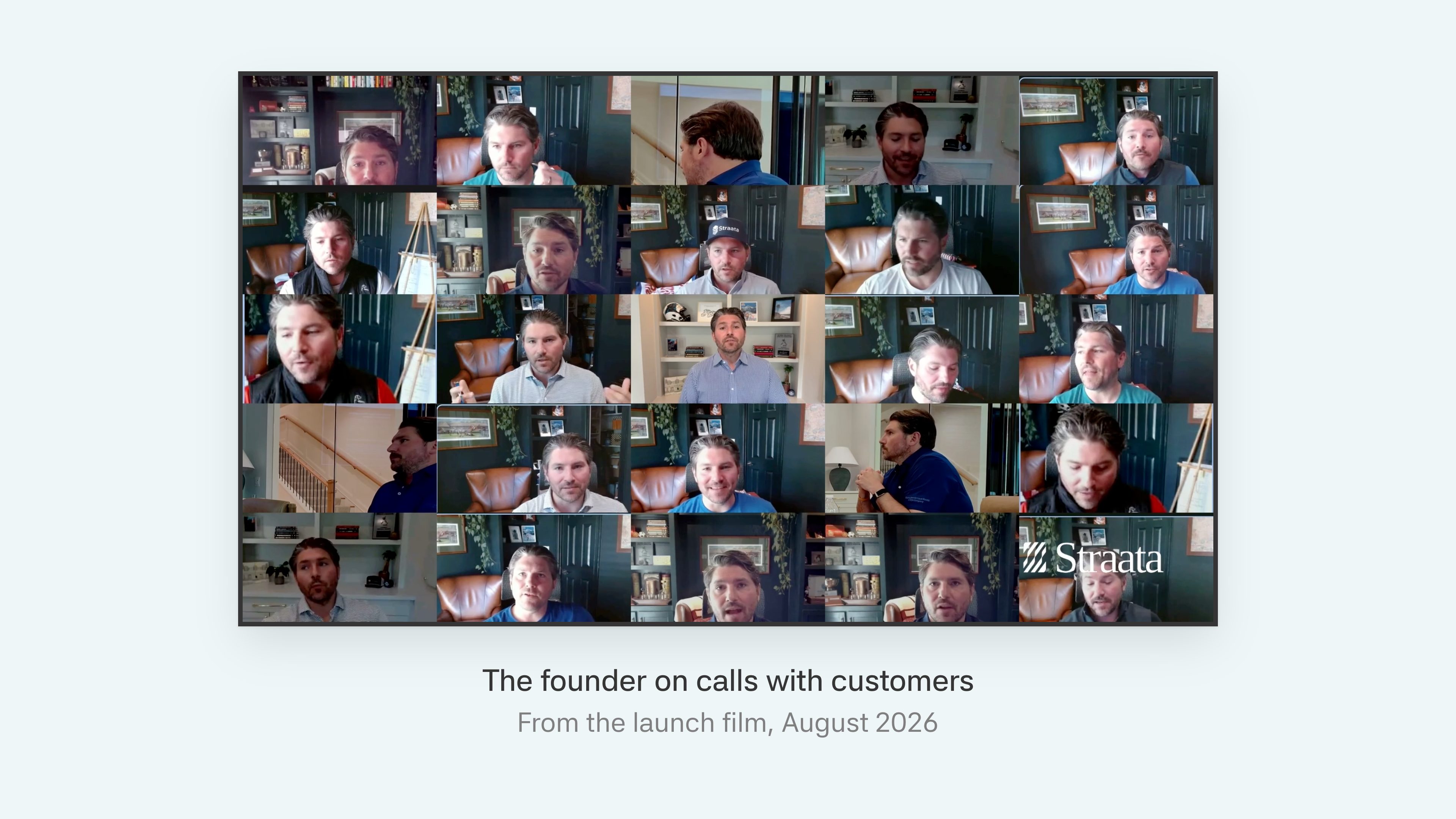
The brand carries what the firm now sells: the outcome, not a tool. The decks went to software platforms, the TSYS and ISO channels and partners; the one-pagers set out each service; the site says it plainly, not a consultant and not a platform. The launch film put the founder in front of customers.
Abacus
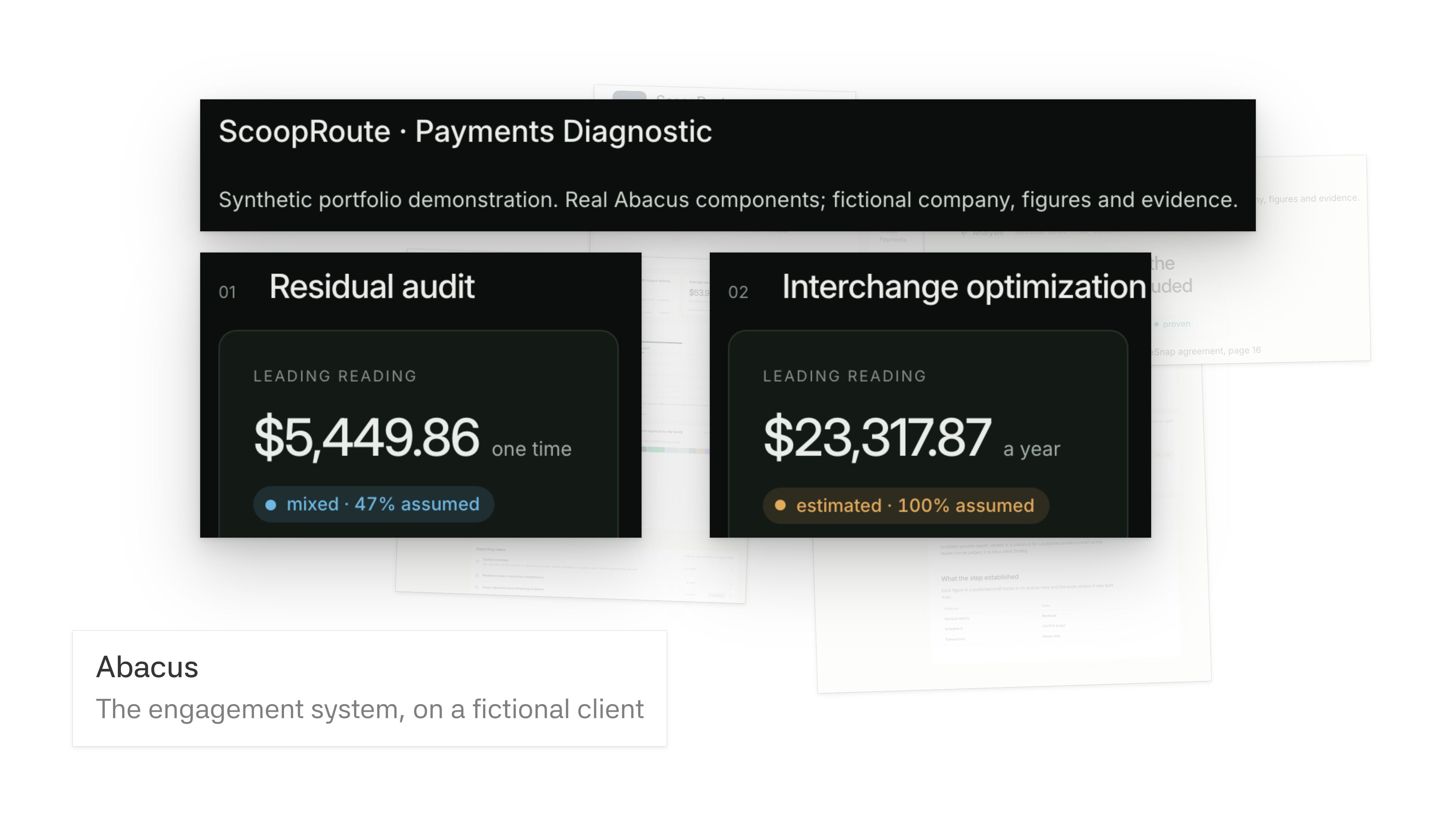
After the launch, contracts came four times as fast, and Abacus held every engagement.
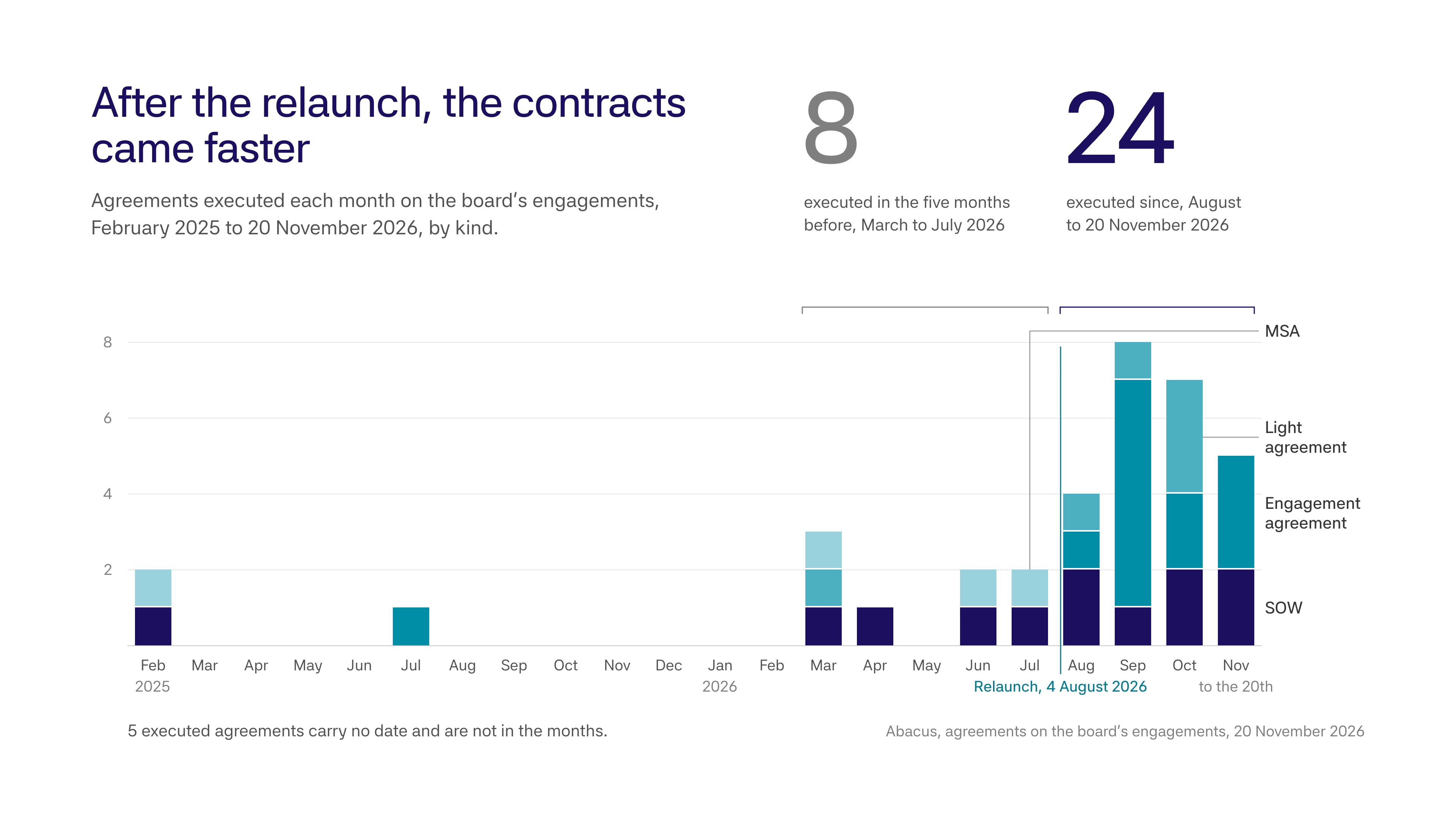
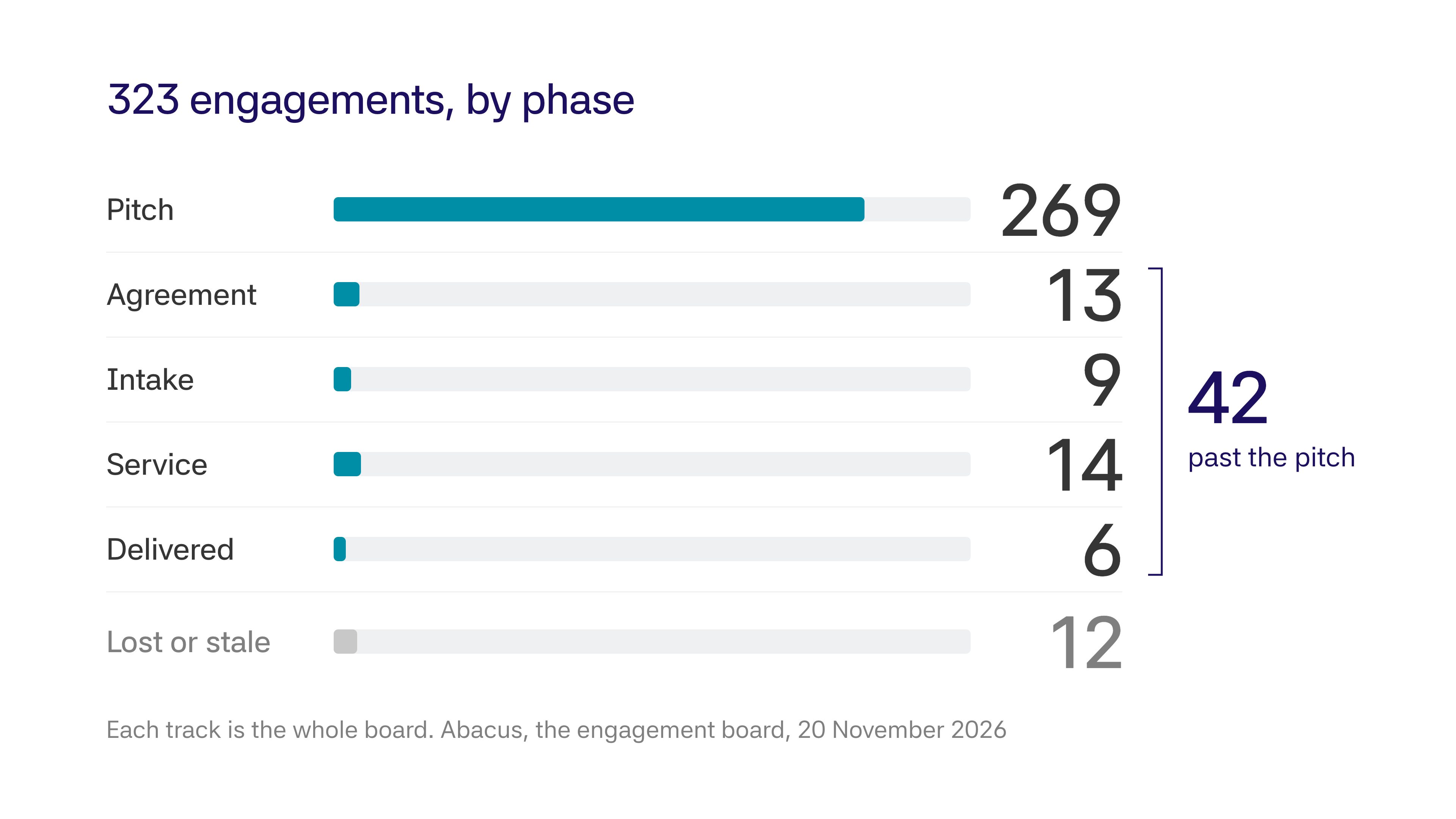
In the five months before the launch on 4 August, eight agreements were executed; in the under four months since, 24. The board holds 323 engagements from the pitch to delivered, with seven standard services. Abacus held the dashboard, the brain already had the founder’s actions in sync, and the services became systems and skills.
The result
The same three people can now offer residual audits at scale.
The team is the three people it was in April. Since then the diagnostic registers have filled with 64 accepted residual audit findings across six engagements, and 269 engagements are still at the pitch. The team keeps up with the deals it has, and there is far more it can now pursue.
The result, in short
Accepted residual audit findings
64
from 0
None before September. Now on the diagnostic registers of six engagements: 12 proven, 30 estimated, 20 waiting on data.
The team
3 people
The same three as in April. Every one of the 323 engagements is owned by one of them.
Contracts since the launch
24
from 8
Executed from 4 August to 20 November 2026, against 8 in the five months before.
Accepted diagnostic cases
111
64 residual audit, 43 interchange optimization, 4 merchant pricing.
Still at the pitch
269
Of 323 engagements on the board: room to take on far more.